German Shepherd Lifespan: How Long Do They Live & How to Extend It
Discover how long German Shepherds live, what affects their lifespan, and proven ways to help your loyal companion stay healthy and active for years.
Introduction
The German Shepherd is one of the most loyal, intelligent, and hardworking dogs in the world. But every owner eventually wonders — how long will my best friend be by my side?
Understanding the average lifespan of a German Shepherd and how to extend it is one of the best gifts you can give your dog. Let’s dive into the facts, backed by real experience and science, to help your furry friend live a long, happy life.
Average German Shepherd Lifespan
On average, a German Shepherd lives between 9 to 13 years.
While genetics play a role, a dog’s health, diet, and care routine can make a big difference.
🐾 Fact: Female German Shepherds tend to live slightly longer than males by about 1 year on average.
Factors that influence lifespan:
-
Genetics and breeding quality
-
Nutrition and exercise
-
Preventive healthcare
-
Living environment and stress levels

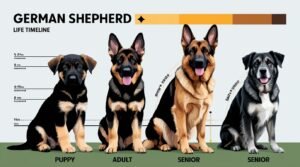
Stages of a German Shepherd’s Life
Like humans, German Shepherds go through several life stages, each requiring special care.
1. Puppy (0–1 Year)
This is a rapid growth period. Proper nutrition, early vet visits, and basic training lay the foundation for lifelong health.
2. Adult (1–7 Years)
German Shepherds are in their prime. They’re active, strong, and mentally alert. Focus on balanced exercise and mental stimulation.
3. Senior (7+ Years)
At this stage, joints may stiffen, energy decreases, and health issues can appear. Adjust diet, reduce physical strain, and schedule regular checkups.
Common Health Issues That Affect Lifespan
German Shepherds are generally strong, but they’re prone to some genetic and lifestyle-related health problems.
1. Hip and Elbow Dysplasia
A common condition caused by poor breeding or overexertion.
Prevention: Regular exercise, joint supplements, and maintaining a healthy weight.
2. Degenerative Myelopathy
A progressive spinal cord disease seen in older dogs.
Tip: Keep them active and consider physical therapy to slow progression.
3. Bloat (Gastric Dilatation-Volvulus)
A life-threatening condition caused by gas buildup in the stomach.
Prevention: Feed smaller meals throughout the day and avoid heavy exercise right after eating.
4. Heart and Skin Issues
Allergies and cardiac diseases can shorten lifespan if untreated.
Tip: Schedule vet visits twice a year for preventive screening.

How to Help Your German Shepherd Live Longer
1. Feed a High-Quality Diet
Choose food rich in protein, omega fatty acids, and essential vitamins. Avoid cheap kibble filled with fillers.
Bonus Tip: Add natural foods like cooked eggs, carrots, or pumpkin for extra nutrients.
2. Keep Them Active
German Shepherds are working dogs. Daily walks, playtime, and training sessions are crucial for both body and mind.
3. Regular Vet Visits
Routine checkups can detect problems early. Never skip annual vaccinations, dental cleaning, and parasite control.
4. Maintain a Healthy Weight
Obesity shortens a dog’s life. Measure meals, limit treats, and monitor weight every few months.
5. Provide Mental Stimulation
Keep your German Shepherd sharp with obedience training, puzzles, and social activities.
A bored dog is a stressed dog — and stress affects lifespan.

Signs Your German Shepherd Is Aging
It’s natural for dogs to slow down with age, but watch for these signs:
-
Gray hair around muzzle
-
Stiff movements or joint pain
-
Sleeping more often
-
Loss of hearing or vision
-
Less interest in physical activities
If you notice these, it’s time to adjust their routine for comfort — softer bedding, gentle walks, and a senior diet can make all the difference.
Frequently Asked Questions
1. What is the oldest recorded age of a German Shepherd?
Some German Shepherds have lived up to 18 years, though it’s rare. Proper care and genetics play a huge role.
2. Do mixed-breed German Shepherds live longer?
Yes, they sometimes do. Mixed breeds often have fewer inherited diseases due to genetic diversity.
3. How can I tell if my German Shepherd is healthy?
A shiny coat, clear eyes, regular appetite, and playful behavior are good indicators of health.
4. Should I give supplements to extend my dog’s life?
Yes, with your vet’s advice. Omega-3 oils, glucosamine, and probiotics can support longevity.
Conclusion
Your German Shepherd’s lifespan depends largely on your care and consistency.
With the right diet, regular vet visits, daily exercise, and love, you can help your companion live a long and fulfilling life by your side.
Remember — it’s not just about adding years to your dog’s life, but adding life to their years.