
Disclosure: Pets Life Time participates in affiliate programs. Product links in this article may earn us a commission at no extra cost to you, it helps keep our content free. Learn more
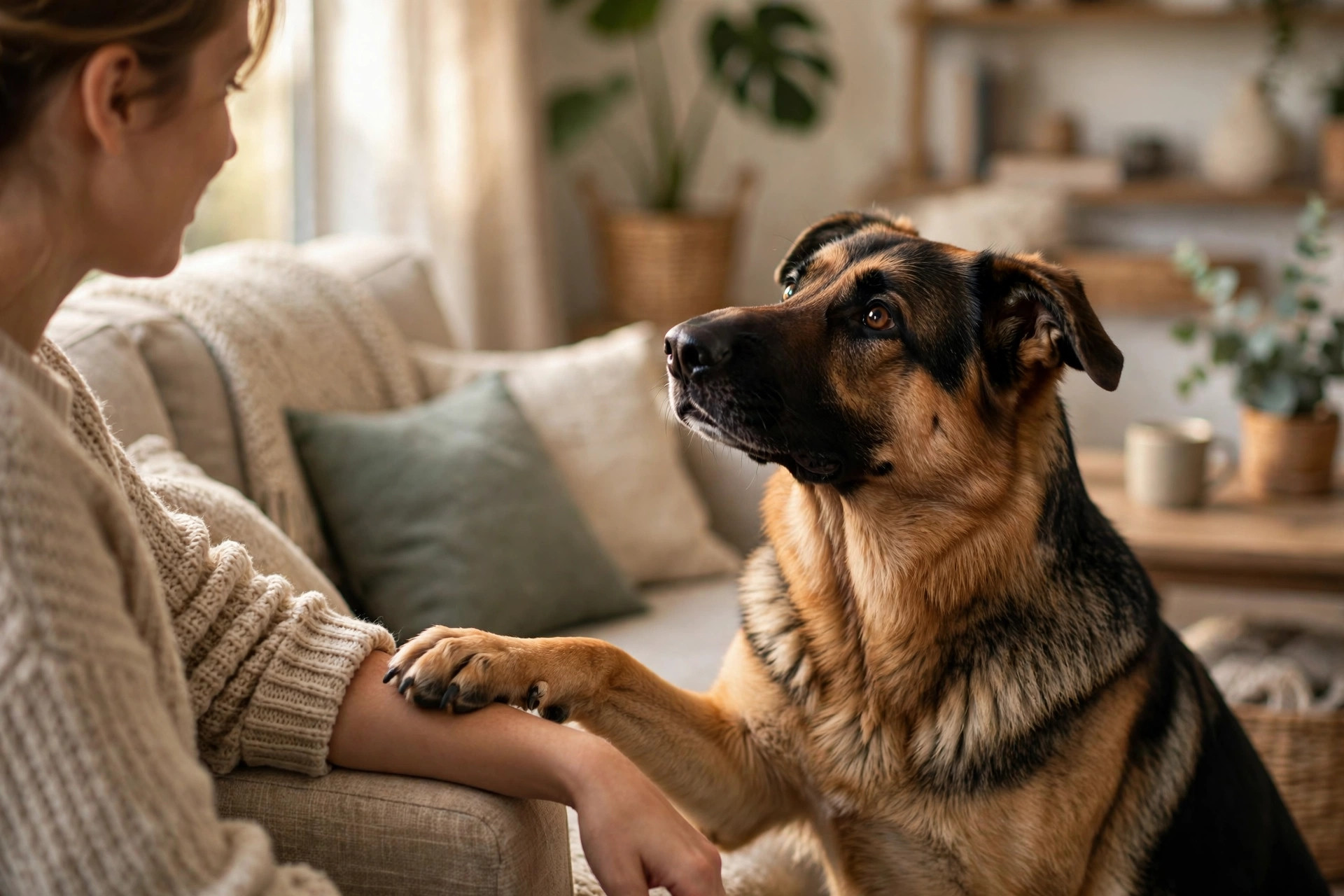
Your German Shepherd puts a paw on your leg, your arm, or straight on your hand, and looks up at you like the message should be obvious. Most of the time it is a request, not random behavior. According to the American Kennel Club, a paw placed on you is communication, and its meaning depends on the moment: the same paw can say “keep petting me,” “I need to go out,” or “something is worrying me.” Here are the seven meanings, and how to tell them apart.
Do not read the paw on its own. Read it plus everything else: where your dog is looking, what his ears and tail are doing, what time it is, and what just happened. A soft paw on your hand during a quiet cuddle is a very different message from hard, repeated pawing at your leg as you try to leave the house. PetMD makes the same point: pawing is a natural communication tool, and body language gives you the context that tells you which need it is.
1. Affection and Bonding: The Paw as a Hand Hold
Sometimes the paw is simply closeness. You are stroking your dog, the stroking stops, and a paw lands gently on your arm as if to say the contact should continue. PetMD notes that dogs rest a paw on a person while being petted as part of showing affection, and the AKC describes the same pattern: if you stop, the paw comes down again. It is hard not to read that as your dog petting you back.
German Shepherds are prone to this because the breed bonds closely and likes physical contact. It is the same closeness behind the Shepherd who trails you from room to room, covered in our guide to why your German Shepherd follows you everywhere. The affection paw is soft and unhurried. If you enjoy it, there is nothing to fix.
2. Attention-Seeking: The Paw That Says “Look at Me”
The second meaning is the one most owners know well. You are on your phone or laptop, and a paw taps your leg. Then taps again, a little harder. This is your dog opening a conversation. The AKC compares it to a person raising a hand to speak: dogs use the paw to start an interaction when they want engagement, play, or simply to be noticed.
Attention pawing comes with bright eyes, ears forward, and a body ready for something to happen, often followed by a play bow or a toy at your feet. Answering it is fine, but if the paw always works within seconds, you are being trained as efficiently as you train him. The steps below cover how to answer without building a demanding habit.
3. Asking for Something: Food, the Door, or a Walk
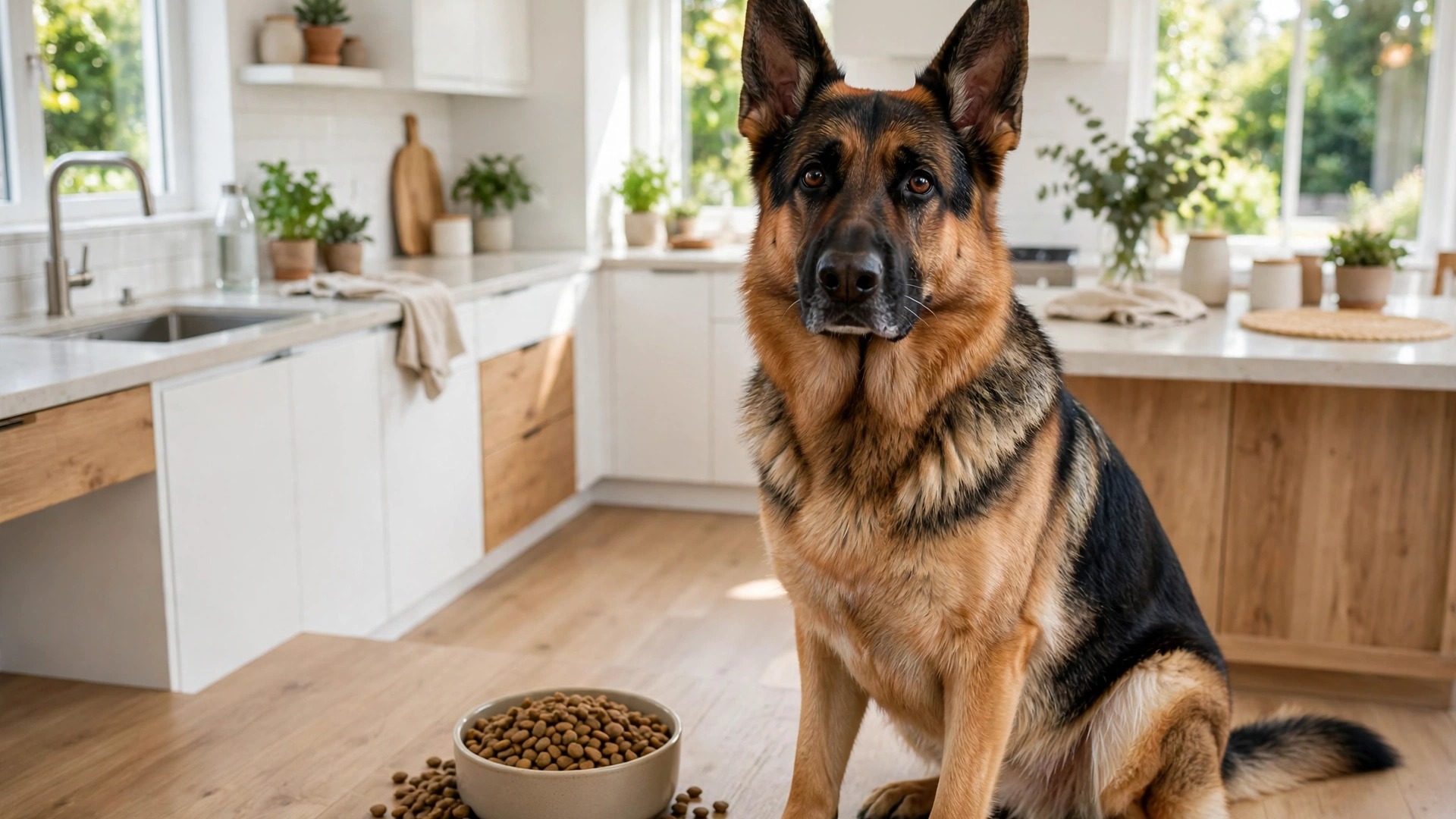
Often the paw is a polite request with a specific item attached. PetMD points out that pawing starts in puppyhood, when pups paw at their mother, and adult dogs keep using it because it works: it gets them food, attention, or access. Watch what your dog does right after the paw lands. A look at the door means he wants out. Pawing near feeding time, or beside the food cupboard, means dinner; PetMD notes many dogs grow restless in the half hour before a regular meal, and the paw becomes part of that routine.
A request you can understand is a gift: your dog is telling you something instead of barking the house down. The problem is not the asking, it is granting every request instantly. Decide if it is reasonable, then grant it calmly or offer an alternative, such as a chew or a short wait followed by the walk he asked for.
4. Anxiety and Stress: A Paw That Asks for Reassurance
A paw can also be a worry signal. Thunder, fireworks, visitors, or the sight of you picking up your keys can send an unsure Shepherd looking for contact. The AKC notes that an anxious dog may paw at you for comfort during storms, departures, or sudden noises. PetMD adds that pawing can sit inside a wider cluster of stress signals, and even a paw lifted without touching anything can be a small stress sign.
An anxious paw usually arrives with ears pinned back, lip licking, yawning, panting when it is not hot, or a dog who cannot settle. That paw is asking whether everything is alright. Stay calm, keep your voice low, and let him stay close. If pawing spikes when you prepare to leave, work through our guide to German Shepherd separation anxiety. Frequent, intense anxiety is worth raising with your vet; PetMD advises discussing stress-linked pawing with a veterinarian.
5. Herding Instinct: The Paw That Steers You
German Shepherds were developed to move and manage livestock, and the AKC places them in the Herding Group, whose breeds share a strong instinct to control the movement of other animals, one that pet dogs often redirect at their own families. At home it shows up as a paw on your leg as you stand up, a dog positioned across a doorway, or pawing and nudging when the family scatters.
This version feels purposeful rather than needy, often paired with intense eye contact or circling. Children running in the garden bring it out most. It is not disobedience: it is a working instinct looking for a job in a home with no sheep. Redirect it: a training session, a place command, or a walk with loose leash practice, like the plan in our puppy leash training guide, beats managing your hallway.
6. Learned Behavior: It Worked Before, So He Does It Again
Some pawing has no deeper message. It is a habit that pays. Dogs repeat what works, and pawing works on people almost every time: you look down, laugh, stroke him, or get up and fetch something. PetMD explains that dogs learn pawing is a useful tool precisely because it usually results in the owner tending to them, and the AKC notes your dog quickly learns that offering a paw gets a positive reaction.
If you taught “shake” as a trick and rewarded it, do not be surprised when your Shepherd offers it freely whenever he wants something, including at the dinner table. The same goes for the pressing, kneading-style pawing some dogs work against a leg or cushion: read it as a self-soothing learned gesture, repeated because it feels good and gets a response. Learned behavior can be reshaped, and the steps below teach a better way of asking.
7. Pain or a Paw Problem: The Medical Meaning You Should Not Miss
The last meaning matters most, because it is the easiest to misread as affection. A dog who suddenly paws at you more than usual, holds one paw up, keeps licking a foot, or flinches when you touch it may be telling you something hurts. VCA Hospitals lists limping, licking at the foot, and bleeding as signs of paw injury, and advises checking the underside of the foot. Splinters, thorns, a torn pad, a broken nail, something wedged between the toes, hot pavement burns, and early joint pain can all sit behind a change in paw behavior.
Do a calm check: look at the top and underside of each paw, spread the toes gently, and check for redness, swelling, a cut, a cracked pad, discharge, or a bad smell. VCA advises veterinary care for bleeding that does not stop, deep punctures or cuts, burns, deeply embedded objects, and signs of infection. Persistent licking focused on one paw also deserves a vet visit; we went deeper on that in our guide to why dogs lick their paws. If the pawing is new, one-sided, or paired with a limp, treat it as medical until a vet says otherwise.
Pawing Meanings at a Glance
| What it looks like | Likely meaning | How to respond |
|---|---|---|
| Soft paw rests on your hand while you stroke him, calm eyes | Affection, keep petting me | Enjoy it and continue the fuss |
| Repeated taps on your leg while you are busy, bright eyes | Attention or play request | Answer on your terms: a short game, then settle him with a chew or toy |
| Paw, then a look at the door or the bowl | A specific need: out, food, or a walk | Grant it if reasonable, keep mealtimes to schedule |
| Pressing paw, ears back, lip licking, panting, unsettled | Anxiety, asking for reassurance | Stay calm, let him stay close, see a vet if it is frequent |
| Firm paw or body block as people move, staring, circling | Herding instinct, managing movement | Redirect to a job: place command, training, or a structured walk |
| Offers a paw constantly, even at the table | Learned habit, a trained “shake” offered freely | Stop rewarding free offers, teach and reward a sit instead |
| New pawing plus licking one foot, limping, or holding a paw up | Pain or a paw injury | Inspect the paw today, vet for wounds or limping |
How to Respond to Pawing: A Step by Step Plan
You need one calm routine used every time, so your dog learns exactly how asking works in your house.
- Pause and read the whole dog. Take two seconds: ears, tail, body tension, and what just happened. PetMD’s guidance is clear that the rest of the body language, not the paw alone, tells you what your dog is saying.
- Rule out the physical first. If the pawing is new or different, check the clock and the paw. Near a meal or walk time? Licking one foot or favoring a leg? Needs and pain come before manners.
- Grant real requests calmly. If he is asking for something reasonable, a toilet break, water, his dinner at dinner time, give it without a fuss. A dog whose real requests are answered rarely escalates to barking or scratching.
- Ask for a polite alternative. For attention pawing, ask for a sit or a down before the reward arrives, then pay him with what he wanted: a stroke, a short game, or a treat. Within a couple of weeks most Shepherds offer the sit instead, because the sit is what works now.
- Do not pay the pushy version. If the pawing gets hard or demanding, calmly withdraw your attention for a few seconds rather than pushing the paw away, which many dogs read as a game. Reward the moment he settles or offers the alternative. Everyone in the house must use the same rule.
- Meet the need underneath. A Shepherd who paws all evening is often under-exercised or bored. Enough exercise, training or scent games, and a set routine for meals and walks remove most of the pressure behind the paw.
When Pawing Becomes a Problem
Pawing crosses a line when it hurts or runs the household: scratching that breaks skin, pawing that unbalances small children, or escalation from paw to bark to mouthing when ignored. Teach children the sit-and-stroke routine too; our guide to German Shepherds with kids covers the house rules. If pawing comes with growling or guarding, bring in a certified trainer or veterinary behaviorist. Punishing communication silences the polite version first.
Disclaimer: This article is general guidance, not a substitute for professional advice. For new, one-sided, or worrying pawing, see your veterinarian or a qualified behaviorist.
Helpful Tools for a Paw-Happy Shepherd
These solve the two most common drivers of pestering pawing: boredom and food motivation. A dog working a puzzle is a dog whose paws are busy somewhere useful.
Recommended
Outward Hound Nina Ottosson Puzzle Toy
A sliding puzzle feeder that turns pawing at you into problem solving. Start on the easiest setting so your Shepherd wins early.
Check Price on AmazonRecommended
Snuffle Mat for Dogs
Scatter kibble in the folds and let your dog search. Sniffing work tires a Shepherd’s brain in a way a second walk often does not.
Check Price on AmazonRecommended
Zuke’s Mini Naturals Training Treats
Small, soft, and quick to eat, exactly what you want when rewarding the polite sit that replaces the paw, repetition after repetition.
Check Price on AmazonFrequently Asked Questions
Why does my German Shepherd put his paw on me when I am petting him?
Usually because he wants the petting to continue, and he is returning the contact. The AKC describes this exact pattern: when you stop, the paw comes back. Read it as affection plus a polite request, not a problem.
What is the difference between pawing at me and putting a paw on me?
Pressure and pace. A paw placed and rested is normally affection. Repeated pawing, taps that get faster or harder, is your dog trying harder to start something: attention, play, food, or a trip outside.
Why do German Shepherds fold their paws or cross them when lying down?
Crossed front paws are mostly comfort and habit, a relaxed resting pose many Shepherds settle into. It is not the same signal as pawing at you. A full guide to folded paws is coming as its own article; for now, treat it as a content dog unless it comes with stiffness or trouble getting up.
Is my German Shepherd trying to dominate me when he paws at me?
No. Pawing is communication and learned behavior, not a rank challenge. He is asking for something, offering something that worked before, or looking for reassurance.
How do I stop my German Shepherd pawing and scratching at me?
Teach a replacement, do not just block the paw. Ask for a sit before attention, reward it every time, and briefly withdraw attention when pawing turns pushy. Add exercise and brain work so he has less reason to pester. If scratching injures or comes with growling, work with a certified trainer.
Do puppies paw for the same reasons?
Largely, yes. PetMD explains that pawing begins in puppyhood, when pups paw at their mother, and sticks because it works on people too. A pawing puppy is already learning how asking works, so reward the calm alternative now. This article follows the American Kennel Club’s guidance on why dogs put a paw on you, PetMD’s explainer on why dogs put their paws on people, and VCA Hospitals’ guidance on paw injuries and when to seek veterinary care.
The Short Version
A German Shepherd’s paw on you is a sentence, and the rest of his body tells you which one. Soft and slow usually means affection. Bright and repeated means “look at me” or “I need something.” Pressed close with a worried body means “reassure me.” A new, one-sided paw paired with licking and limping means “check my foot.” Answer the real message, teach a polite way to ask, and the paw stays one of the clearest ways your dog talks to you.
Leave a Reply