Disclosure: Pets Life Time participates in affiliate programs. Product links in this article may earn us a commission at no extra cost to you — it helps keep our content free. Learn more
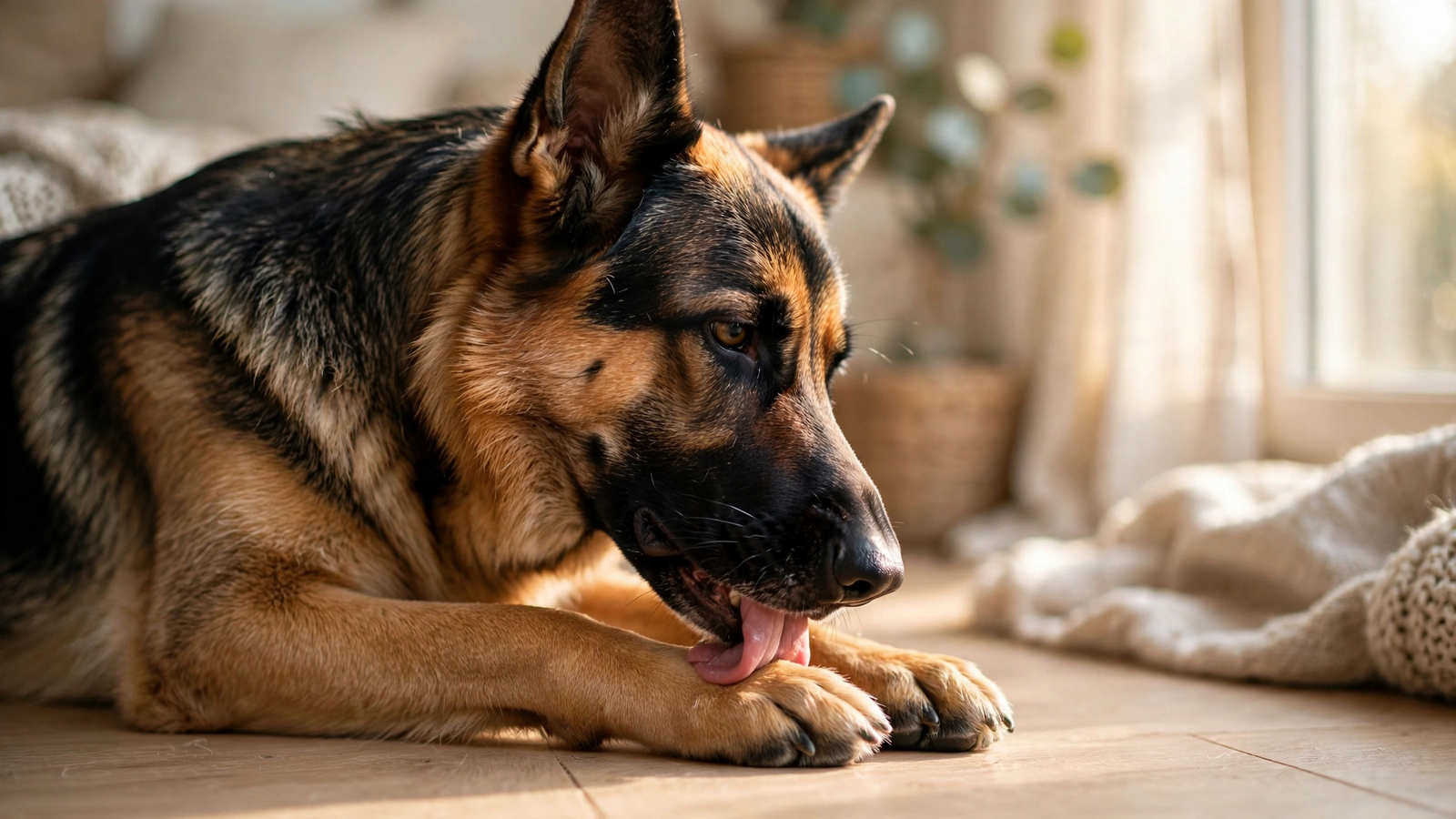
It is 11 PM. The house is quiet. And from the living room comes that sound: slurp, slurp, slurp. Your dog has been working the same front paw for twenty minutes straight, and when you finally check, the fur between his toes is damp and starting to look pink.
A dog licking his paws now and then is completely normal. Chewy’s veterinary team puts it plainly: occasional licking is just grooming or self-soothing. Constant, focused licking is something else. That is a dog trying to fix a problem he cannot tell you about.
The tell is the pattern. Normal grooming is brief and moves around. Problem licking is obsessive: same paw, same spot, night after night. If that sounds familiar, run through these six causes in order. The answer is almost always one of them.
1. Allergies: The Most Common Cause of Itchy Paws
If a dog is chewing all four paws fairly evenly, allergies are the prime suspect. Pollen, grass, dust mites, mold. The paws are the lowest point of the dog, so every walk drags them through whatever is blooming outside. Spring and fall are the worst months.
The giveaway: licking gets worse after walks and improves when you wipe the paws down. Keep wipes by the door and clean each paw, between the toes included, every time you come inside. If a week of that cuts the licking in half, you have your answer.
One honest caveat. Food allergies get blamed for paw licking far more often than they deserve. Vets generally agree true food allergies are uncommon next to environmental ones, and diagnosing them takes a strict elimination diet lasting 8 to 12 weeks, not a weekend of switching kibble brands. Do not overhaul the diet on a hunch.
Recommended
Hypoallergenic Paw Wipes for Dogs
Allergy-driven licking starts with pollen on the paws. Wiping after every walk removes the trigger before the itching starts, and it is the first thing most vets suggest trying.
2. A Hidden Injury on That One Paw
When the licking is locked onto a single paw and it started suddenly, stop reading and go look at the foot. Right now. The AKC lists injuries as the first thing to rule out, and the checklist is short: a cut pad, a thorn or splinter, a cracked or torn nail, a bee sting, a burn from hot pavement, or raw pads from winter de-icing salt.
Spread the toes, flip the paw over, check the pads and nails. Something as small as a grass seed worked between the toes can make a dog lick one spot for days. If you find a splinter you can remove cleanly, do it, then watch the spot for swelling. Anything deeper, anything bleeding that will not stop, or a nail torn at the base goes to the vet.
3. Yeast or Bacteria Thriving Between the Toes
Paws are warm, dark, and damp. Yeast and bacteria love that. When they overgrow, the skin between the toes gets red and itchy, and there is often a musty, sour smell. Dog people call it the corn-chip smell. A little of it is normal on any dog. A strong, sharp version of it, plus pink or brown staining on light-colored fur, means the microbes have taken over.
Cruel twist: licking feeds the problem. Saliva keeps the area moist, which grows more yeast, which itches more. The loop does not break on its own. If the paws smell strongly, look red between the toes, or the fur is staining rusty brown, your vet can confirm with a quick skin test and prescribe the right medicated wipe or shampoo. Do not wait this one out, because every day of licking digs the hole deeper.
4. Fleas, Ticks, or Mites
Fleas do not usually camp out on paws, but ticks absolutely do. They crawl up from grass and wedge themselves between the toes or along the edge of a pad, where the skin is thin. A dog licking one foot after a hike or a run through tall grass should make you part the fur and check every millimeter between the toes.
With flea allergy dermatitis, the itch is not where the flea is. A handful of bites can make a dog miserable all over, paws included. If the licking comes with scratching at the base of the tail or the belly, parasites move up the suspect list. Stay current on your vet-recommended flea and tick preventative. It is cheaper than the dermatology bill.
Recommended
Musher’s Secret Paw Protection Wax
Cracked, dry pads itch and sting, which starts the licking. A thin layer of paw wax before walks protects against salt, hot pavement, and rough ground.
5. Joint Pain, Especially in Older Dogs
This one gets missed constantly. A dog with arthritis in the wrist or toe joints will lick the area over the sore joint the way you would rub a sore knee. It looks like a skin problem. It is actually a pain problem.
The pattern to watch: an older dog, licking focused on the wrist or the top of the front foot, maybe a little stiff getting up in the morning. If your Shepherd is past seven and has started a new licking habit, read our guide to German Shepherd hip dysplasia: 8 signs, prevention and treatment and ask your vet about a joint check. Treating the pain often stops the licking without anyone touching the skin.
6. Boredom, Stress, or a Habit That Stuck
Everyone jumps to this cause, but vets rule out the medical ones first. Still, it is real. Some dogs, especially velcro breeds like German Shepherds that were bred to work all day next to a human, lick their paws the way an anxious person bites their nails. It usually shows up at night when the house winds down.
Left alone, the habit can harden into something vets call a lick granuloma, a raw, thickened sore on the leg from relentless licking. VCA Hospitals describes it as a self-feeding cycle: the licking releases soothing endorphins, so the dog keeps licking, which keeps the wound open, which keeps it licking. Breaking that cycle takes removing the underlying stress and physically blocking the licking while the skin heals.
The honest fix for a bored licker is not a spray. It is a tired dog. A German Shepherd that has had a real workout and a training session rarely has leftover energy for a 40-minute paw session. If your dog’s exercise is a quick loop around the block, start with our guide on how much exercise a German Shepherd actually needs daily before you buy anything.
What Actually Helps, in the Right Order
Do not start with products. Start with this sequence.
First, the 60-second paw inspection. Toes spread, pads flipped, nails checked, smell test. Do it today, because an injury or a tick is a today problem.
Second, start wiping paws after every walk for one week. This one habit rules allergies in or out for free.
Third, look at the dog’s day. Enough exercise? Enough to do? A bored German Shepherd invents hobbies, and paw licking is a popular one.
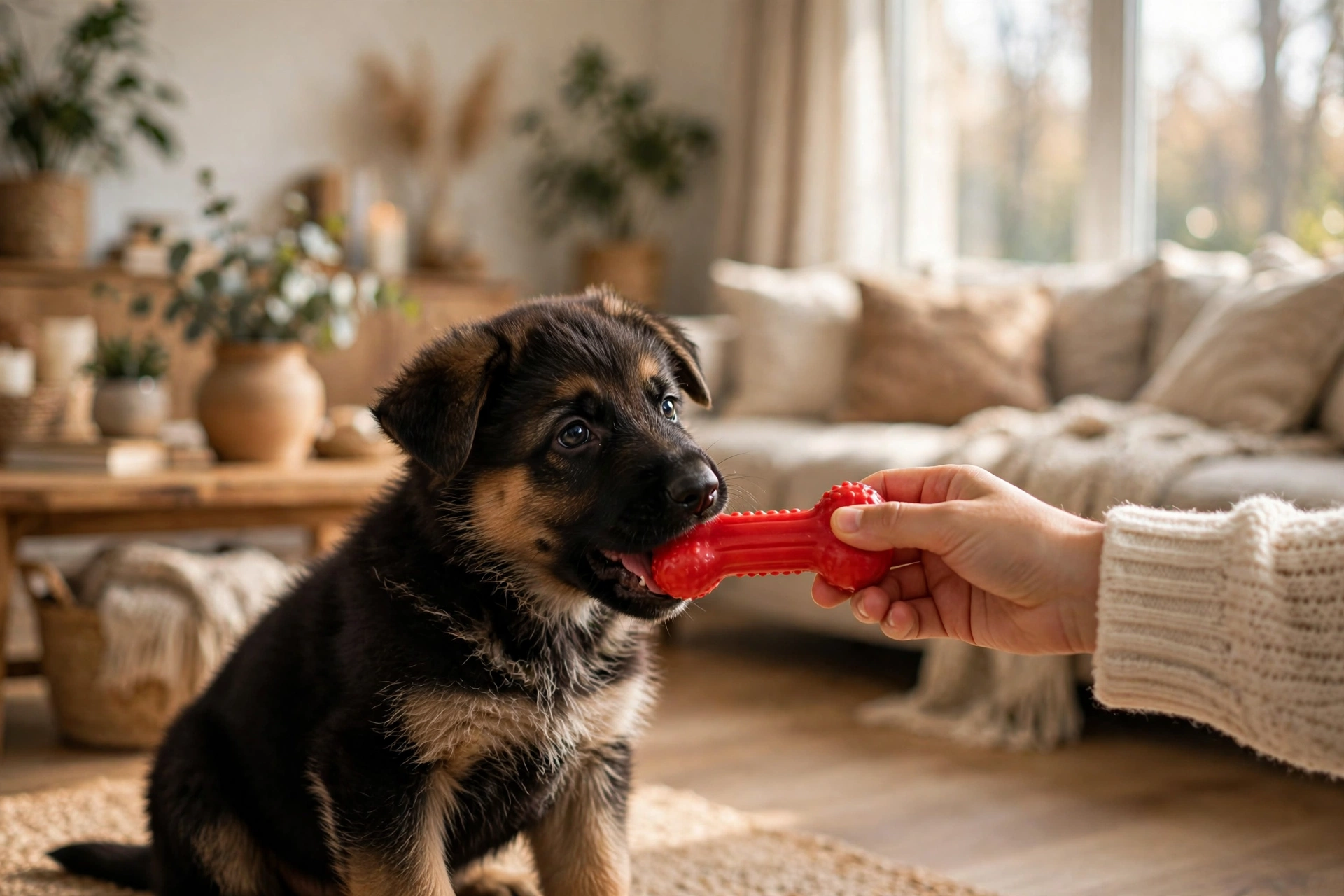
Fourth, interrupt, do not punish. When you catch the licking, redirect with a toy or a quick training rep. Yelling at a dog for licking adds stress to a stressed dog, which is exactly backwards.
Fifth, call the vet for bleeding or open sores, limping, hair loss on the feet, a strong sour smell, or licking that lasts more than two weeks. Bring notes on which paws and when it started. That detail genuinely helps the diagnosis.
Recommended
Zesty Paws Omega-3 Wild Alaskan Fish Oil for Dogs
Omega-3s support healthy skin from the inside, which matters for allergy-prone dogs whose itchy paws keep them licking. A useful add-on once the vet has ruled out injuries and infection.
Most paw licking is one of two things: allergies or something stuck in the foot. Both are fixable, and both get easier the earlier you catch them. The dogs that end up with raw, stained paws are the ones whose owners waited months hoping it would stop on its own. You are already past that. Go check the paws.
This article is for information only and isn’t a substitute for your vet’s advice.
Leave a Reply