
Disclosure: Pets Life Time participates in affiliate programs. Product links in this article may earn us a commission at no extra cost to you — it helps keep our content free. Learn more
German Shepherd puppies come with a warning nobody prints on the adoption papers: needle teeth. Those tiny fangs will find your hands, your pant legs, your ankles when you walk past the couch. If your puppy seems more shark than shepherd right now, take a breath. It isn’t aggression. It’s one of the most normal phases a puppy goes through, and almost every GSD owner survives it.
But normal doesn’t mean you just wait it out. Puppy biting that nobody addresses can harden into an adult habit, and at 80 pounds that same “cute” mouthing stops being funny. Here are seven methods that actually work, the mistakes that make biting worse, and how to tell normal mouthing from something that needs a trainer.
Why Your Puppy Bites Everything
Before fixing it, it helps to know what you’re dealing with. Most puppy biting comes down to four things.
Teething. Puppies cut their adult teeth roughly between 4 and 6 months, and sore gums make everything chewable. Your hands are simply the nearest object.
Play. This is how puppies played with their littermates, wrestling and mouthing each other. You’re now the littermate.
Attention. Even a “no!” followed by eye contact teaches the puppy that biting gets a reaction. To a bored puppy, any engagement beats none.
Overtiredness. Biting that shows up at 8 PM, sharp and frantic, is almost always an exhausted puppy. Many owners know this pattern: the “witching hour” where a pup who was gentle all day suddenly turns into a land shark. That puppy doesn’t need more training. It needs sleep.
7 Proven Methods to Stop Puppy Biting
1. Teach Bite Inhibition With a Calm “Ouch”
The first goal is not zero teeth on skin. It’s soft teeth. When your puppy bites too hard during play, let out a short, high-pitched “ouch,” the way a littermate would, then go still for a few seconds. Don’t yank your hand away fast. Quick movement just excites them more.
When the puppy pauses, even briefly, that’s your moment. Praise softly and keep playing. Repeat this every time, and most puppies start mouthing more gently within a week or two. The AKC recommends this bite-inhibition approach as the foundation, noting that dogs who learn to control bite force as puppies are far safer adults.
One caveat: some high-energy puppies get more wound up by the yelp instead of pausing. If that’s your dog, skip the sound entirely and just stop all movement and attention silently.
2. Redirect Every Bite Onto a Toy
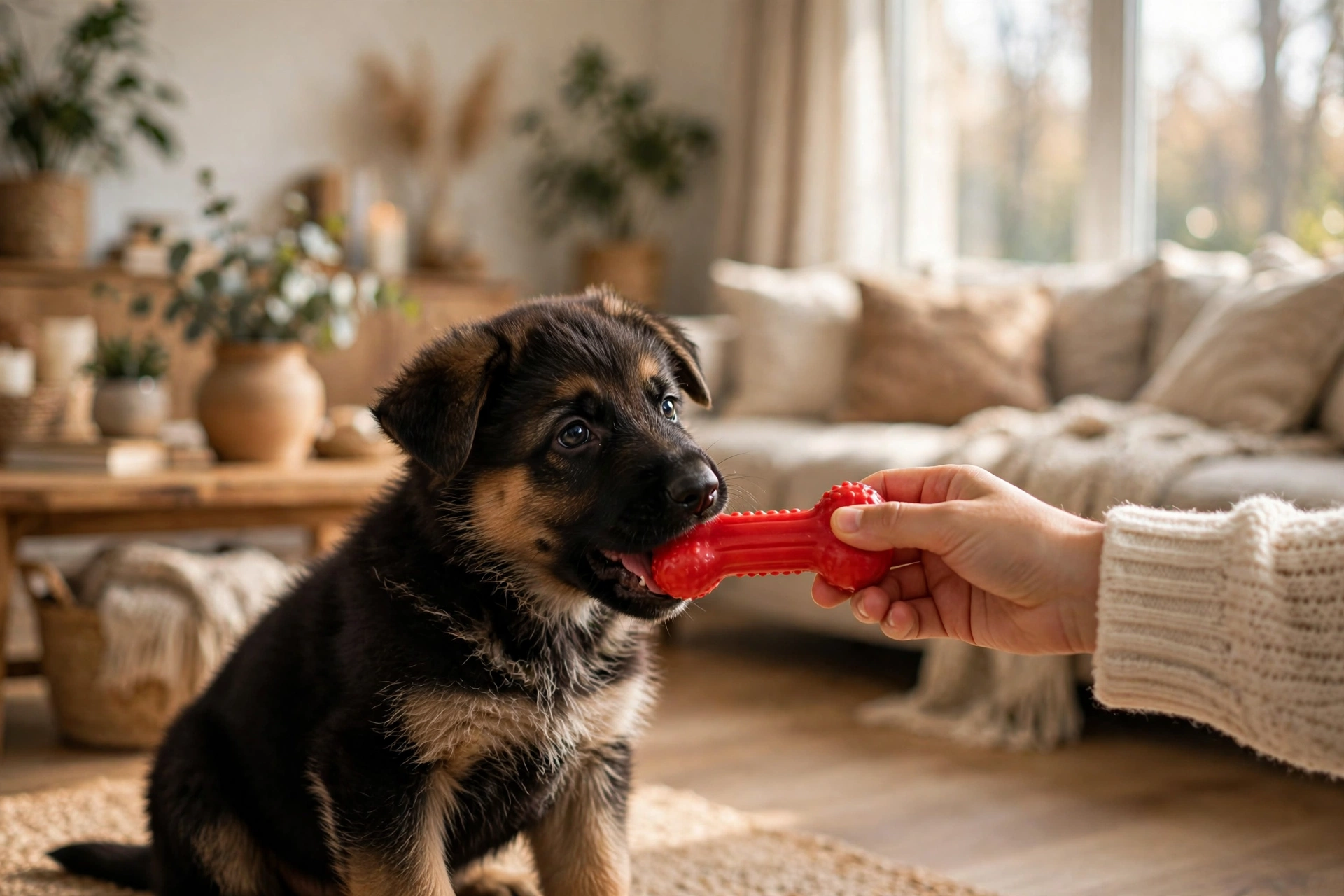
This is the single highest-leverage move in the whole list. Before you reach for your puppy, grab a tug toy or chew first. When the mouth comes out, the toy is already there to catch it. You’re not fighting the urge to bite. You’re giving it somewhere legal to go.
The instant teeth touch your skin, calmly slide a toy into your puppy’s mouth instead. When they take it, praise them. The lesson you’re teaching is simple: hands are boring, toys are fun. Keep toys in every room you spend time in, because fumbling through a closet while a puppy is latched to your sleeve misses the teaching moment. As Cornell’s veterinary behavior experts advise owners of persistent biters, teaching an incompatible behavior (a mouth full of toy, no teeth free for hands) beats lecturing the puppy every time.
Recommended
KONG Puppy Durable Natural Rubber Chew Toy
The redirect workhorse: soft enough for puppy teeth, and you can stuff it with kibble or peanut butter and freeze it for teething relief.
Check Price on Amazon3. End Play With a Reverse Time-Out
Redirection won’t catch every bite. For the repeat offender, stop being fun. Stand up, fold your arms, turn slightly away, and quietly step behind a baby gate or into the next room for 15 to 20 seconds. No scolding, no lecture, no eye contact. You’re simply removing yourself, the reward.
Come back calm, offer a toy right away, and try again. Most puppies connect the dots within a few sessions: teeth on skin makes the fun leave. Two rules: keep time-outs short, and never use the crate as the time-out spot. The crate should stay the puppy’s safe den. (If you haven’t crate trained yet, our crate training schedule walks through day and night plans.)
4. Reward the Gentle Mouth
Owners are quick to correct biting and slow to notice its absence. Flip that. Catch your puppy being gentle: licking instead of nipping, taking a treat softly, lying quietly at your feet during TV time. Mark it with a warm “yes” and a small treat within two to three seconds.
Puppies repeat whatever earns good things. If gentleness pays and biting empties the room, the choice gets easier every day. The hardest part for busy owners is simply noticing the calm moments.
Recommended
PetSafe Treat Pouch Sport
Reward timing matters (within 2-3 seconds), and a pouch on your hip keeps treats and a clicker on you so you can catch good behavior the instant it happens.
Check Price on Amazon5. Enforce Nap Time
Here’s the one most biting guides bury and every tired owner needs to hear first: puppies need roughly 18 to 20 hours of sleep a day. When biting spikes into frantic, sharp, can’t-stop territory, it’s usually exhaustion, not defiance.
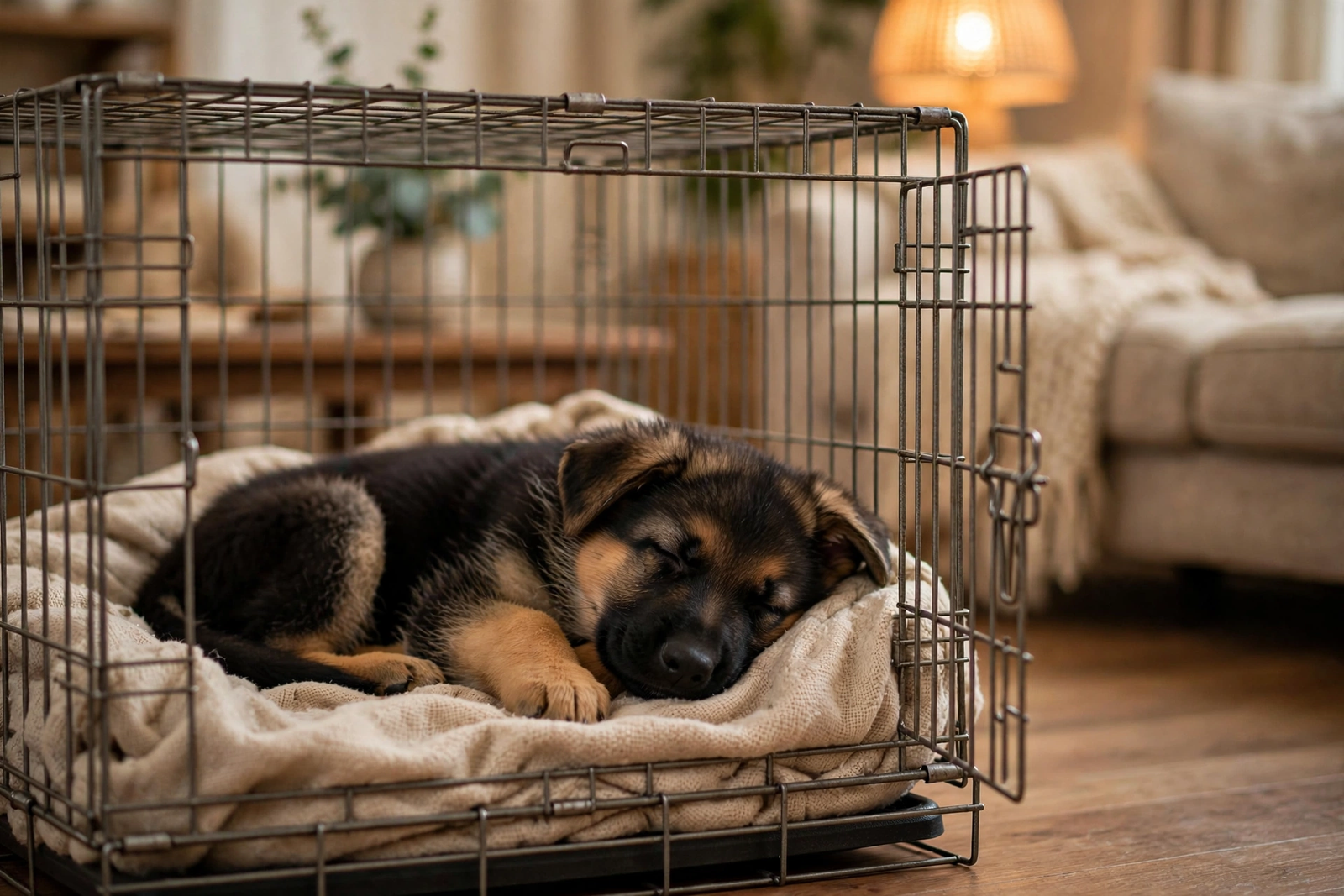
Build enforced crate naps into the day: roughly every 1 to 2 hours of awake time for young puppies. When the evening biting frenzy starts, guide the puppy to a quiet crate or pen before attempting any training. A rested puppy has a softer mouth. Our puppy schedule planner can help you map out the wake/nap rhythm by age.
6. Soothe Teething Gums With Frozen Chews
During teething, some biting is pain relief. Help it along: freeze a stuffed Kong, or twist a damp washcloth, freeze it, and let the puppy gnaw it. The cold numbs sore gums the way a cold teething ring works for a baby. The AKC’s teething guide specifically recommends frozen chew options, reminding owners that some nipping is part of the process, so chews should be plentiful and easy to reach.
One classic mistake: handing the puppy old shoes or worn clothing as “chews.” The puppy can’t tell the difference between the shoe you gave it and the pair by the door. Real chew toys only.
Recommended
Nylabone Puppy Chew Teething Rings
Sized and textured for puppy jaws during the 4-6 month teething phase. Gentle on sore gums and tough enough to survive daily gnawing.
Check Price on Amazon7. Teach “Leave It” as a Safety Valve
None of the above works without consistency, so the final method is a cue you can use when everything else is mid-progress. Teach “leave it” the slow way: hold a treat in a closed fist, wait for the puppy to back off from sniffing and mouthing it, then mark and reward from your other hand. Add the words only once the puppy reliably disengages.
This cue takes a week or two of short sessions, but it becomes your emergency brake in the moments redirection is too slow, like a puppy lunging at a visitor’s shoelace. It’s one of the first cues in our week-by-week German Shepherd puppy training schedule.
5 Responses That Make Puppy Biting Worse
Almost every owner does at least one of these in the first week. Drop them and the methods above work twice as fast.
1. Hitting, nose-tapping, or pinning. Physical corrections scare puppies and often produce harder biting, not less. They also teach the puppy that hands are scary.
2. Screaming or huge dramatic reactions. Some puppies read a loud shriek as exciting feedback and bite more. Calm and boring beats loud.
3. Wrestling with bare hands. Every hand-wrestling session teaches the puppy that hands are toys. Use a toy as the interface for every game.
4. Mixed household rules. If you redirect but someone else lets the puppy chomp, the puppy learns that persistence pays. Everyone needs the same playbook.
5. Expecting it gone by Monday. Bite inhibition takes weeks of repetition. It will feel like it’s not working, right up until it starts working.
When Biting Isn’t Just “Puppy Mouthing”
Normal puppy mouthing is loose, wiggly, and happens during play or excitement. Call your vet or a certified professional trainer if you see any of these instead:
- A stiff body, hard stare, or freezing before the bite
- Growling or snapping around food, toys, or resting spots
- Bites that break skin and bruise repeatedly with escalating intensity
- Biting that continues unchanged past 6 to 7 months despite consistent training
These patterns can signal fear, resource guarding, or pain, not ordinary puppy behavior, and they need professional eyes, not a DIY method. This article is for information only and isn’t a substitute for your vet’s advice.
Frequently Asked Questions
At what age do puppies stop biting?
With consistent training, most bite noticeably less once adult teeth are in, around 7 months. Without training, some keep the habit into adolescence. German Shepherds are a mouthy breed, so steady redirection through the first year pays off.
Leave a Reply