
Disclosure: Pets Life Time participates in affiliate programs. Product links in this article may earn us a commission at no extra cost to you — it helps keep our content free. Learn more
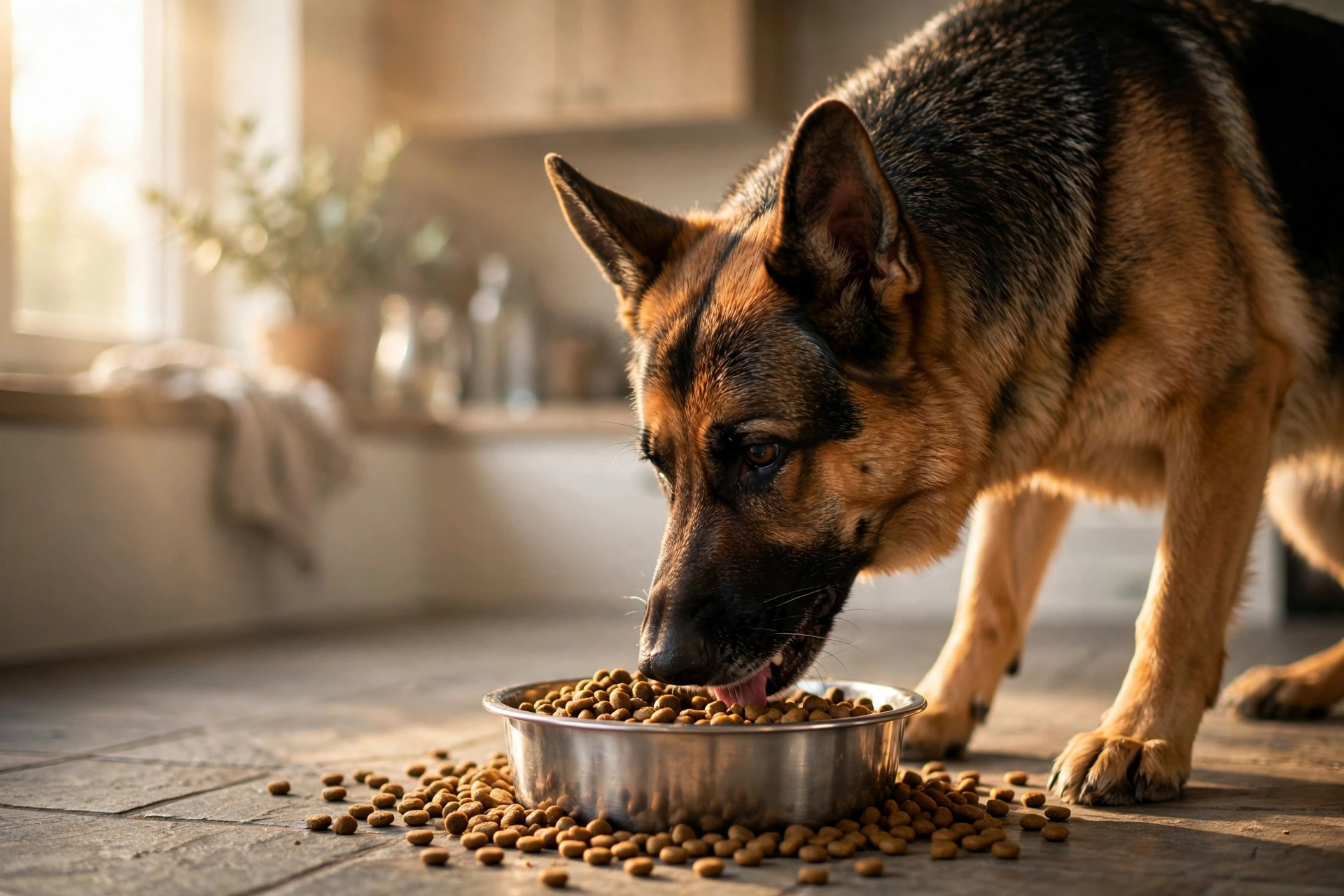
Here’s a question that sounds simple and isn’t: how much should I feed my dog? Ask your neighbor and he’ll eyeball it. Check the internet and you’ll find feeding charts that disagree with each other by half a cup. Meanwhile your dog stares at his bowl like he’s been starved for a month, and you’re left wondering whether you’re feeding too much, too little, or getting it exactly right by accident.
The honest answer is that the feeding chart on the bag is a starting line, not a verdict. Finding the right amount takes some trial and error — the AKC says exactly that — and the real number depends on your dog’s weight, age, activity level, and the food itself. Let’s work through it step by step.
Start With the Feeding Chart on the Bag
Every commercial dog food sold in the US is required to print a feeding chart. The layout changes from brand to brand, but the idea is the same: find your dog’s weight, read across, and you get a daily amount in cups. If you feed more than once a day, you divide that daily amount between the meals — Purina’s feeding guide stresses this, and it’s the step people mess up most.
Below is a typical dry-food chart, close to what you’ll see on most bags. One warning before you use it: foods differ a lot in calories per cup, so your bag’s own chart always wins over this one.
| Adult Dog Weight | Dry Food Per Day |
|---|---|
| 3–12 lbs | 1/3 to 1 cup |
| 13–20 lbs | 1 to 1-1/3 cups |
| 21–35 lbs | 1-1/3 to 2 cups |
| 36–50 lbs | 2 to 2-2/3 cups |
| 51–75 lbs | 2-2/3 to 3-1/3 cups |
| 76–100 lbs | 3-1/3 to 4-1/4 cups |
| Over 100 lbs | 4-1/4 cups plus 1/4 cup per 10 lbs |
The single most common chart mistake is feeding the full daily amount at every meal. The chart shows the whole day. Split it.
Feed the Weight You Want, Not the Weight You See
Here’s the part most owners skip. If your dog weighs 45 pounds but should weigh 40, feed for 40. These charts assume an ideal body weight, not whatever the scale says this morning. Feeding an overweight dog for his current weight just maintains the problem.
Not sure where your dog stands? Run your hand along his ribs. You should feel them easily under a thin layer of fat, and from above he should show a visible waist. We walk through the full check in our guide on how to tell if your dog is overweight.
Recommended
Etekcity Digital Kitchen & Food Scale
Cups lie, grams don’t. Weighing portions in grams is the most accurate way to actually follow any feeding chart.
Check Price on AmazonActivity Level Moves the Needle More Than Anything
Two 50-pound dogs can need very different amounts. A couch-potato Lab gets fat on portions that keep a farm Collie lean. As a rough guide, most adult dogs need about 25 to 30 calories per pound of body weight per day, with active dogs at the top end and quiet house dogs below it.
Practically speaking: start at the chart, then adjust for lifestyle.
- Sedentary, senior, or neutered house dog: start at the low end of the chart, or trim 10 to 20 percent.
- Average adult with a daily walk and some play: the middle of the chart usually works.
- High-energy dog who runs, trains, or works every day: start at the high end and watch the ribs.
Give any change two to three weeks before judging it. Dogs’ bodies respond slowly, and chasing daily fluctuations will drive you crazy.
Puppies, Adults, and Seniors Eat on Different Schedules
The chart above covers adult maintenance. Everything else plays by different rules.
Puppies need more calories per pound than adults because they’re building a body, and they have small stomachs to fit it in. VCA Hospitals recommends three or four small meals a day for young puppies, since they can’t take in enough at one sitting. Puppy food is also more calorie-dense than adult food, so don’t just scale the adult chart up. Drop to two meals around six months. (If you’re raising a German Shepherd puppy specifically, our German Shepherd weight chart shows what healthy growth looks like month by month.)
Adults do best on two set meals a day, morning and evening — VCA’s feeding guidelines recommend once or twice daily for most pet dogs. Free-feeding, leaving the bowl down all day, is the fastest route to an overweight dog, because you never know how much he actually ate.
Seniors usually need fewer calories as their metabolism slows. If your older dog is gaining weight on the portions he ate at five, the portions are the problem, not his age. Try trimming 10 to 15 percent or switching to a senior formula. Our dog age calculator can tell you exactly which life stage your dog is in.
Recommended
PetSafe Healthy Pet Simply Feed Automatic Pet Feeder
Programs up to 12 meals a day in exact portions, so your dog eats the right amount on the right schedule even when you’re at work.
Check Price on AmazonThe Measuring Mistake Almost Everyone Makes
Most owners measure with a coffee mug or a random scoop from the pantry. Kibble varies in size and density, so a “cup” can swing 20 percent either way between foods — sometimes even between scoops of the same food. Over a year, that hidden error compounds into real weight gain or loss.
There are two fixes. Weigh the food on a kitchen scale in grams — grams don’t lie. Or at least use a real, level measuring cup. And if you want the most precise answer for your exact dog, run the numbers through our dog calorie calculator. It factors in weight, age, and activity instead of relying on the chart alone.
Recommended
Outward Hound Fun Feeder Slow Feed Dog Bowl (Large)
If your dog inhales a perfectly measured portion in thirty seconds flat, this maze bowl slows him down and makes the meal last.
Check Price on AmazonTreats Are Food Too
This is where the math quietly breaks. Cornell veterinary nutritionist Dr. Joseph Wakshlag calls too many treats the most common feeding mistake he sees, noting that the average dog gets about 20 percent of his calories from scraps and extras. Most veterinary nutritionists recommend keeping treats at or under 10 percent of daily calories.
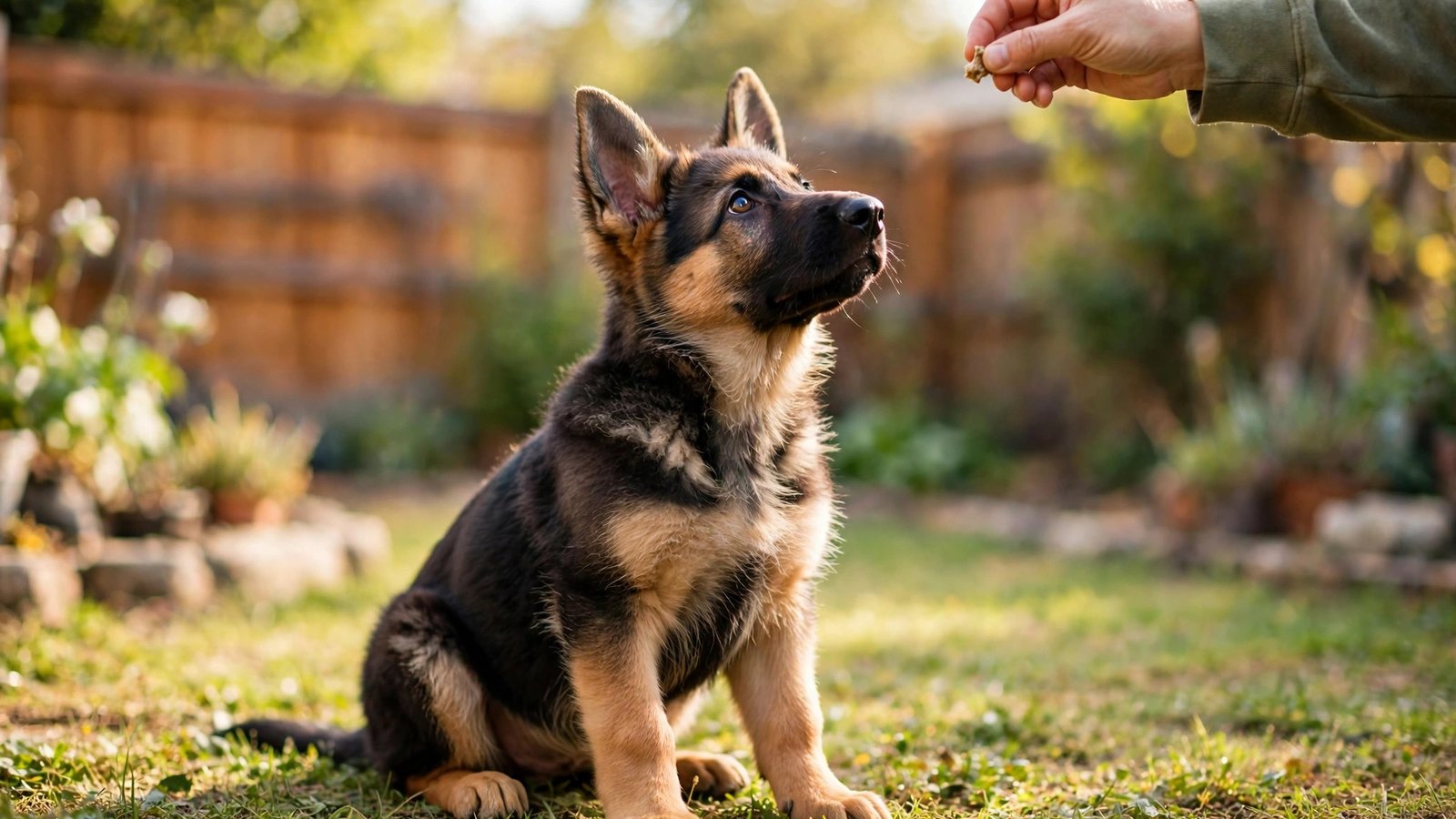
A heavy training session with big biscuits can eat a third of a small dog’s day. If you’re doing serious training, subtract the treat calories from dinner — or train with pieces of your dog’s own kibble. He won’t know the difference, but his waistline will.
The Two-Week Fine-Tune
No chart gets it right on the first try. Here’s how to land on the right amount:
- Start at the chart for your dog’s ideal weight.
- Split the daily total into two meals.
- Weigh your dog monthly, and run the rib check weekly.
- Hold steady for two to three weeks, then adjust up or down by about 10 percent.
When in doubt, adjust down first. It’s easier to add food to a slightly lean dog than to take weight off an obese one. And once your dog looks right, write the final amount down. Future you will be grateful.
Frequently Asked Questions
How much should I feed my dog per day by weight?
For an average dry food, start with 1/3 to 1 cup daily for a 3 to 12 pound dog, scaling up to about 3-1/3 to 4-1/4 cups for 76 to 100 pounds. Always check your own food’s chart, since calorie content varies, and adjust for activity and body condition.
Should I feed my dog once or twice a day?
Twice. Most adult dogs do best on morning and evening meals. It keeps energy and digestion steadier, and set mealtimes make it much easier to notice appetite changes that can signal illness.
How do I know if I’m feeding too much?
Your hands and the scale. If the ribs get hard to feel under a layer of fat, the waist disappears when viewed from above, or the monthly weigh-in keeps climbing, trim 10 percent and re-check in three weeks. Our guide to spotting an overweight dog walks through the full body-condition check.
Can I just follow the chart on the bag forever?
The chart is a starting estimate for an average dog. Life stage, neutering, activity, and the food’s own calorie density all shift the real number. Use the chart to start; use the scale and your hands to finish.
This article is for information only and isn’t a substitute for your vet’s advice.


Leave a Reply