
Disclosure: Pets Life Time participates in affiliate programs. Product links in this article may earn us a commission at no extra cost to you, it helps keep our content free. Learn more
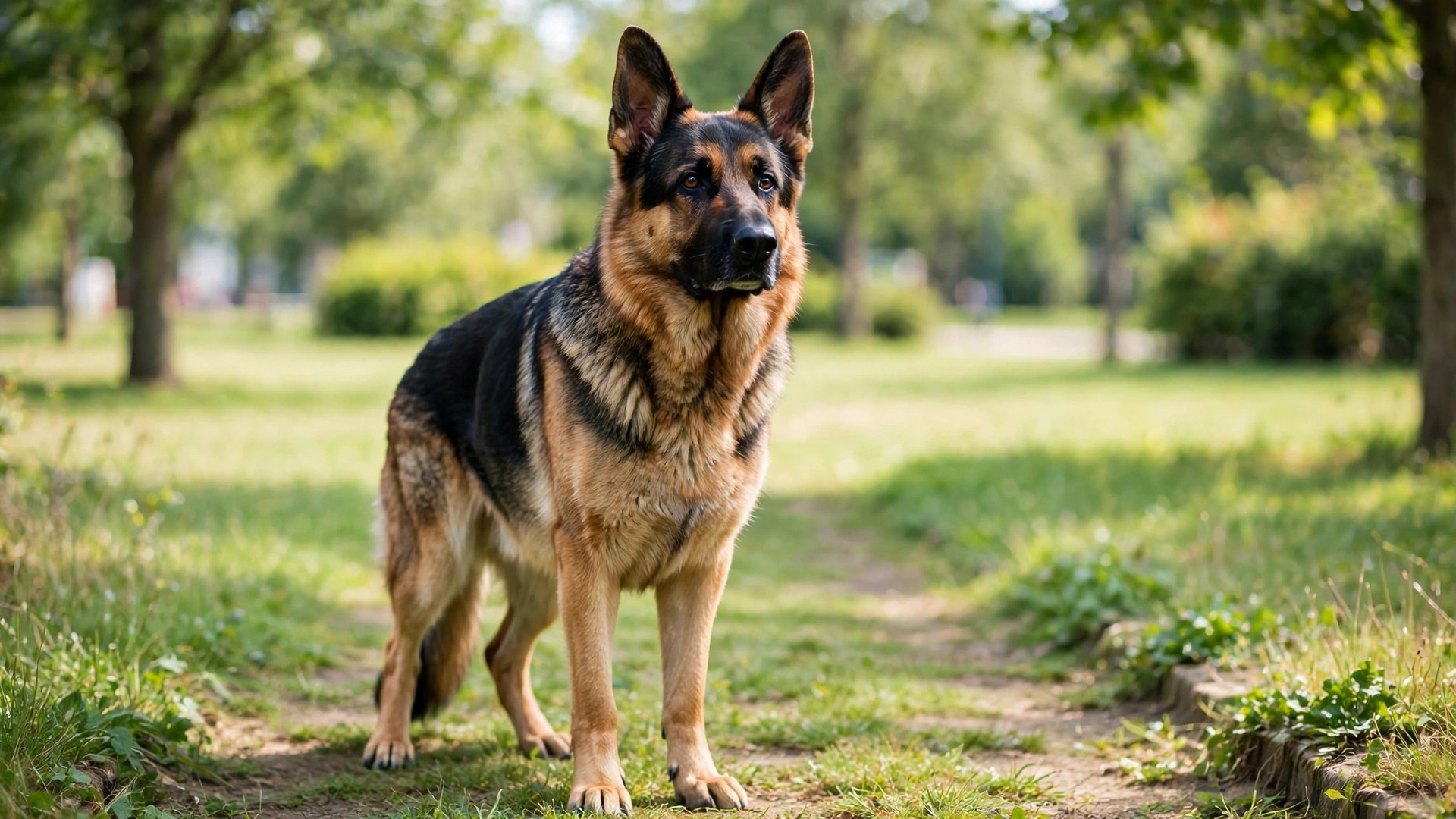
Ask ten people whether German Shepherds are aggressive and you will get ten different answers. A police officer and a neighbour who got lunged at on the pavement will describe two different dogs. People ask it before bringing a 35-kilo dog into a home with kids, or after their own dog has scared someone. So here is the short version. No, German Shepherds are not naturally aggressive. They are protective, alert and wary of strangers by breeding, which is not the same thing as aggression, even though it can look identical from the other end of the leash. A well-bred, well-socialised Shepherd is confident and steady, not looking for a fight. But size, strength and guarding instinct mean that when things go wrong with a Shepherd, they go wrong bigger than with a smaller dog.
What the numbers actually say
The reputation and the data point in different directions.
The American Temperament Test Society has run standardised temperament tests since 1977. Dogs that show unprovoked aggression, or panic and cannot recover, fail. German Shepherds pass at 85.3 percent, a fraction above the Golden Retriever at 85.2 percent, and above the all-breed average in the low 80s.
Research using the University of Pennsylvania’s C-BARQ questionnaire found the same split. German Shepherds score above average on stranger-directed aggression and average to low on owner-directed aggression. Put plainly, the breed is warier than most of people it does not know, and no more likely than most to turn on its own family.
The American Veterinary Medical Association reviewed the bite research and concluded that breed is a poor predictor of whether a dog bites. How the dog was raised and socialised, and the circumstances of the moment, all predict bites better than breed alone. Shepherds do appear in bite statistics, partly because there are a lot of them and partly because a Shepherd bite is more likely to need medical attention, and therefore be counted, than a nip from a small dog.
Protective vs aggressive: how to tell the difference
This is the distinction most owners get wrong. A protective dog and an aggressive dog can both bark, both stand stiff, both put themselves between you and a stranger. The difference is what happens next.
| Behaviour | Protective (normal) | Aggressive (a problem) |
|---|---|---|
| Body posture | Alert and upright, ears up, tail still | Stiff and frozen, hard stare, hackles raised |
| Barking | A few sharp barks, then watches you for a cue | Continuous, escalating, ignores your voice |
| What ends it | You relax, you greet the person, the dog settles | Nothing you do ends it, or only the person leaving |
| Afterwards | Shakes it off, back to normal within a minute | Stays wired, paces, cannot settle |
A protective dog takes its cue from you. It alerts, then checks in. An aggressive dog has stopped listening. If your Shepherd alerts at the door and then looks back at you, the instinct is working. If it charges the door and ignores your recall, that is a dog making its own decisions.
The American Kennel Club describes the breed as confident, courageous and smart, and the breed standard calls for a dog that is steady of nerve and never nervous or over-aggressive. Nervousness is the giveaway. A confident Shepherd does not need to lunge, and the dogs that cause problems are very often the nervous ones.
7 causes of aggression in German Shepherds, and what fixes each one
Aggression is not one behaviour. It is a label we stick on a dozen different problems, and the fix depends on which one you have. VCA Animal Hospitals lists the main types as fear-based, territorial, possessive, pain-related, redirected and frustration-related, and notes that cases involving bites can be serious enough to need a veterinary behaviour professional.
1. Fear
The most common cause, by a wide margin. A frightened Shepherd does not run away the way a smaller dog might. It stands its ground and attacks. Watch for the early signs: lip licking, yawning, a tucked tail, ears pinned back. Miss those and you get the growl; miss the growl and you get the snap. The fix is slow counter-conditioning. Find the distance where your dog notices the scary thing but can still take a treat, and work there. Shrink the distance by a few metres a week, never in a single session. Forcing a fearful dog to “face” what scares it is how you create a biter.
2. Poor socialisation
German Shepherds have a critical socialisation window that runs roughly from 5 to 14 weeks of age. Puppies that miss it grow into adults that treat every new thing as a threat. Cornell University College of Veterinary Medicine notes that puppies separated from the litter too early are more likely to show fear, aggression and anxiety later in life. If you are buying a puppy, meet the parents and ask how the litter was socialised. An under-socialised adult needs the same slow exposure work, just with more patience.
3. Pain or illness
A dog that has snapped out of nowhere, with no pattern you can see, needs a vet before it needs a trainer. Hip dysplasia, ear infections, dental pain and arthritis all lower a dog’s tolerance. Cornell’s veterinary guidance lists uncharacteristic snapping or growling as a recognised sign of pain in dogs. If the aggression started suddenly, book the vet visit first and the behaviour consult second. Training cannot fix a sore hip. Our hip dysplasia guide covers the pain angle in more detail.
4. Resource guarding
Some Shepherds guard food, bones, toys, beds, or even a favourite person. The dog goes stiff over the bowl, eats faster when you approach, or growls if a child walks past. The fix is not taking the food away to “show them who is boss”, which only confirms the dog’s fear that you are a thief. The fix is the opposite. Walk past and drop something better into the bowl, for weeks. The dog learns that your approach means more food, not less.
5. Territorial behaviour
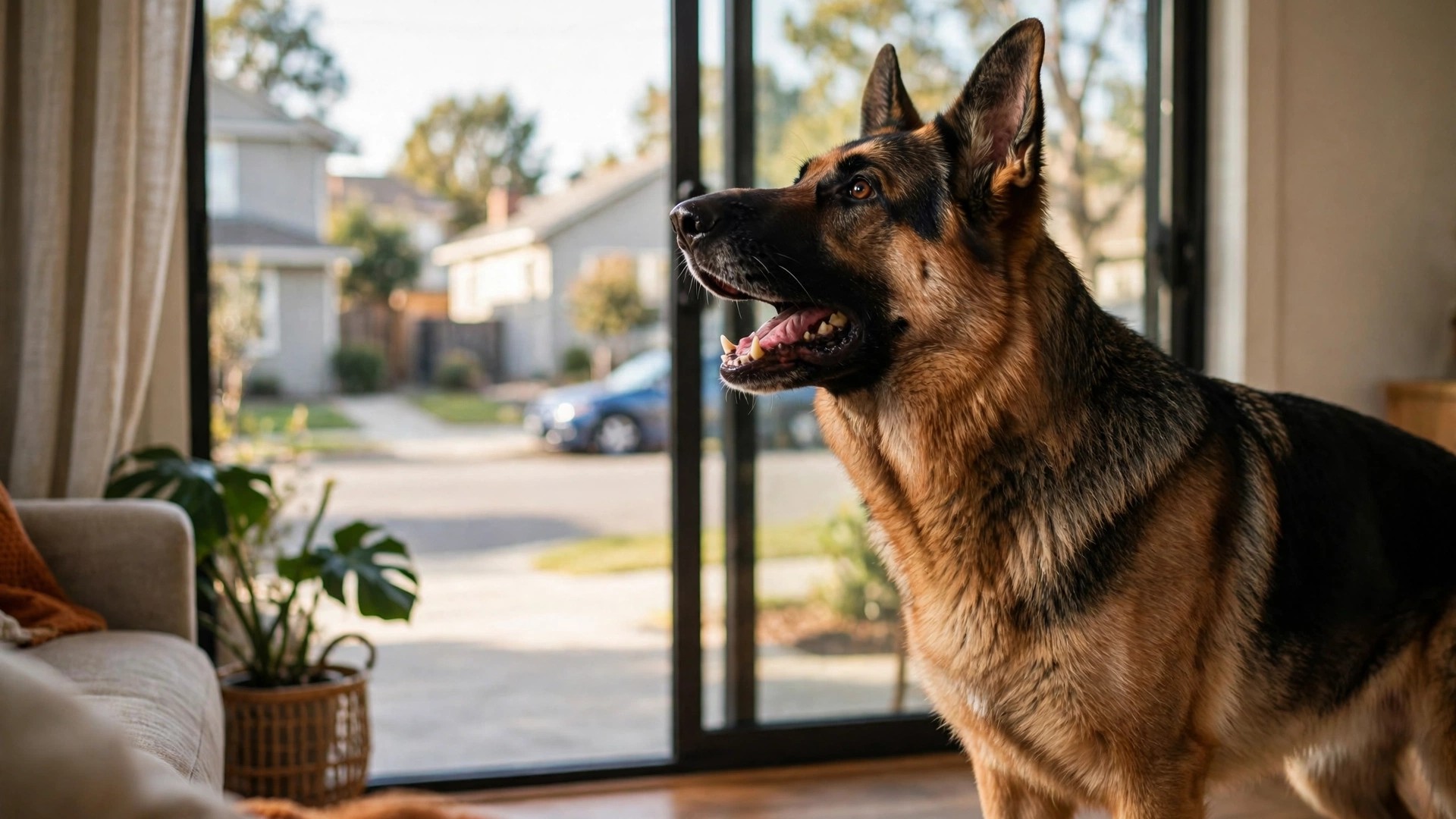
A Shepherd that is calm on a walk and a different animal at the front gate is showing territorial aggression. The fix is management first, training second. Block the view from the window with frosted film. Stop letting the dog rehearse the behaviour at the fence ten times a day, because every repetition makes it stronger. Then teach a solid “go to your place” cue for the doorbell, so the dog has a job that is not barking at the gate. Our guide to why German Shepherds bark at night covers the same ground from the noise angle.
6. Frustration and leash reactivity
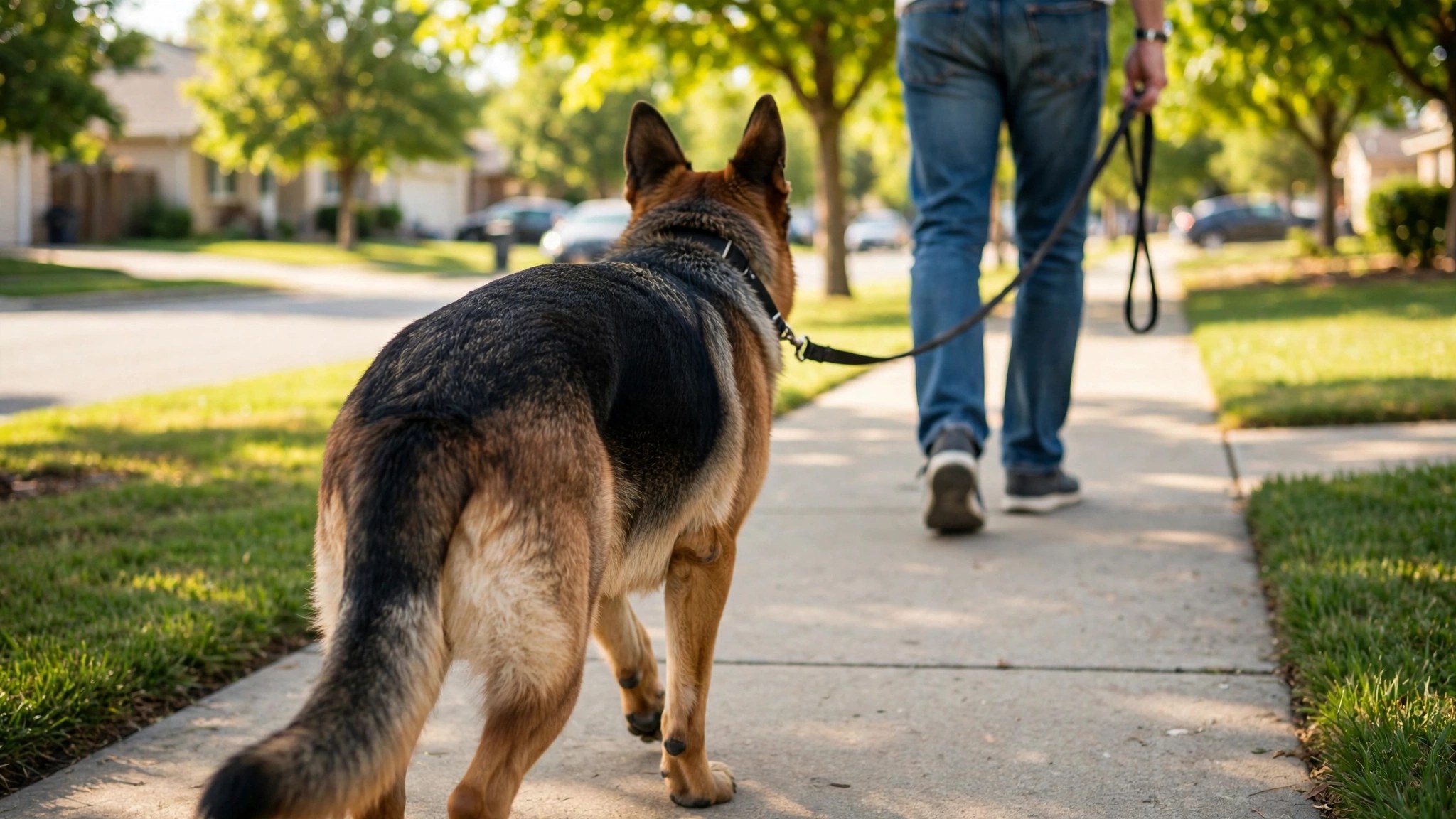
Leash reactivity is the one owners describe most often. The cause is usually frustration. The dog wants to greet or investigate, the lead stops it, and the frustration comes out as lunging and barking. The fix is distance and a different job. Cross the road before your dog reacts, reward the calm look, and keep moving. A front-clip harness gives you steering without a choke chain. If walks have become a daily battle, our 10-day leash training plan walks through the same steps in order, and the daily exercise guide matters too, because an under-exercised Shepherd is a frustrated one.
Recommended
PetSafe Easy Walk Dog Harness
A front-clip harness that steers a strong Shepherd from the chest instead of the neck, which makes leash-reactivity training far less of a wrestling match.
Check Price on Amazon7. Genetics and breeding lines
This is the uncomfortable one. Temperament is partly inherited, and some lines are more reactive than others. Working-line Shepherds, bred for police and military work, carry higher drive and intensity than show lines. Drive is not aggression, but a high-drive dog with no job and no training has more energy to put into bad habits. A puppy from nervous or aggressive parents is more likely to be nervous or aggressive itself. This is why the breeder matters more than the training book. Ask to see the parents and ask about temperament testing.
| Working line | Show line | |
|---|---|---|
| Drive and energy | Very high, needs a daily job | High, but settles more easily in the house |
| Stranger wariness | Strong, sharper reactions | Present, usually softer |
| Best suited to | Sport, protection work, very active owners | Family life with structured training |
| Risk if under-trained | Reactivity and guarding escalate fast | Anxiety and over-protectiveness creep in slowly |
Neither line is “the aggressive one”. The line tells you how much work the dog needs, not how it will turn out.
Are black German Shepherds more aggressive?
No. There is no evidence that coat colour affects aggression in German Shepherds, and every source that has looked at the question says the same. A black German Shepherd is the same breed, with the same temperament range, as a black-and-tan one. The solid black coat comes from a recessive gene, and the AKC recognises it as an accepted colour in the breed standard. The myth survives because a large, all-black dog simply looks more intimidating. Temperament comes from bloodline, breeding, socialisation and training, never from the colour of the fur.
The 14-day calm-down plan
If your Shepherd is reactive but has never bitten anyone, this two-week plan is a reset, not a cure for serious aggression.
Days 1 to 3: lower the pressure. Cut out the situations that trigger reactions. Walk at quiet times and keep visitors to a minimum. Add a long sniffy walk or a food puzzle every day. No training sessions yet.
Days 4 to 7: find the threshold. Take your dog somewhere it can see triggers from far away. Watch for the exact distance where your dog notices the trigger but can still eat a treat and look back at you. That distance is your working line, often 30 metres or more. Work inside it, never across it.
Days 8 to 11: teach the look. At your working distance, every time your dog looks at the trigger and then back at you, mark it and pay it. A word like “yes” followed by a treat is enough. Keep sessions to ten minutes.
Days 12 to 14: shrink the distance. Move five metres closer, no more. If the dog can still eat and look back at you, stay there. If it cannot, go back to yesterday’s distance. After day 14, keep going. If your dog is also generally anxious, our guide to why German Shepherds are so anxious covers the wider picture, and the separation anxiety guide covers the version that shows up when you leave.
Recommended
Baskerville Ultra Muzzle
A basket muzzle lets a reactive dog pant, drink and take treats while you train safely.
Check Price on AmazonRed flags: when to call a professional
Some cases are beyond a two-week plan. Get help from your vet first, then a certified veterinary behaviourist, if:
- Your dog has bitten a person or another dog, or tried to, more than once.
- The aggression is getting worse, more frequent, or harder to predict.
- Your dog growls or snaps at family members, especially children, inside the house.
- The aggression started suddenly in an adult dog with no obvious trigger.
- You are afraid of your own dog, or visitors are afraid to enter your home.
A muzzle is not a punishment and it is not a sign of failure. Cornell’s veterinary guidance is clear that muzzles are not painful, do not stop a dog breathing, and are a sensible safety tool any time you are concerned about a bite.
What not to do
Three mistakes make Shepherd aggression worse, and all three are still common advice online.
Do not punish the growl. The growl is a warning, and it is the last warning before a bite. A dog that is punished for growling does not become less aggressive. It becomes a dog that bites without warning.
Do not use alpha rolls, scruff grabs, or “dominance downs”. Pinning a 35-kilo Shepherd to the floor does not teach it respect. The ASPCA’s guidance on aggression is blunt on this point: aggression is most often rooted in fear and anxiety, not in a bid for dominance, and confrontational methods tend to make it worse.
Do not flood the dog. Flooding means forcing a fearful dog into the situation it fears until it stops reacting. It sometimes looks like it worked, because the dog goes quiet. What you are seeing is shutdown, not calm. Slow exposure with choice beats forced exposure every time.
Recommended
KONG Classic Durable Natural Rubber Toy (Large)
Stuff it with kibble and peanut butter and you have twenty minutes of calm, focused chewing, which takes the edge off a bored, frustrated Shepherd.
Check Price on AmazonFrequently asked questions
Are German Shepherds good with kids?
Yes, with the same conditions as everything else in this article. A well-socialised Shepherd raised around children is typically patient and protective with them. Supervise, teach the kids the rules, and give the dog an escape route. Our guide to German Shepherds with kids covers the safety rules in detail.
Are female German Shepherds less aggressive than males?
On average, females tend to be a little less territorial and males a little more prone to same-sex dog friction, but the difference is small and the overlap is huge. Individual temperament, breeding and training matter far more than sex.
Are working line German Shepherds more aggressive?
They are more intense, not more aggressive. Working lines have higher drive and a sharper reaction to stimuli, so a badly managed one can become reactive faster. A well-trained one is often steadier, because it has an outlet for all that energy.
Do German Shepherds bite more than other breeds?
They appear near the top of bite statistics, but the numbers are misleading. Shepherds are one of the most popular large breeds, so there are simply a lot of them, and their bites are more likely to need hospital treatment and be recorded. The AVMA’s review found breed alone to be a weak predictor of biting.
Can an aggressive German Shepherd be rehabilitated?
Most of them, yes, if the cause is fear, frustration or poor socialisation and the owner is willing to put in months of consistent work. Some cases improve but never become fully trustworthy around triggers, and a small number cannot be made safe. That is a decision for a veterinary behaviourist.
At what age does aggression show up in German Shepherds?
Two windows matter. The first is adolescence, roughly 6 to 18 months, when hormones, confidence and size all arrive at once. The second is social maturity, around 2 to 3 years, when territorial behaviour fully switches on.
German Shepherds are not aggressive dogs. They are powerful, protective, intelligent dogs that punish sloppy ownership more visibly than most breeds do. That is a fair trade for what they give back, a dog that learns fast, watches over your family, and follows you from room to room for a decade. Get the breeding right, socialise early, and exercise the body and the brain.
This article is for information only and isn’t a substitute for your vet’s advice.
Leave a Reply