
Disclosure: Pets Life Time participates in affiliate programs. Product links in this article may earn us a commission at no extra cost to you, it helps keep our content free. Learn more
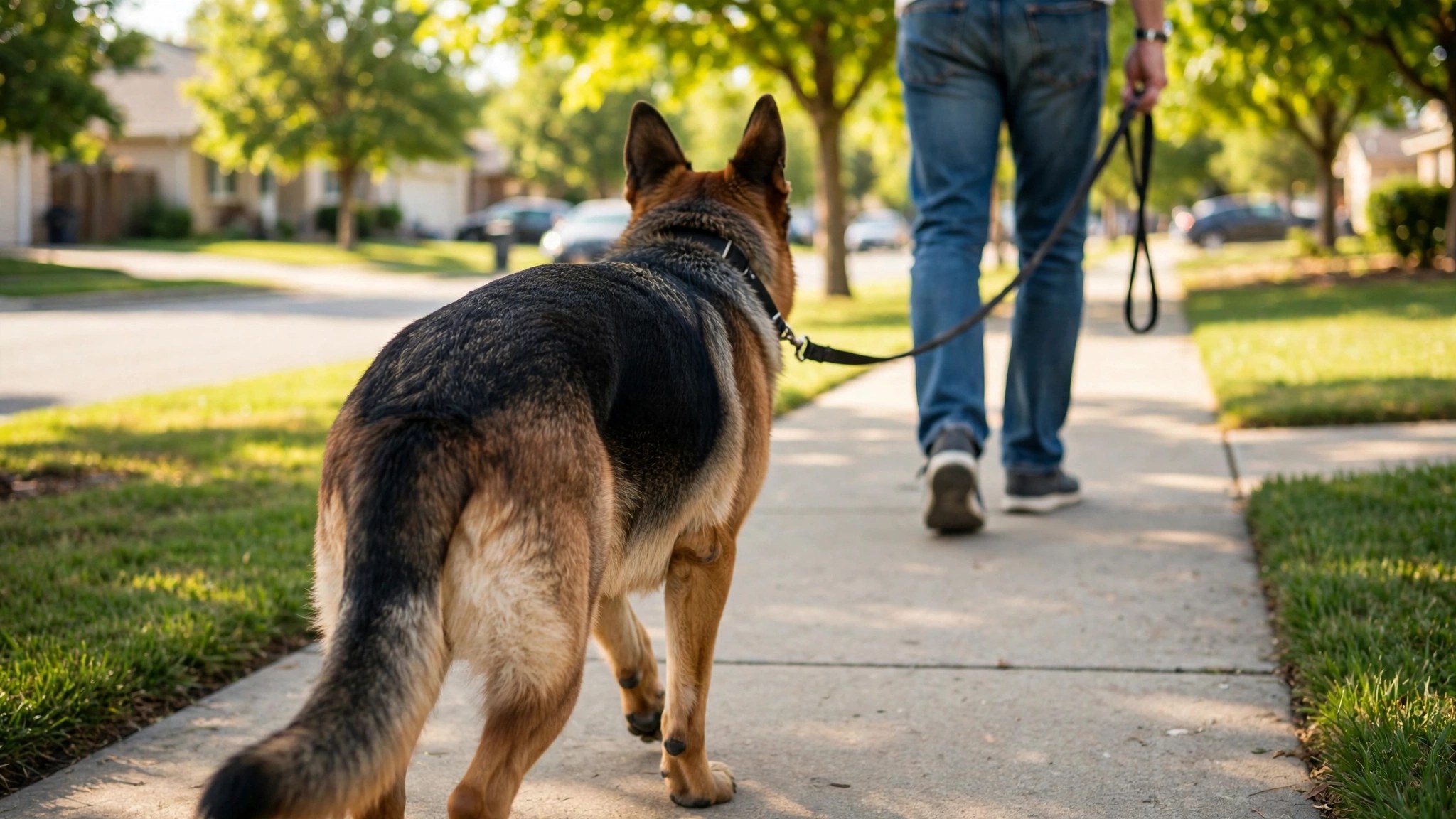
You clip the leash on, step out the door, and before you reach the end of the driveway your German Shepherd is three feet ahead, leaning into the leash like a sled dog. So why does he walk in front of you?
Short answer: usually it is a mix of instinct and habit, not defiance. German Shepherds were bred to work ahead of people, scanning and guarding. They are fast, strong, and full of energy, and most have simply never been taught that walking beside you is the job. All six reasons below are fixable.
1. Protection: he is putting himself between you and the world
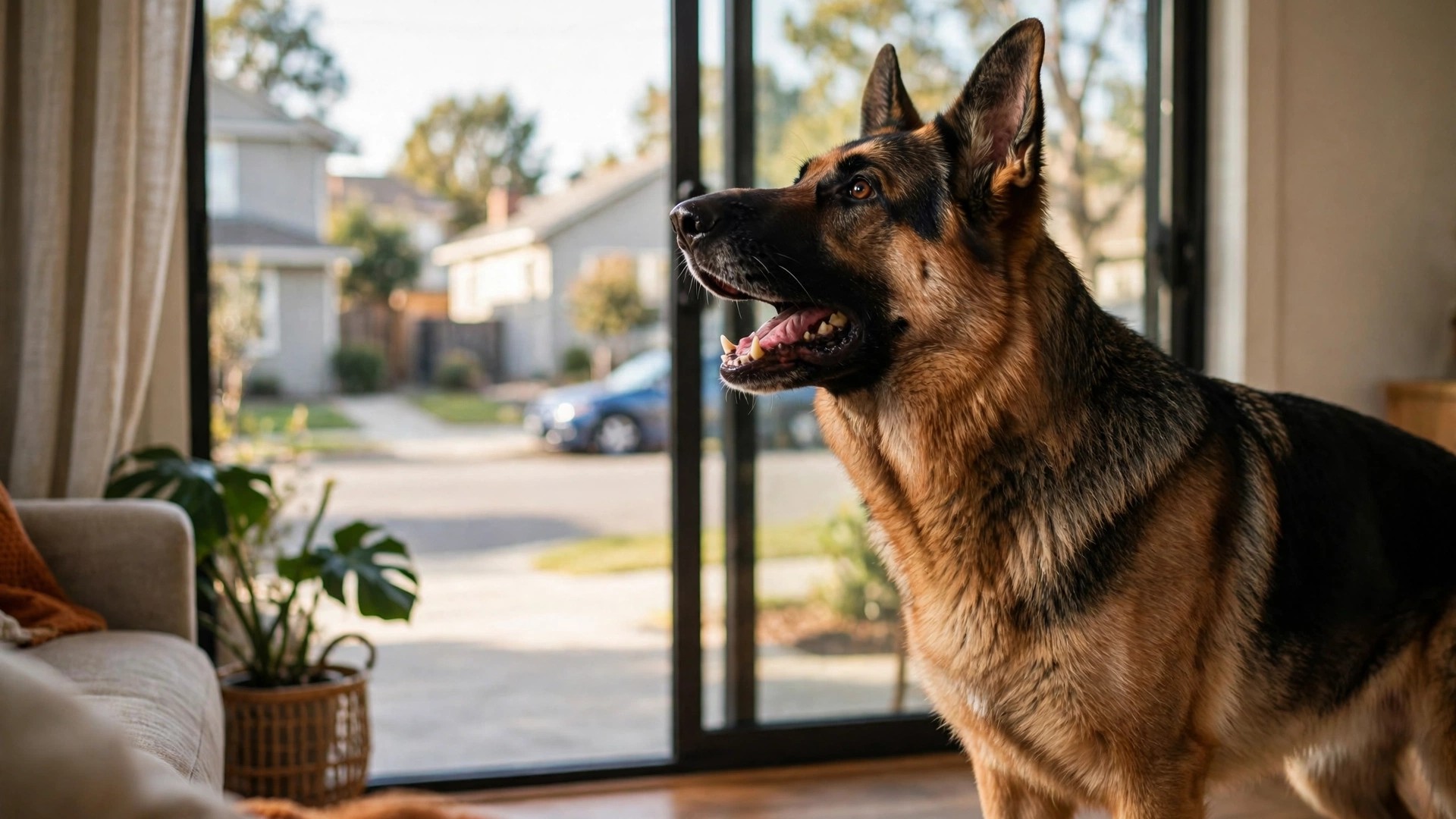
This is the reason most German Shepherd owners hope for, and honestly, it is often part of the truth. The breed was developed to herd livestock and guard the people and property around it. The American Kennel Club describes German Shepherds as a herding breed built to work alongside people, and that job never really left the breed. A dog doing that job walks where it can see what is coming.
If he surges forward mainly when another person, a strange dog, or a loud noise appears, going stiff with ears up and tail high, that is guarding behavior. He is not being rude. In his head, he is doing the job he was bred for. That does not mean you should just accept it. A dog that appoints himself your bodyguard can escalate into lunging at joggers and other dogs, so the fix is to teach him that you decide what counts as a threat.
If your dog also shadows you from room to room, that is the same instinct in a quieter form. Our guide on why your German Shepherd follows you everywhere covers the indoor version.
2. He is faster than you, and he has energy to burn
A healthy adult German Shepherd’s natural walking pace is noticeably faster than a human stroll, and that gap is the whole story for a lot of dogs. From your dog’s point of view, you are moving at a crawl.
Add energy and the pulling gets worse. German Shepherds are a high energy working breed, and most breed guides put their daily exercise need at one to two hours of activity, split across sessions, with mental work counting alongside the physical part. A dog that got a ten minute stroll yesterday and a quick garden break this morning has a full tank, and he is trying to get the exercise he needs out of a walk that is too slow and too short. That is also why the pulling is worst at the start and eases off after fifteen or twenty minutes. If that sounds like your dog, read our guide on how much exercise a German Shepherd needs daily.
One free trick: burn off the sharp edge before the walk with ten minutes of fetch or a short training session.
3. Herding instinct: he is steering the flock, and you are the flock
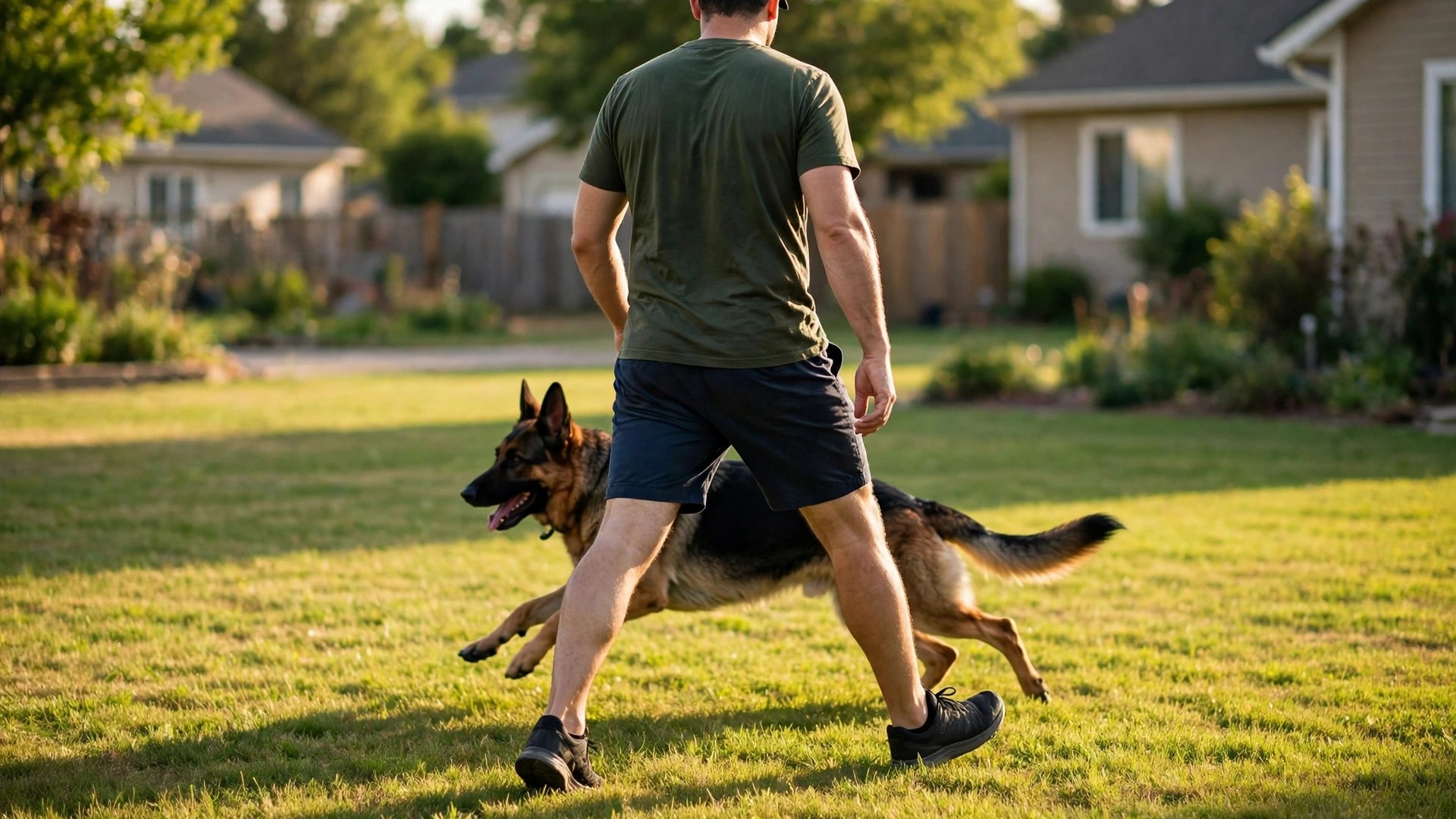
German Shepherds do not just guard. They herd. And herding dogs control movement. On a walk, a herding dog may push ahead of you, circle around to your front, or cut across your path, all attempts to direct where the group goes. It is the same instinct behind the circling many owners notice at home: if your dog walks ahead and loops back to check on you, that is herding in action. We covered it in why your German Shepherd circles you.
Herding is usually harmless, but it becomes a tripping hazard when the dog weaves side to side in front of you. The answer is a clear job (walk on this side, at this pace) to replace the self appointed one (manage the whole street).
4. Nobody ever taught him otherwise, and pulling keeps paying off
This is the least flattering reason and the most common one. Most dogs walk in front of their owners because it works. Every time your dog pulls forward and you keep walking, he learns that pulling gets him where he wants to go. A behavior that pays off every single day is a behavior that sticks.
Vets put it plainly. In their guide to pulling on walks, VCA Animal Hospitals notes that dogs pull to get where they are going, and that from a dog’s perspective humans are simply slow. They also call loose leash walking one of the most complex skills we teach pet dogs. It takes patience, planning, and persistence, and most owners never got a plan. They just got a leash.
Many people also accidentally reward the exact behavior they hate: the dog surges ahead, glances back when called, gets a treat, and learns that surging ahead is step one of earning a treat. Reward the dog when he is already in the right place, not after he has pulled to get there. With a puppy this is the easiest version to solve, because the habit is still shallow. Our guide on how to leash train a puppy in 10 days covers the same method in puppy sized steps.
5. His nose is driving
Sometimes the reason your dog walks ahead is not about you at all. It is about the smell twenty feet up the pavement. A dog’s world is built out of scent, and German Shepherds have one of the best noses in the dog world, with a sense of smell far stronger than ours. When a smell catches his attention, his feet follow before his brain has a say.
You can tell this is the reason when the behavior is patchy. He walks nicely, then veers ahead toward a bush or lamppost where another dog stopped yesterday, and relaxes again once he has sniffed it. Fighting the nose is a losing game, so build sniff breaks into the walk on purpose. A dog that knows a sniff break is coming is much more willing to walk nicely to earn it, and sniffing is tiring work for a dog’s brain.
6. He is nervous, not naughty
Not every dog that walks ahead is confident. Some walk ahead because they are anxious and want to see what is coming. A nervous dog often walks slightly ahead with a low body, ears back, scanning constantly, and startling at noises. He may also keep glancing back at you. He is not leading. He is worrying.
This pattern shows up in rescue dogs, under socialized adolescents, and dogs that had a scare on a walk, like being rushed by an off leash dog. It also shows up in dogs with separation anxiety. If your dog panics when you leave the house too, read our guide on German Shepherd separation anxiety: the two problems may share a cause. With a nervous walker, the key is what NOT to do: jerking the leash, shouting, or dragging him past the scary thing only confirms his fear. Cornell’s behavior team recommends reward based training for fearful dogs, building confidence through small wins and letting the dog approach the world at a pace it can handle. Keep walks in familiar, quiet places, reward calm behavior, and give him space from triggers. If the anxiety is severe, a certified behaviorist is worth the money.
Is walking in front a dominance thing?
Probably not, and this is where old advice does real damage. The idea that a dog walking ahead of you means he thinks he is the alpha comes from outdated wolf studies that modern behaviorists have moved past. It means he is faster than you, or excited, or herding, or never learned another way. That matters because the fixes that follow from the dominance idea are usually the wrong ones: alpha rolls, leash jerks, and collars that rely on pain might suppress the pulling in the moment, but they teach the dog nothing, and they can make a nervous dog more fearful and a protective dog more reactive. VCA is blunt about this: training collars that rely on pain work by hurting, and training without pain is a priority. Ignore any relative who tells you to show your shepherd who is boss.
Read your dog: what the walk is telling you
Spend one walk just watching. The pattern tells you which reason is driving your dog.
| What you see | Most likely reason | First thing to fix |
|---|---|---|
| Surges ahead only when people or dogs appear, body stiff, ears up | Protection instinct | Teach a watch me cue and create distance from triggers |
| Pulls hardest in the first 15 minutes, then settles | Excess energy | Add exercise and play before the walk, not after |
| Pulls steadily the whole walk, every walk | Habit, pulling has always paid off | Stop moving the instant the leash goes tight |
| Walks ahead low and tense, startles easily, glances back often | Nervousness | Quieter routes, more distance, reward calm, no leash jerks |
Most dogs are a mix of two or three rows. Pick the row that fits best and start there.
The 7 day loose leash reset
Seven short sessions, ten to fifteen minutes each, somewhere quiet like your driveway. Train first, then give a normal walk as the reward.
Day 1: Pick a side and stick to it all week. Hold a treat at your side, take five steps, treat. Repeat. Show him good things happen beside you, not in front of you.
Day 2: Same as day 1, but reward every eight to ten steps. The moment the leash goes tight, stop dead and stand still. Wait for any slack, then praise and move again. Do not yank the leash.
Day 3: Add a turn. When your dog drifts ahead, turn and walk the other way. He learns that you choose the direction.
Day 4: Move to a slightly more interesting street. Keep it short. If he falls apart, go back to the quiet street. A step backward is not failure. It is how training works.
Day 5: Introduce a release word. Say “go sniff”, let him investigate for thirty seconds, then call him back with a treat. Walking nicely earns freedom.
Day 6: Stretch rewards to every twenty steps, and start using real life rewards: walking nicely toward the park earns the park, pulling earns a full stop.
Day 7: Do a full normal walk with the rules in place. You will not be finished, nobody is after a week, but your dog should check in with you and spend noticeably more time at your side than on day 1. Keep practicing for two or three more weeks.
Two warnings. First, the early days are slow: your ten minute walk might take thirty minutes. Do it anyway. Second, everyone in the household has to follow the same rules. If one person lets the dog pull, the dog learns that pulling sometimes works, and sometimes is all it takes.
Recommended
PetSafe Easy Walk Dog Harness
The front clip turns pulling into a gentle sideways turn, giving you steering control on a strong shepherd while you train.
Check Price on AmazonGear that actually helps (and gear that does not)
Gear will not train your dog, but the right gear makes training easier and the wrong gear makes it harder.
| Gear | Best for | Watch out for |
|---|---|---|
| Flat collar + 6 ft leash | Dogs that already walk fairly well | Hard pullers can hurt their throat; least control |
| Front clip harness | Strong pullers in training; redirects the dog toward you | Needs correct fitting or it rubs; a training aid, not a permanent fix |
| Retractable leash | Open fields with no one around | Teaches pulling, gives almost no control, can cause friction burns |
For most owners working on this problem, a front clip harness and a plain six foot leash is the right starting pair: control without pain, and consistent feedback from a fixed length leash.
Recommended
Max and Neo Double Handle Dog Leash (6 ft)
A second handle near the clip lets you shorten up instantly when another dog appears.
Check Price on AmazonBefore every walk checklist
- Energy check: has he had play or training today, or is this walk supposed to do all of it?
- Treat pouch loaded: small soft treats he actually cares about.
- Gear fitted: harness snug with two fingers under the straps, leash clipped at the front for training walks.
- Your rules set: a tight leash means a full stop, every time, no exceptions today.
Recommended
PetSafe Treat Pouch Sport
Keeps treats in reach for the split second rewards this plan depends on, and clips to your waist.
Check Price on AmazonFrequently asked questions
Should I let my German Shepherd walk in front of me?
On a loose leash, yes, sometimes. Nothing is wrong with a dog walking a few steps ahead while the leash stays slack. The problem is not the position, it is the tension. A dog ahead on a loose leash is exploring. A dog ahead on a tight leash is pulling, and that is what you want to change.
Why does my dog walk in front of me and then stop?
Usually he is checking on you. Dogs that walk ahead often pause, look back, and wait for you to catch up, especially herding breeds. It can also mean he found a smell, or he is unsure about something ahead. Walk up calmly and reward him for waiting. That pause is good behavior.
Is it bad if my dog pulls on the leash?
It is bad for both of you. For your dog, constant pressure on the neck can cause coughing and throat irritation, which is why VCA recommends a harness over a collar for hard pullers. For you, a 30-plus kilo shepherd hitting the end of the leash can wrench a shoulder. VetStreet notes that 88 percent of falls that require an emergency room visit are related to tripping over a dog or cat.
How long does it take to teach loose leash walking?
Expect visible improvement in a week of daily short sessions, and a reliable habit in three to six weeks, depending on the dog’s age and how long the pulling has been rehearsed. Consistency matters most: every walk either trains the habit you want or rehearses the one you do not.
Your German Shepherd walks in front of you because his breed, his body, and his history all point him that way. Protection, energy, herding, habit, scent, and nerves are all normal reasons. What he needs is a clear job, a reward for doing it, and an owner who stops moving every time the leash goes tight. Give him that for a week and the walk changes. Give him that for a month and the dog changes.
This article is for information only and isn’t a substitute for your vet’s advice.
Leave a Reply