
Disclosure: Pets Life Time participates in affiliate programs. Product links in this article may earn us a commission at no extra cost to you, it helps keep our content free. Learn more
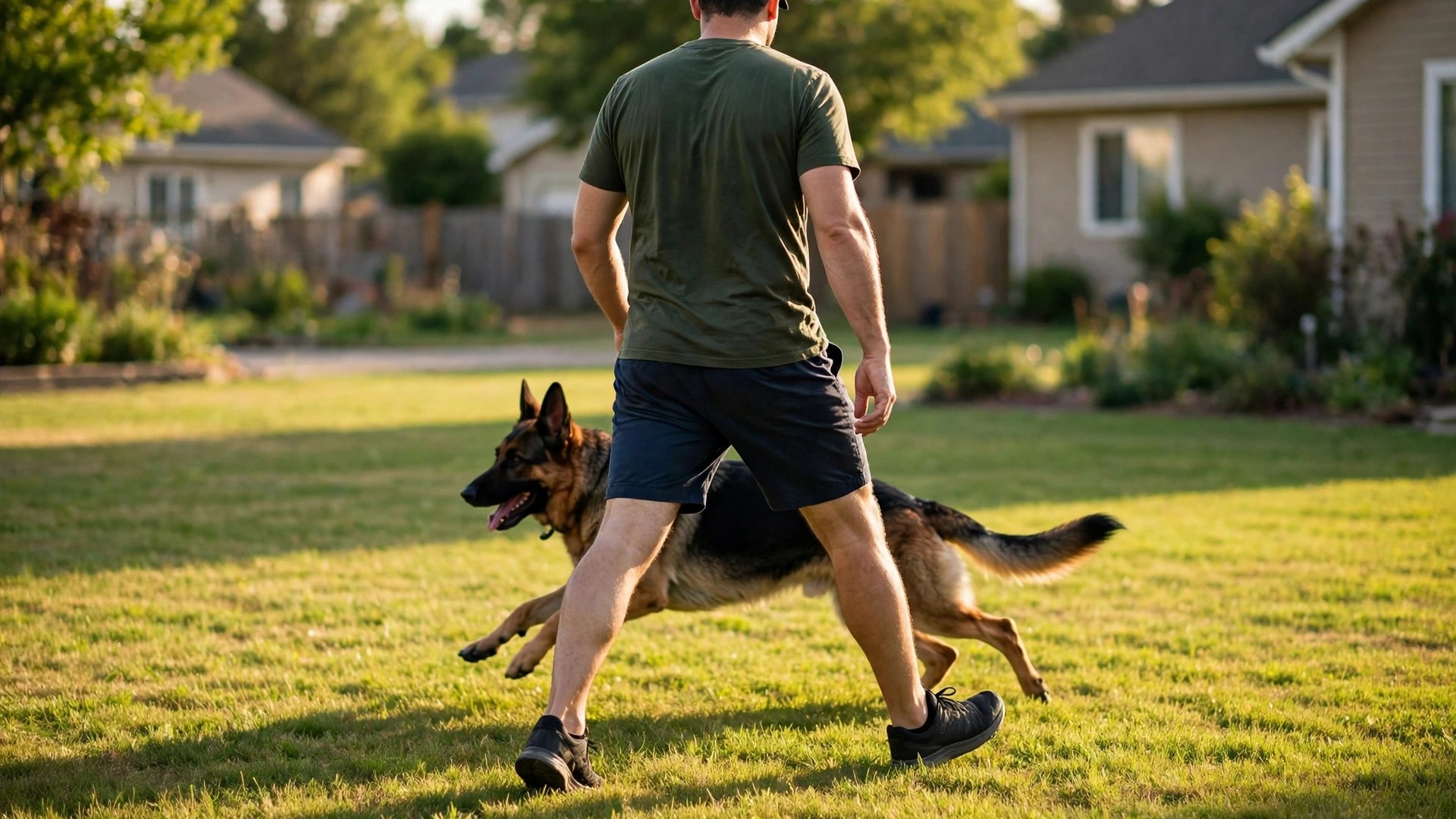
You stand up to grab a glass of water. Your German Shepherd stands up too, trots a tight loop around your legs, and waits to see where you go next. You walk to the kitchen. He circles again. You sit down. He settles for thirty seconds, then the loop starts over.
It looks funny, until a 35-kilo dog keeps cutting across your path and herding your kids into a corner. Most circling is herding software running on autopilot. German Shepherds were built to move other animals around, and with no sheep around, you become the flock. The rest comes from excitement, attention seeking, anxiety, or plain boredom. A small share is medical, which is why the last part of this article matters most.
7 Reasons Your German Shepherd Circles You
1. Herding instinct, the big one
For this breed, it is usually the answer. The German Shepherd was developed in late 1800s Germany to take command of large flocks, and the breed’s own history describes the dog acting as “a sort of moving fence by constantly patrolling along the flock’s perimeter.” That is from VCA Animal Hospitals’ German Shepherd breed guide. Your dog is not being weird. He is patrolling.
The American Kennel Club still lists the German Shepherd in the herding group, and recognized the breed in 1908. More than a century of breeding for one job does not wash out because the dog now lives in a suburban house. The job just finds a new target: you.
Herding circling has a look to it: a wide arc, behind or beside you, often with a low head and a fixed stare at your heels. It gets stronger when you move and fades when you stand still. If that matches your dog, the fix is training, not worry.
2. He is excited to see you
Walk through the front door after eight hours away and a lot of German Shepherds cannot contain themselves. The tail goes, the feet go, and the whole dog goes around in circles, sometimes around you, sometimes just spinning in place. The timing gives it away: arrivals, the word “walk,” the sound of the treat jar, anything good. It is loose and bouncy, soft body, open mouth, fast sloppy circles, and it stops on its own within a minute or two. If your dog only circles when something fun is about to happen, enjoy it.
3. He wants your attention, and it works
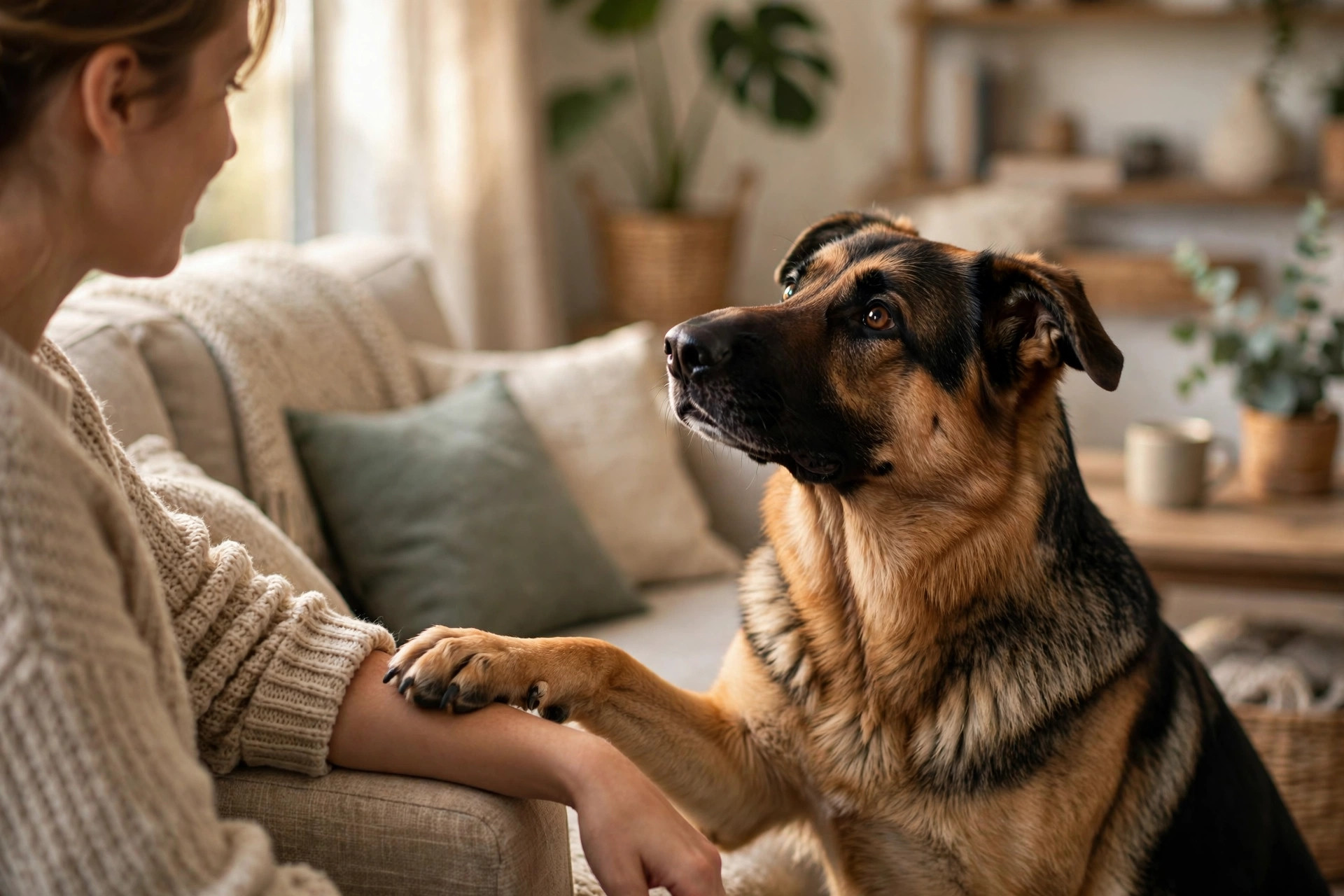
Dogs repeat whatever pays off. If circling once earned a pat on the head, a laugh, or a biscuit, circling becomes a strategy. Owners do this without noticing. The dog loops around your legs, you reach down and ruffle his ears because he looks cute doing it, and the lesson lands: circling gets attention.
This is also why it often gets worse over months: every laugh is a reward. Test it: next time he circles, stand still, fold your arms, and give him nothing, no eye contact, no words, no touch. If the circling fades within a minute and he tries something else, like sitting or bringing you a toy, attention was the fuel. Attention circling often travels with shadowing. If your shepherd also trails you from room to room, our guide on why German Shepherds follow their owners everywhere covers the clingy side of the same instinct.
4. He is guarding you
German Shepherds take protection seriously, and circling is part of how they do it. A dog that loops around you when a stranger approaches or the doorbell rings is drawing a line. You are inside it. Everything else stays outside it. Protective circling looks different from playful circling: stiff body, tail raised or still, ears locked forward, the dog placed between you and whatever caught his attention. VCA’s breed guide notes the German Shepherd “tends to be aloof toward and suspicious of strangers” and needs early socialization so it willingly accepts new people. It becomes a problem when the dog starts deciding for you, body-blocking every visitor, jogger, and delivery driver. That is a dog who has taken over a job you never gave him, and the 7-day plan below covers how to hand it back.
5. He is anxious or stressed
Some dogs circle when they do not know what else to do with a feeling: a thunderstorm, fireworks, a house full of guests, the sound of you picking up your keys. The circling is a coping loop, the same way some people pace a room when they are nervous. Anxious circling usually comes with other signs: lip licking, yawning, ears pinned back, a tucked tail, or panting when the house is cool. The circles are tight and repetitive, same direction, same path, and hard to interrupt. A happy dog stops for a treat. An anxious one often cannot.
Cornell’s College of Veterinary Medicine says in its guide to anxious behavior in dogs that anxiety is seldom a simple diagnosis, and there is usually something else behind it. Separation anxiety is one of the common drivers, showing up as pacing, whining, and distress when the owner leaves. If your dog’s circling spikes right before you go out or right after you come home, read our German Shepherd separation anxiety guide next. It walks through the slow desensitization Cornell recommends: step out of the room and come straight back, then stretch the time out a little at a time.
6. He is bored and full of unused energy
A German Shepherd with nothing to do will invent a job, and circling you is a job that is always available. It is the most common reason behind circling at the same time every day, usually in the evening, when the dog has been inside since the morning walk. Boredom circling often comes with a package deal: pacing, nudging, sighing, and the same toy brought to you six times. The dog is not trying to annoy you. He is telling you, in the only language he has, that his day was too small for his brain. Our guide to how much exercise a German Shepherd needs daily breaks down the real numbers, and ten minutes of scent games tires a shepherd out more than half an hour of wandering the garden.
Recommended
KONG Classic Durable Natural Rubber Toy (Large)
Stuff it with kibble and peanut butter and a bored dog has a job that keeps his brain busy for 20 minutes.
7. It has become a compulsive habit, or something medical is going on
Circling that never stops, that the dog cannot be pulled out of, or that appears out of nowhere in an older dog deserves a vet visit. Not panic, a visit.
Two medical causes matter most. The first is vestibular disease, a problem with the balance system in the inner ear and brain. VCA’s guide to vestibular disease in dogs lists the signs: sudden loss of balance, falling or circling to one side, a head tilt, and rapid flicking eye movements called nystagmus. The signs usually come on fast, often in less than an hour. Most dogs recover completely within two to three weeks, with the head tilt and stumbling usually improving over 7 to 10 days. Only a vet can rule out the more serious lookalikes, so a sudden onset always means a same-day call.
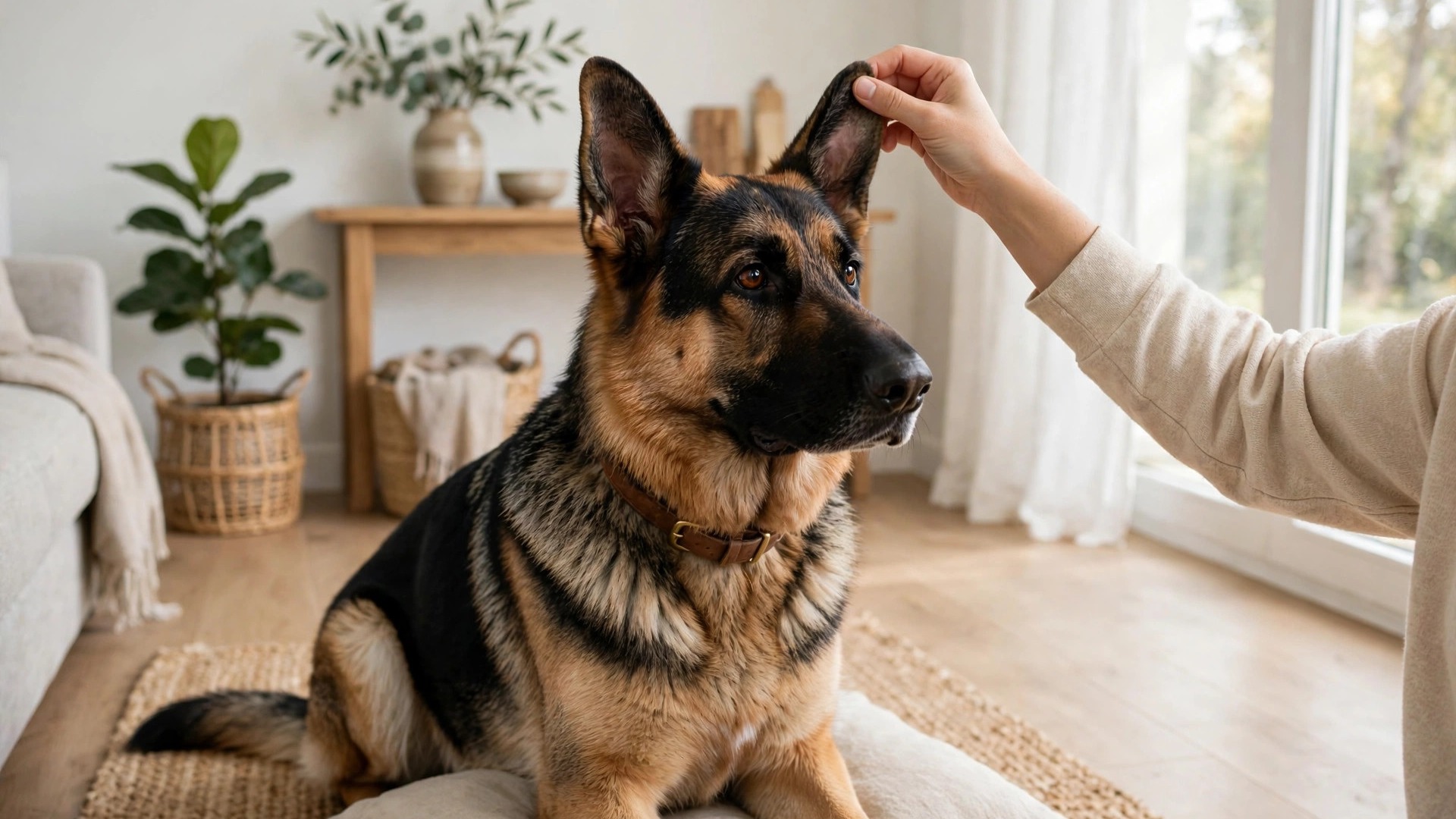
The second is ear trouble. An inner or middle ear infection can throw a dog’s balance off enough to make him circle. If the circling comes with head shaking, pawing at one ear, or a smell from the ear, that is your clue. Our guide to cleaning your dog’s ears without a fight shows what healthy ears look like, and when a vet needs to look inside instead.
Then there is the behavioral side. VCA describes compulsive disorders as behaviors repeated often enough to disrupt a dog’s daily routine, performed almost automatically, as if the dog has no control over them. The line between a habit and a compulsion is how stuck the dog is: a dog with a habit stops for a treat, a dog with a compulsion often cannot, or goes straight back to it the moment you look away. VCA’s advice is firm: do not scold a dog for repetitive behavior, it only adds stress to a stressed dog. A vet check to rule out pain or neurological causes comes first, then a behavior plan. You can read the full picture in VCA’s guide to compulsive disorders in dogs.
One last note: circling that starts late in life, alongside confusion or getting stuck in corners, can be tied to cognitive decline. It is not just old age being quirky, and it is worth a conversation with your vet.
What the Circling Is Telling You
Before you try to fix anything, spend two days watching. Note when it happens, what the body looks like, and whether the dog can stop.
| What you see | Most likely reason | First move |
|---|---|---|
| Wide arcs behind you while you walk, staring at heels | Herding instinct | Teach a heel position and reward walking beside you |
| Fast sloppy circles at arrivals, soft body, open mouth | Excitement | Wait for calm before the good thing happens |
| Stops when ignored, restarts when you look | Attention seeking | Reward calm sitting instead, never the circling |
| Stiff body, circling between you and a stranger | Protection | Socialization work and a solid “leave it” |
| Tight same-direction loops, lip licking, tucked tail | Anxiety or stress | Find the trigger, add a safe space, talk to your vet |
| Every evening, plus pacing and nudging | Boredom and pent-up energy | More exercise plus daily training and scent games |
| One side only, head tilt, stumbling, sudden onset | Vestibular disease or ear problem | Vet visit the same day |
| Cannot stop, even for food, many times a day | Compulsive behavior | Vet check first, then a behaviorist |
A 7-Day Plan to Calm the Circling
This plan works for the first six reasons on the list, not for medical problems. A week of consistent work usually cuts ordinary circling down by half or more.
Day 1: Watch and write it down. Note every episode: time, place, trigger, and whether the dog could stop.
Day 2: Stop paying for it. Circling earns nothing from today: no eye contact, no talking, no pushing the dog away. Stand still like a tree. The second the dog offers a sit or four paws on the floor, mark it with a quiet “yes” and a treat.
Day 3: Teach a job for walks. Use a short leash and reward the dog every few steps for walking at your side. If he swings behind you to start a loop, stop walking until he comes back, then reward and move on. Our 10-day leash training guide walks through this step by step.
Day 4: Add ten minutes of brain work. Scatter kibble in the grass and let him hunt for it, or teach a simple trick like touching your palm with his nose. A tired brain circles less.
Day 5: Practice calm greetings. Step outside for thirty seconds, come back in, and wait for four paws on the floor before you greet him.
Day 6: Give the guarding a boundary. Teach a place cue: the dog goes to a mat when the doorbell rings, and you reward him for staying there while you answer the door.
Day 7: Review the log. Compare today’s count with day 1. Most owners see the episodes drop and get shorter. If nothing has changed, that points toward anxiety or a compulsive pattern.
Recommended
Snuffle Mat for Dogs
Five minutes of foraging on a snuffle mat burns more mental energy than a lap around the block and gives a herding dog a real job indoors.
When Circling Means Call the Vet
Most circling is a training matter. The list below is the exception: if any one of these fits your dog, skip the training plan and book a vet visit first. Bring your two-day log, and film an episode on your phone. Vets diagnose circling largely from the pattern, and a short video is worth more than a long description.
- Sudden onset. The dog never circled before and now circles constantly.
- One direction only. Every circle goes the same way, with no variation.
- Head tilt or eye flicking. The head stays cocked, or the eyes dart back and forth on their own.
- Loss of balance. Stumbling, falling over, walking into walls.
- Cannot be interrupted. You call his name, offer a treat, open the door, and he keeps circling.
- It is getting worse. The episodes are longer, more frequent, or harder to stop than they were a month ago.
- It comes with other changes. Appetite down, sleep changed, confusion, staring at walls, house soiling in a previously clean dog.
- Self-injury. Tail chasing that leaves raw skin, or the dog hurting himself against furniture.
Recommended
PetSafe Easy Walk Dog Harness
A front-clip harness gives you steering control on walks without yanking your dog’s neck, while you retrain the herding loop into a proper heel.
Frequently Asked Questions
Why does my German Shepherd circle me when I walk?
Movement switches the herding instinct on: a walking owner reads like a flock member drifting out of formation, so the dog loops around to gather you back. Loose-leash training is the fix, not a longer leash.
Is it normal for German Shepherds to circle their owners?
Yes, in most cases. It stops being normal when the dog cannot stop, circles only in one direction, or shows balance problems. Those are vet signs, not quirks.
How do I stop my German Shepherd from circling me?
Stop rewarding it and start rewarding the alternative: stand still, give the circling nothing, then pay for a sit or four paws on the floor. Add daily training and scent games, and teach a heel position on walks. The 7-day plan above lays out the order.
Why does my German Shepherd circle me and nip at my heels?
Heel nipping is herding in its most literal form: the dog corrects a straying flock member with a nip at the leg, never a bite. It still hurts and still needs to stop, especially around children. Stop the walk the moment teeth touch skin, redirect to a toy or a sit, and reward calm walking.
Should I worry if my old German Shepherd started circling suddenly?
Yes, enough to call the vet the same day. It can be vestibular disease, which often improves on its own over two to three weeks, but it can also be an ear infection, a neurological problem, or cognitive decline. Only an exam can tell them apart, so film the circling before you go in.
This article is for information only and isn’t a substitute for your vet’s advice.

Leave a Reply