
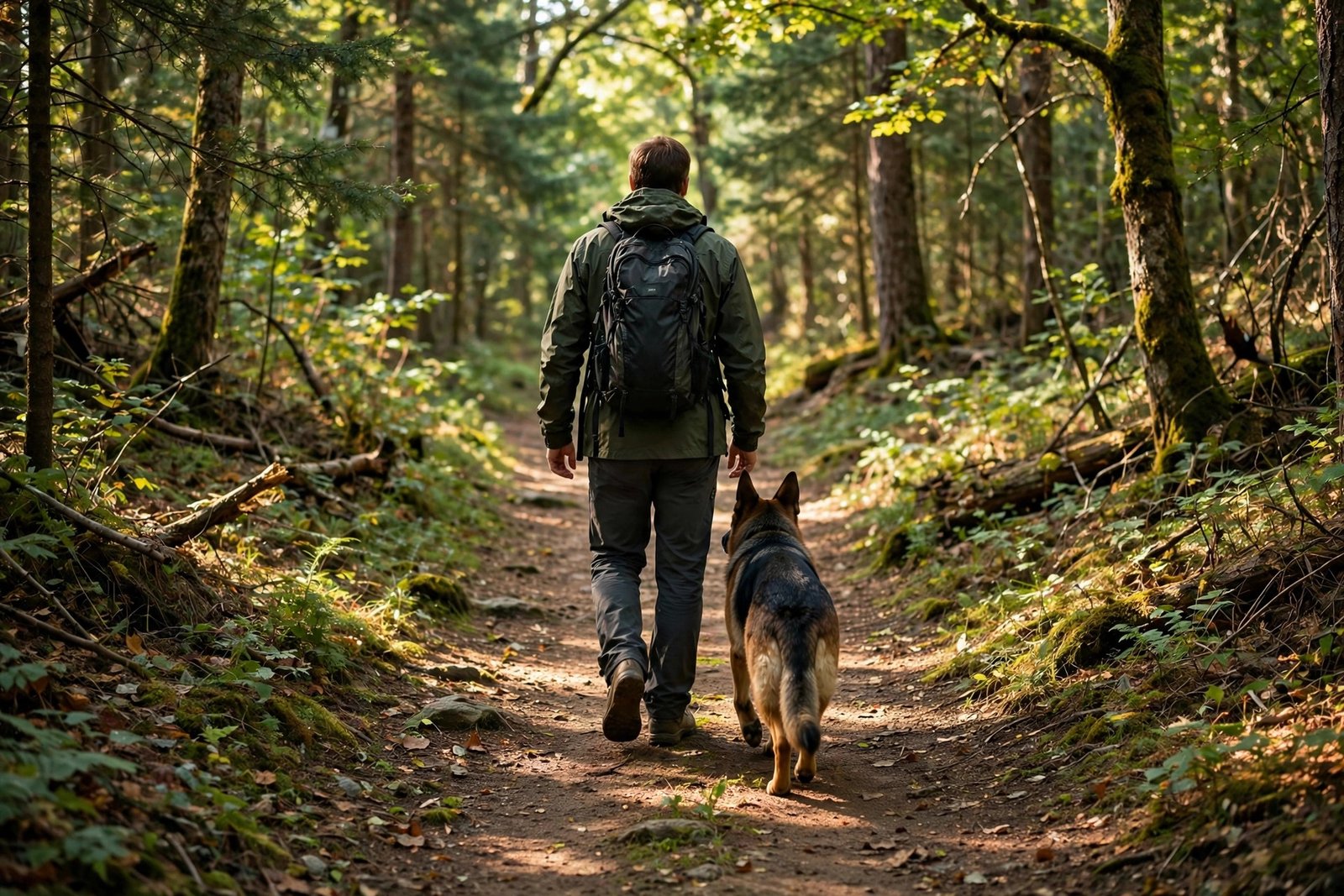
If you’re wondering why does my German Shepherd follow me everywhere, you’re not alone. You can’t go to the bathroom alone anymore. You get up for a glass of water — four paws follow. You walk to the laundry room — a furry shadow glides behind you. If you own a German Shepherd, you don’t have a dog. You have a supervisor.
So why does your German Shepherd follow you everywhere? If you’ve ever asked yourself ‘why does my German Shepherd follow me everywhere,’ the short answer is: it’s mostly love, instinct, and a dash of opportunism.
Table of Contents
1. It’s in Their DNA: They Were Bred to Work Beside You
German Shepherds weren’t bred to be independent backyard dogs. They were developed in Germany as herding and working dogs — animals expected to read their handler’s every move, stay close, and respond instantly. That “velcro” behavior isn’t a quirk; it’s the breed doing exactly what it was designed to do.
A German Shepherd that follows you room to room is, in a sense, still on the job. You’re the flock. This herding instinct is a fundamental answer to why does my German Shepherd follow me everywhere.
2. Deep Bonding and Attachment
Dogs form genuine attachment bonds with their people, and German Shepherds bond hard. Research on canine attachment shows dogs experience a surge of oxytocin — the same “bonding hormone” humans feel — during positive interaction with their owners.
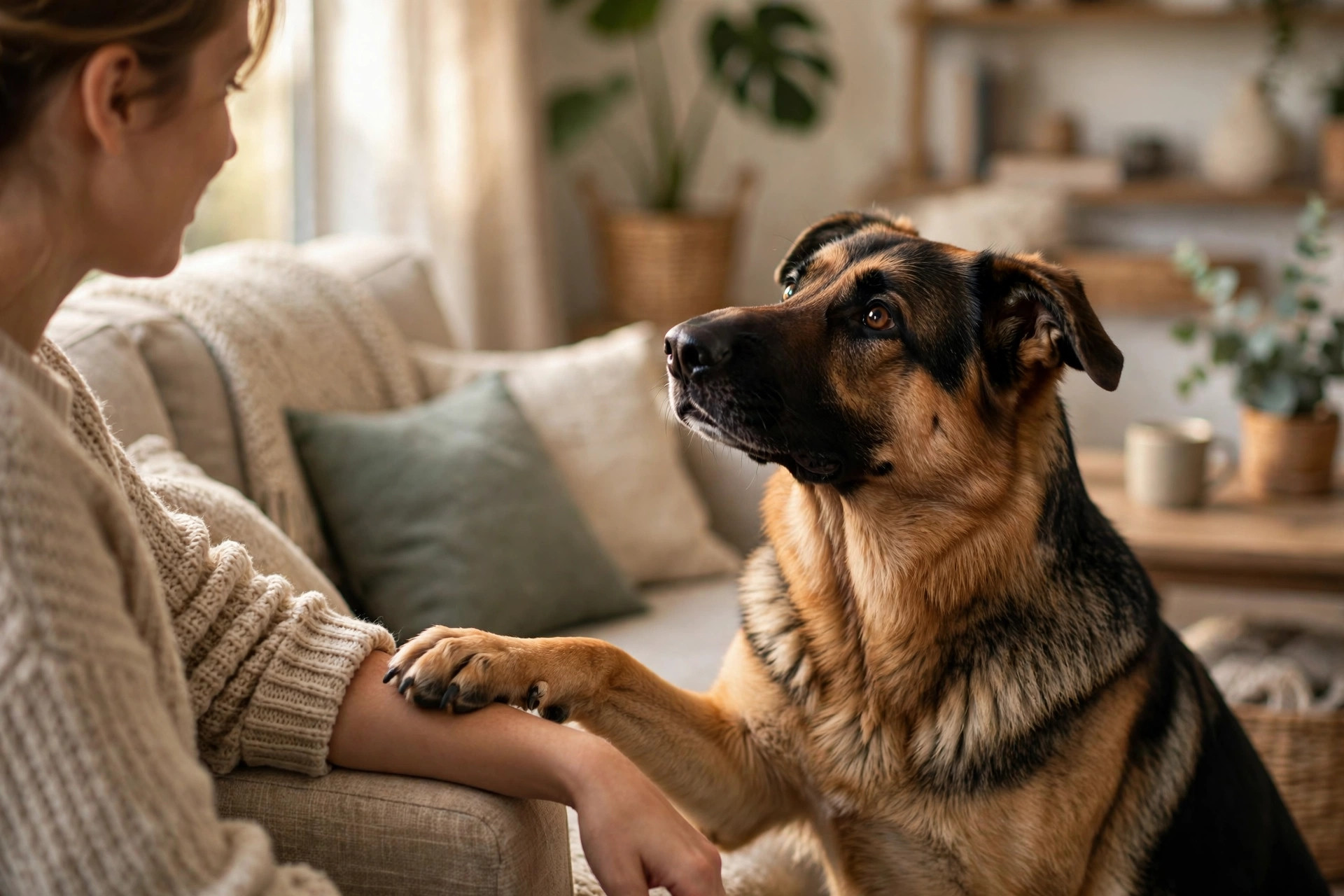
Every walk, training session, and quiet evening on the couch strengthens that bond. Following you is how your Shepherd expresses it. This deep bond is at the heart of why does my German Shepherd follow me everywhere.
3. They Want Something (And It Usually Works)
Let’s be honest: shadowing pays off. The dog that follows you to the kitchen gets the dropped cheese. The dog that trails you to the door gets the walk. German Shepherds are extremely smart — they learn fast which behaviors get rewarded.
If your dog’s following intensifies around mealtimes, this is likely a big piece of the puzzle. Dogs are creatures of routine, and a Shepherd will memorize your schedule better than you know it yourself.
Tip: Keep meals on a consistent schedule and measure portions properly. A dog that knows food comes at set times is less likely to hover anxiously. If you’re unsure how much to feed, a dog calorie calculator takes the guesswork out — enter your dog’s weight and activity level and it tells you exactly what they need. A well-fed dog on a predictable routine is a calmer shadow.
4. Boredom: An Under-Exercised Shepherd Becomes a Stalker
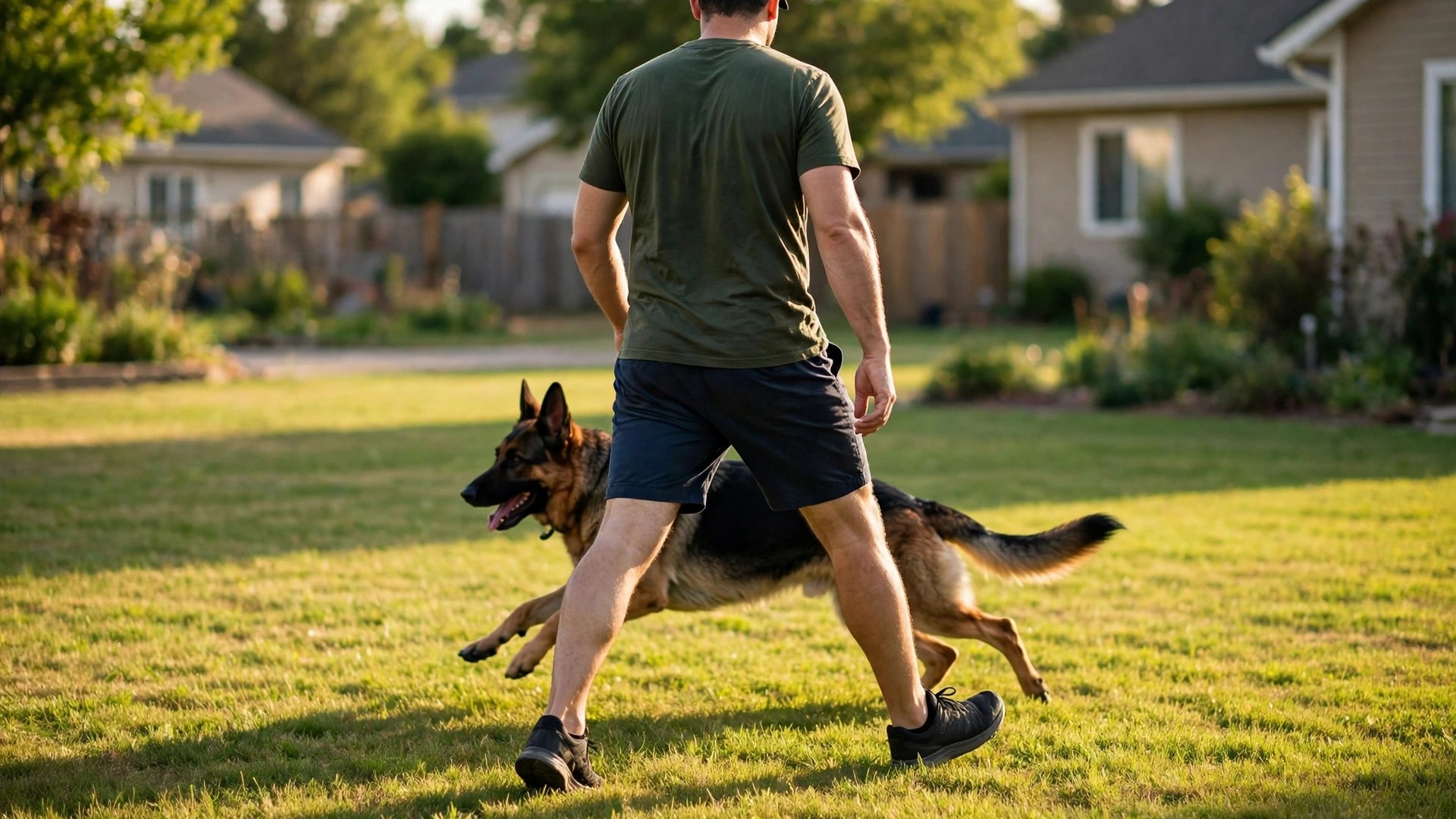
A bored German Shepherd doesn’t just lie down and nap. This is a high-energy working breed, and when their physical and mental needs aren’t met, they redirect that energy somewhere — often onto you. Following becomes their entertainment.
Ask yourself: is the shadowing worse on days with no real exercise? Does your dog also pace, whine, or get mouthy? Those are classic signs of an under-stimulated working dog, not a behavior problem.
The fix isn’t complicated: a tired Shepherd is an independent Shepherd. Aim for real daily exercise plus mental work — training drills, nose games, puzzle feeders. A dog with a fulfilled day is far more content to settle on their bed while you move around the house.
5. Anxiety: When Closeness Becomes Neediness
Here’s the layer worth watching. Some following is driven by anxiety — especially separation-related anxiety. (We cover how to fix it step by step in our German Shepherd separation anxiety guide.) The difference between healthy bonding and anxious clinging:
Normal shadowing: Your dog follows you, settles nearby, and relaxes. If you leave the room and close the door, they’re mildly interested but fine.
Anxious clinging: Your dog panics when you leave — whining, scratching at doors, drooling, destroying things, or unable to settle even when you’re home. They may follow so closely they trip you.
If you see the second pattern, don’t just punish the following — that treats the symptom, not the cause. Anxiety-driven behavior usually needs a structured plan: gradual independence training, and in persistent cases, guidance from a professional trainer or veterinary behaviorist. Your vet can also rule out medical issues that sometimes show up as clinginess, like pain or cognitive changes in older dogs.
6. The Guardian Instinct
German Shepherds are natural protectors. Many owners notice their dog positions themselves between them and strangers, or follows them more closely in unfamiliar places. That’s the guardian instinct talking.
This is normal breed behavior and usually nothing to worry about — it’s the same instinct that makes the breed excel in police and service work. It only becomes a problem if protectiveness tips into reactivity (barking, lunging at guests). Early socialization and calm, consistent training keep the guardian instinct in its healthy zone: watchful, not worried.
7. You Trained It (Without Meaning To)
Every time you pet, praise, or talk sweetly to the dog trailing behind you, you reward the following. German Shepherds are reinforcement-learning machines — behavior that earns attention gets repeated.
This isn’t a criticism. Most of us like being followed; it feels good. But if the shadowing ever annoys you, notice your own role in it. Dogs do what works.
Life Stage Matters: Puppies and Seniors Follow Most
How much your Shepherd shadows you often depends on their age:
- Puppies (under 6 months) follow relentlessly — they’re babies wired to stay near their “parent” for safety. Totally normal.
- Adolescents (6–18 months) may get clingier during fear periods, then more independent as confidence grows.
- Seniors (8+ years) often become shadow-like again as senses dull and they seek security.
Knowing your dog’s life stage helps you read the behavior correctly. A dog age calculator converts your dog’s actual age into human years and life stage, so you can tell whether you’re dealing with a clingy puppy phase or a senior needing extra comfort.
How to Build Healthy Independence (Without Breaking the Bond)
You don’t need to stop the following — you just want a dog that’s okay when they can’t follow. A few proven approaches:
Teach a solid “place” command
Train your dog to go to a bed or mat and settle there on cue. Start with seconds, build to minutes, and reward calm settling — not just going to the spot. This gives your dog a “job” that isn’t following you.
Practice micro-separations
Step out of the room for 5 seconds, return calmly, repeat. Gradually extend the time. The key word is calmly — no big hellos or goodbyes, which teach the dog that separations are dramatic events.
Enrich the alone time
A frozen Kong, a snuffle mat, or a puzzle feeder given when you leave the room teaches your dog that your absence predicts good things. Independence becomes rewarding in itself.
Keep departures and arrivals boring
The less ceremony around you coming and going, the less your dog learns to fixate on it.
The Bottom Line: Why Does My German Shepherd Follow Me Everywhere?
A German Shepherd that follows you everywhere is usually just being a German Shepherd — bonded, bred to stay close, and deeply attached to you. Once you understand why does my German Shepherd follow me everywhere, you can appreciate this loyal behavior instead of worrying about it.
The only time to act is when closeness turns into distress — panic, destruction, or a dog that can’t function without you in sight. That’s anxiety, not affection, and it deserves a real plan (and possibly professional help), not punishment.
Want to understand your Shepherd better? Use our free dog age calculator to pin down their life stage, or the dog calorie calculator to get feeding exactly right — a well-fed, well-exercised dog is a happy shadow.

Leave a Reply