Disclosure: Pets Life Time participates in affiliate programs. Product links in this article may earn us a commission at no extra cost to you — it helps keep our content free. Learn more
Studies suggest that more than half of dogs in the United States are overweight or obese — and most owners don’t realize it until their vet points it out. Large, food-motivated breeds like German Shepherds hide extra pounds easily under a thick double coat. The good news: spotting excess weight early is a skill you can learn in about five minutes. This guide shows you exactly how to tell if your dog is overweight — and what to do about it safely.
Table of Contents
Why “Just a Little Chubby” Is a Bigger Deal Than It Looks
A few extra pounds on a 75-pound German Shepherd might not sound dramatic, but even 10% over an ideal weight counts as overweight in veterinary terms. Excess weight stresses the joints (a real concern for German Shepherds, who are already prone to hip dysplasia), raises diabetes risk, and can shorten a dog’s lifespan. Dogs that maintain a healthy weight often live longer — catching weight gain early is one of the simplest ways to add healthy years to your dog’s life.
How to Tell If Your Dog Is Overweight: The 3-Step Home Check
Vets use a 1-to-9 Body Condition Score scale, where 4–5 is ideal. This simple at-home routine is how to tell if your dog is overweight — you can do the whole thing in about a minute, and repeat it monthly to catch slow weight creep.
1. The Rib Test
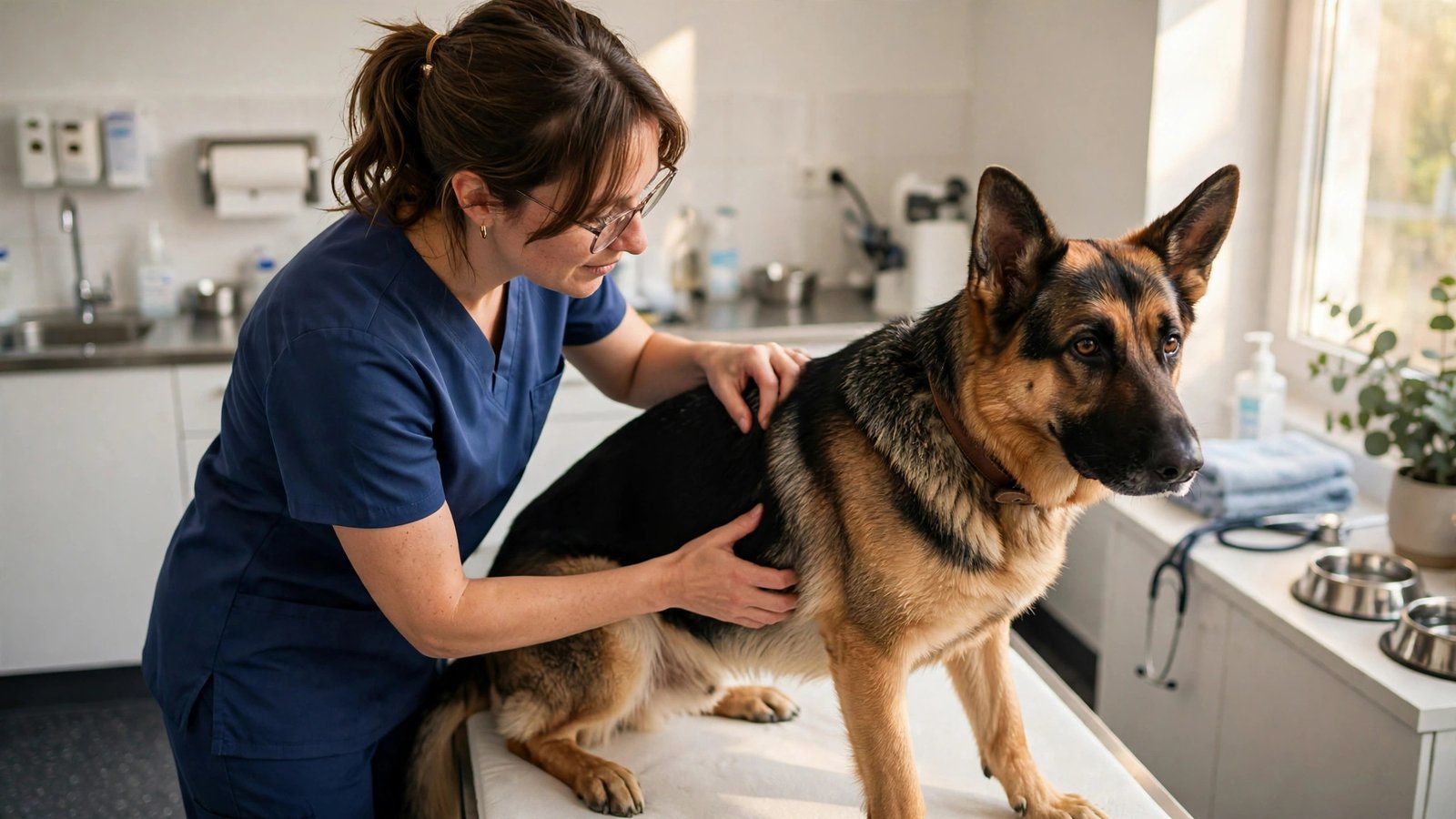
Run your hands along your dog’s ribcage with light pressure. On a dog at a healthy weight, you should be able to feel the ribs easily, with just a thin layer of fat over them. If you have to push firmly to find them, that’s your first sign of excess weight. German Shepherd coats are thick, so trust your fingers, not your eyes.
2. The Waist Check
Stand directly above your dog and look down — when you’re learning how to tell if your dog is overweight, this top-down view is the most revealing angle. Behind the ribcage, you should see a visible waist — a gentle hourglass curve before the hips. From the side, the belly should tuck up slightly from the chest toward the hind legs. If the waist has vanished into a straight line (or bulges outward), your dog is carrying extra weight.
3. The Energy Check
Watch your dog move. A healthy-weight dog has an easy, springy gait. Extra weight shows up as labored breathing after short play sessions, reluctance to play as long as before, and stiffness when getting up — especially in the morning.
One caveat: sudden lethargy or rapid weight change can signal a health problem (thyroid issues, for example), not just overfeeding. If your dog’s weight changed quickly, book a vet visit before changing anything. If you’re unsure how to tell if your dog is overweight versus simply slowing down with age, the waist check is your best tiebreaker — age slows a dog down, but it doesn’t erase a waistline.
Common Reasons Dogs Gain Weight
Most weight gain comes down to more calories in than out. The usual culprits:
- Portion creep. Feeding by “a scoop” instead of a measured amount lets portions grow a little every month.
- Treats add up fast. A couple of large biscuits a day can add 15–20% to a dog’s calorie intake without owners noticing.
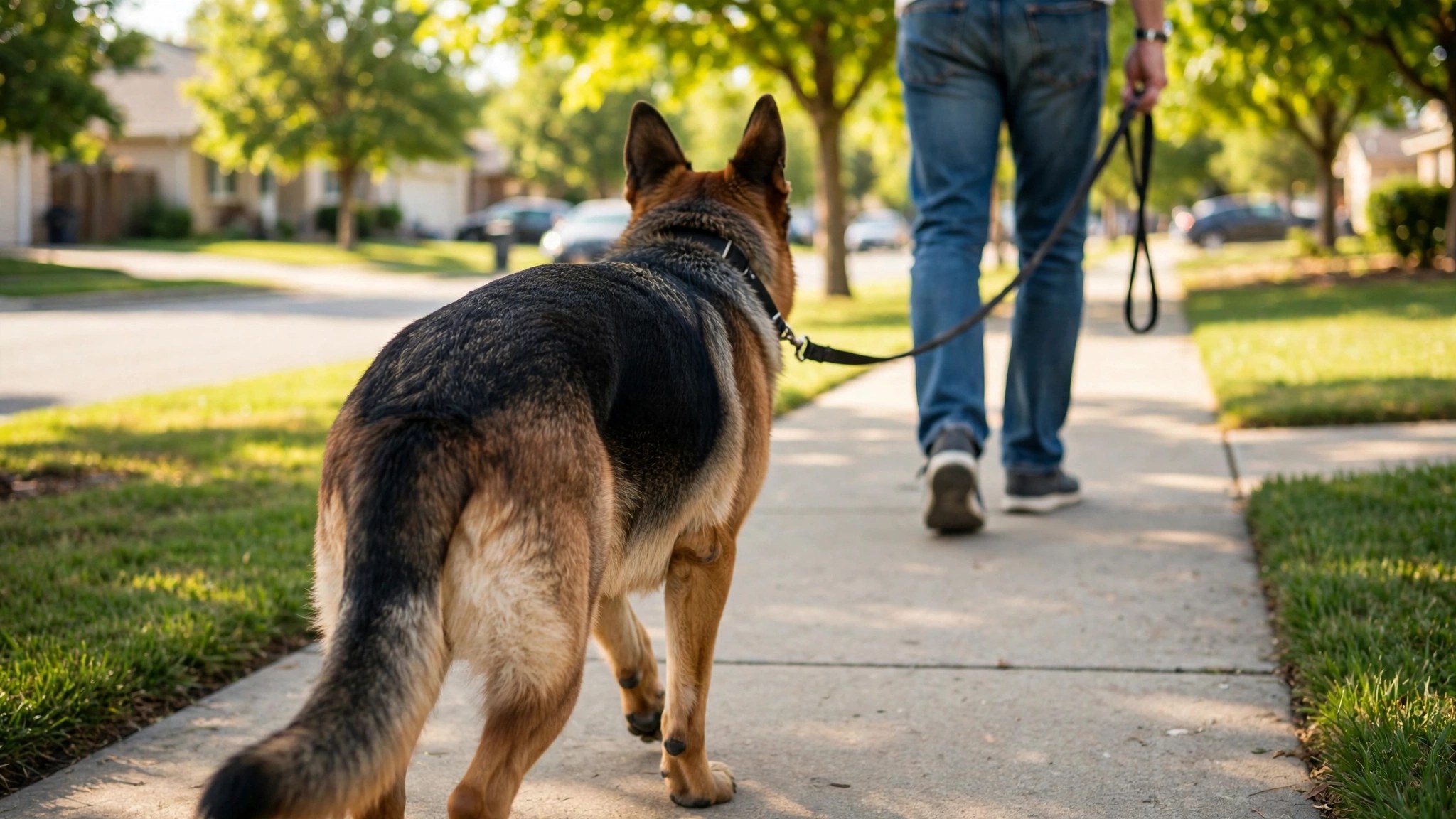
- Less exercise than you think. A slow 20-minute neighborhood walk burns far fewer calories than an hour of fetch or structured play.
- Age and neutering. Calorie needs drop as dogs age, and neutered dogs typically need about 20–30% fewer calories — but most owners keep feeding the same amount.
- Medical causes. Hypothyroidism and other conditions can cause weight gain. If the diet hasn’t changed but the weight has, see your vet.
Since calorie needs shift as dogs age, our dog age calculator can help you translate your dog’s life stage into the right daily portions.
What to Do If Your Dog Is Overweight: A Safe Plan
Step 1: Confirm the target with your vet
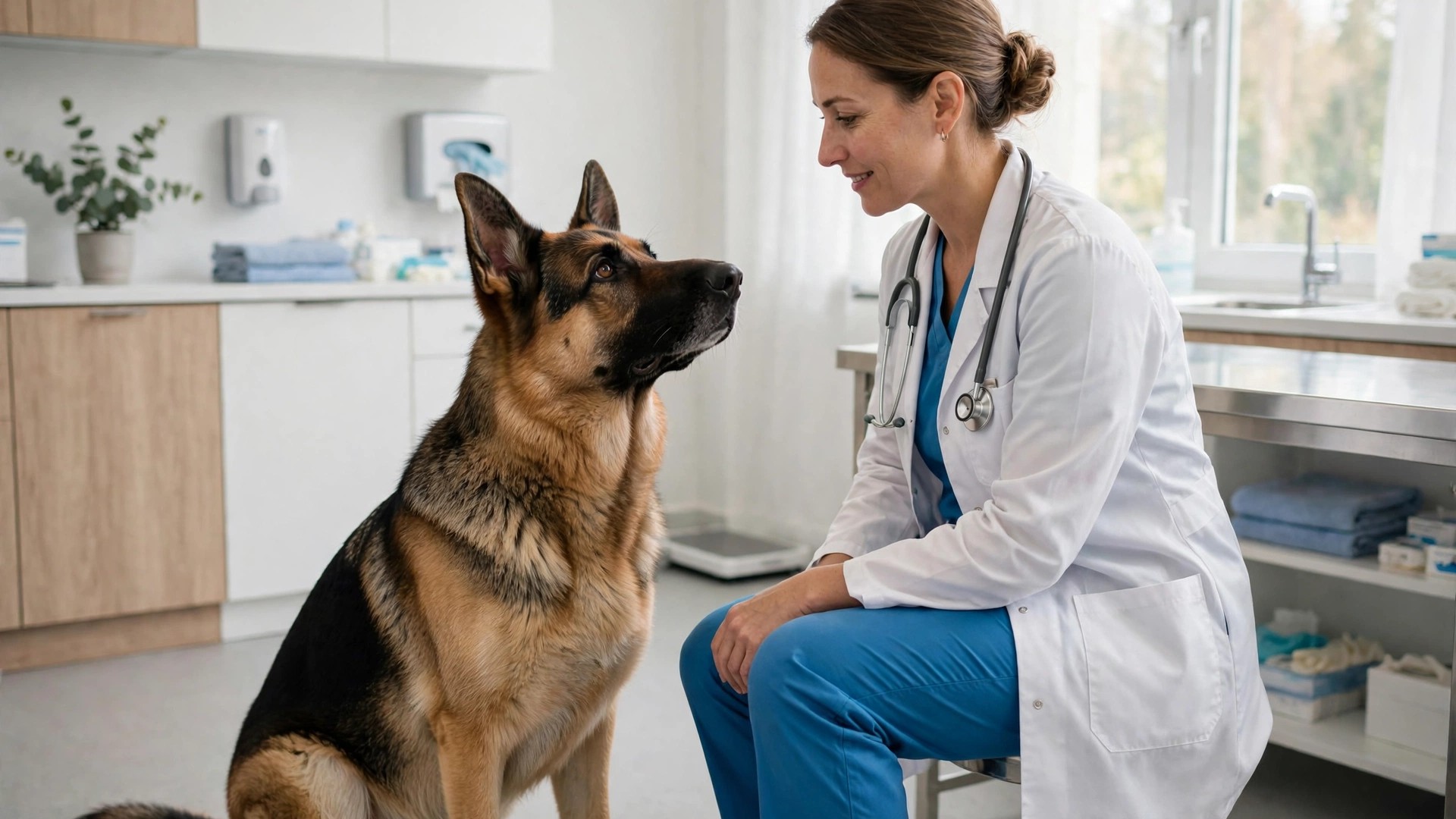
Before changing anything, get a professional read. Your vet can confirm the Body Condition Score, rule out medical causes, and tell you roughly how much weight your dog should lose. Never put a dog on a crash diet — rapid weight loss is unsafe for dogs. A steady loss of about 1–2% of body weight per week is the safe target most vets recommend.
Step 2: Measure food — actually measure it
This is the single highest-impact change most owners can make. Switch from eyeballing scoops to weighing every meal. A digital scale is cheap and far more accurate than any cup, because kibble density varies between brands.
Recommended
Digital Pet Food Scale
Accurate portions are the foundation of safe weight management — a scale beats any scoop for consistency.
Step 3: Recalculate daily calories
Calorie needs depend on current weight, target weight, age, and activity level — and they drop as pounds come off, so recalculate every few weeks. Use our dog calorie calculator for a science-based daily target, then weigh portions to match it.
Step 4: Rebuild the exercise routine
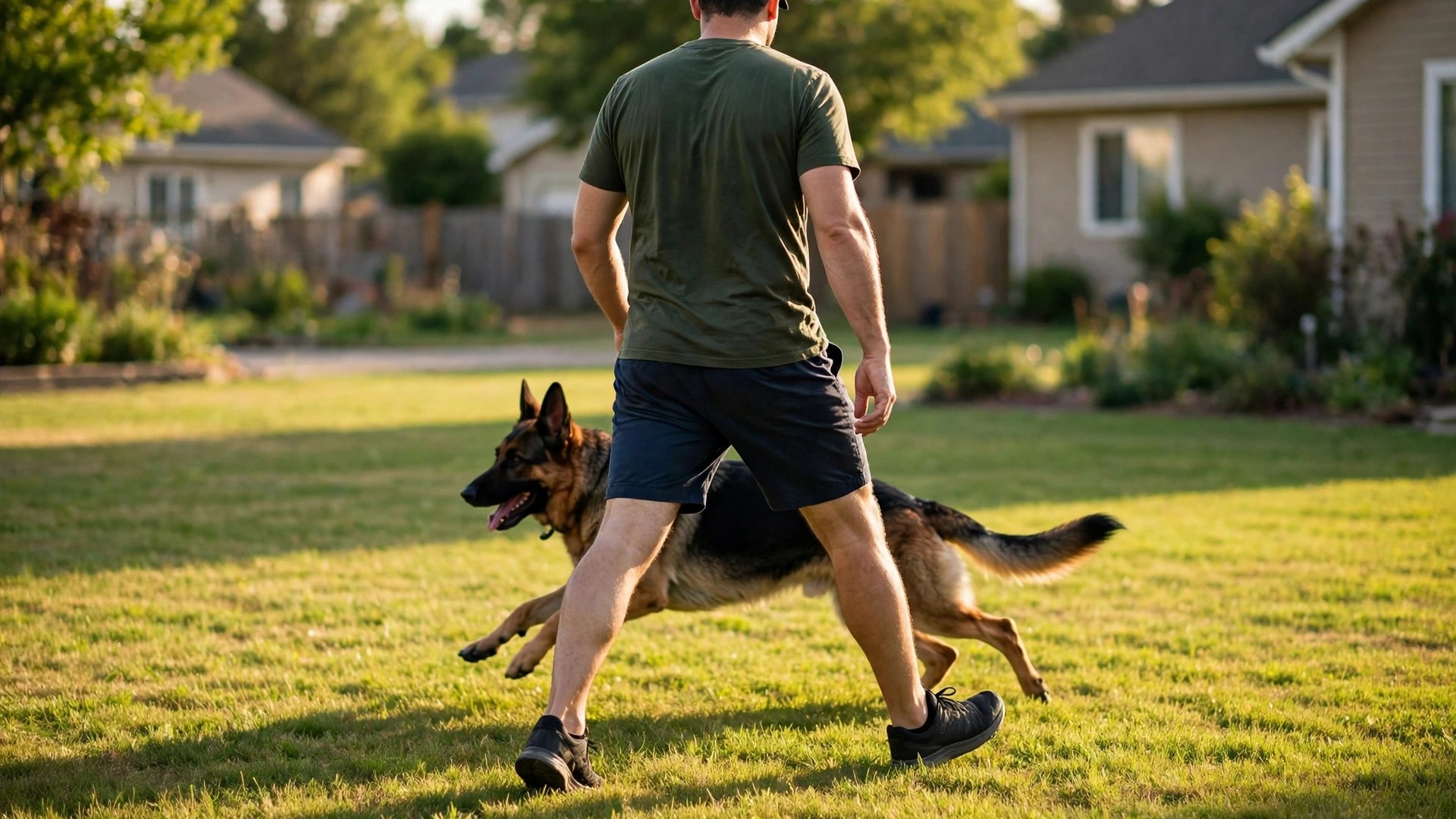
For German Shepherds, aim for at least 60–90 minutes of real activity daily: brisk walks plus high-energy outlets like fetch, tug, swimming, or agility-style play. Build up gradually if your dog has been inactive — an overweight dog’s joints need time to adapt. Two or three shorter sessions often beat one long one at the start. For a full weekly plan, see our guide on how much exercise a German Shepherd needs daily.
Step 5: Fix the treat problem
Treats should make up no more than 10% of daily calories. Swap large biscuits for tiny training treats, or use pieces of your dog’s measured kibble as training rewards — then the “treats” are already counted in the meal.
Step 6: Consider a weight-management formula
If your dog needs to lose more than a few pounds, a food formulated for weight management can make the process easier: lower calories but higher fiber and protein, so your dog feels full while eating less. Transition gradually over 7–10 days to avoid stomach upset — and check the new calorie content, because “light” labels vary widely between brands. German Shepherd owners can also browse our guide to the best dog food for German Shepherds for breed-specific picks.
Recommended
Weight Management Dry Dog Food (Large Breed)
Higher fiber and protein per calorie helps an overweight dog feel full while eating less — a practical choice for steady, safe weight loss.
Example: Blue Buffalo Life Protection Healthy Weight (Large Breed)
Step 7: Slow down fast eaters
Dogs that inhale their food in 60 seconds often overeat because the “full” signal arrives too late. A slow feeder bowl turns mealtime into a puzzle and stretches the meal out — many owners find their dog eats less overall once the bowl slows them down.
Recommended
Slow Feeder Dog Bowl (Large Breed)
Maze-style ridges slow down gulpers and improve digestion — a simple upgrade that supports portion control.
How to Keep the Weight Off
Now that you know how to tell if your dog is overweight, the real challenge is keeping it off — most dogs regain weight because old habits creep back. Lock in these habits permanently:
- Do the 3-step home check on the first of every month.
- Re-run portions through the dog calorie calculator whenever your dog’s activity level, age, or food changes.
- Weigh your dog monthly (most vet clinics let you pop in for a free scale weigh).
- Keep treats at 10% of daily calories, no exceptions for puppy-dog eyes.
The Bottom Line
Learning how to tell if your dog is overweight takes about a minute: feel the ribs, check the waist, and watch how your dog moves. If you spot extra weight, get a vet’s confirmation, measure portions honestly, recalculate calories, and build up exercise gradually. A lean dog is very often a longer-lived dog — and your German Shepherd will feel the difference in every walk.
Not a substitute for veterinary advice: this article is general information, not a medical diagnosis. If you’re unsure about your dog’s weight or health, talk to your veterinarian.
Leave a Reply