Disclosure: Pets Life Time participates in affiliate programs. Product links in this article may earn us a commission at no extra cost to you — it helps keep our content free. Learn more
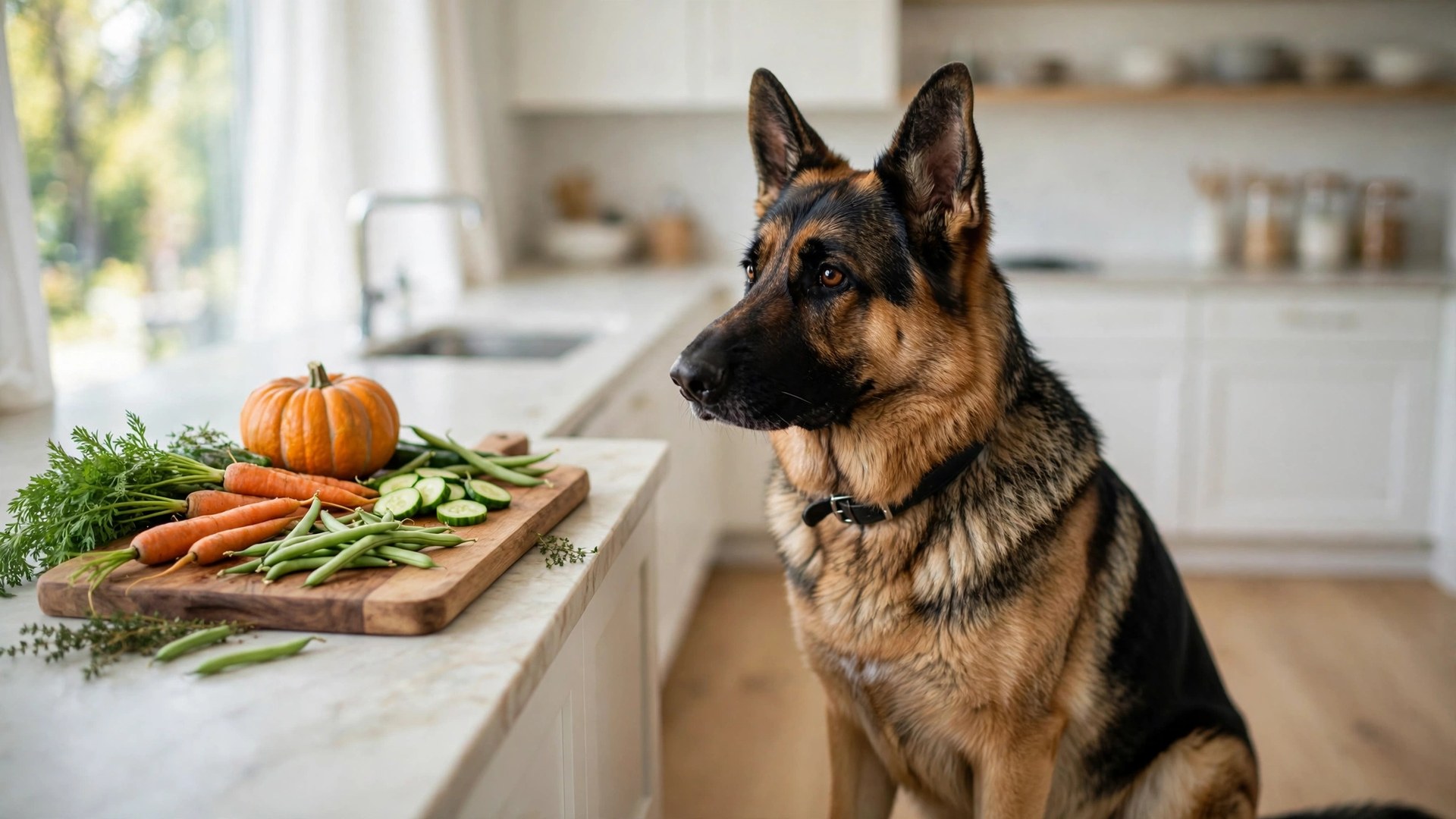
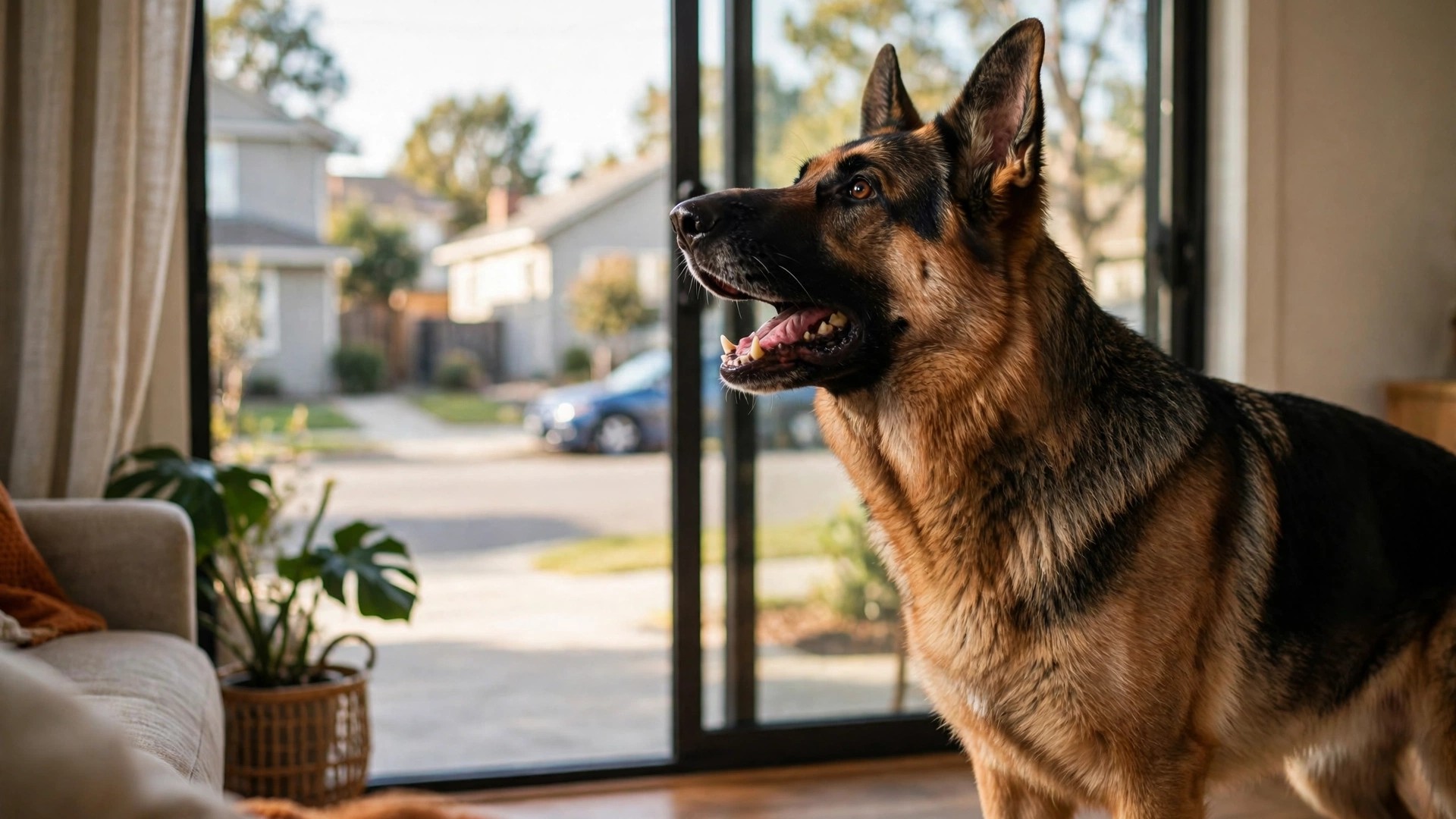
You are standing at the kitchen counter chopping carrots, and your German Shepherd is already there. Nose on the counter edge, eyes locked on your hands. He has decided, on your behalf, that whatever you are cutting is for him.
Most of the time, he is right. A raw carrot is one of the safest things you can hand a German Shepherd. But not every vegetable in the fridge is a good idea. Onions sit in almost every kitchen, and a single medium onion can poison a 45-pound dog. This guide covers the 15 safe vegetables, how to serve them, and the short list that should never cross your dog’s bowl. Every verdict is checked against the AKC’s guidance and veterinary sources.
Do German Shepherds even need vegetables?
Short answer: no. A complete and balanced dog food already covers a German Shepherd’s needs. The AKC puts it plainly: dogs have no real need for fruits or vegetables, but giving dog-safe ones as a treat or snack is fine. Their full list of fruits and vegetables dogs can or can’t eat is the source behind most of the verdicts here.
So why bother? Vegetables are low-calorie treats, which matters for a breed that gains weight easily and pays for it in its hips. A few genuinely help: pumpkin firms up loose stools, green beans fill a hungry dog up without adding calories, and a frozen carrot keeps a teething puppy busy. They are useful training currency too, but they supplement a good diet, never replace it.
The 10% rule: how much is too much?
Here is the one number that governs this whole article. Treats and extras, vegetables included, should stay under 10% of your dog’s daily calories. That rule shows up in nearly every veterinary nutrition guide, and VetStreet’s vegetable guide repeats it: past 10%, extras start displacing the balanced food your dog actually needs.
For an adult German Shepherd eating roughly 1,500 to 2,000 calories a day, 10% is about 150 to 200 calories of treats. A medium carrot is around 25 calories; a quarter cup of green beans is about 8. You would have to try hard to blow the budget with vegetables. Our dog calorie calculator gives you your own dog’s daily number, and our feeding chart by weight shows how those calories translate into actual food.
One more rule before the list: introduce one new vegetable at a time, and wait a day or two before adding another. If your dog gets soft stools, you will know exactly which vegetable caused it.
15 safe vegetables for German Shepherds
Every vegetable below is safe for a healthy adult German Shepherd when served plain, cut small, and kept inside the 10% rule.
Everyday staples
1. Carrots. The easiest win on this list. Low in calories, high in fiber, and full of beta-carotene. A raw carrot scrapes plaque off teeth as they chew. Cut into sticks for puppies; freeze one for a teething pup.
2. Green beans. For a German Shepherd that needs to lose weight, green beans are your best friend. Very low in calories and high in fiber, they fill the stomach without filling out the waistline. Serve raw, steamed, or frozen, always plain. Skip canned beans unless the label says no salt added. Our guide on how to tell if your dog is overweight walks through the rib check.
3. Pumpkin. Plain canned pumpkin, not pumpkin pie filling, is the go-to for upset stomachs. Its soluble fiber absorbs excess water in the gut, which helps both loose stools and mild constipation. A tablespoon or two mixed into kibble is enough. Keep a can in the cupboard.
4. Sweet potatoes. Cooked only, never raw. Raw sweet potato is hard to chew and hard to digest. Baked, boiled, or mashed with the skin off, it is one of the most nutrient-dense vegetables you can offer: fiber, vitamins A and B6, manganese, and potassium. Higher in calories than the others here, so keep it to a tablespoon.
5. Cucumber. Mostly water, almost no calories, and genuinely hydrating on a hot day. The AKC notes cucumbers are especially good for overweight dogs: little to no carbohydrates or fat. Slice into coins, or freeze a few for a summer snack.
Worth rotating in
6. Peas. Fresh or frozen, peas are a solid source of fiber, protein, and vitamins A, B, and K. Small enough for training treats straight from the freezer. A tablespoon or two is plenty. Avoid canned peas with added salt.
7. Broccoli. Safe, but only in small amounts. The AKC says dogs can eat broccoli cooked or raw, as long as nothing is added, and it is high in fiber and vitamin C. The catch is a compound in the florets called isothiocyanates, which irritate the stomach in large amounts. The AKC’s guidance is that broccoli is safe under 10% of daily intake, and over 25% is considered toxic. A floret or two, not a bowlful.
8. Celery. Crunchy, low in fat, and a decent source of fiber, folate, and vitamins A, C, and K. Another good weight-loss treat, and many owners swear it freshens their dog’s breath. Cut it into bite-size pieces first, since long strings can choke.
9. Zucchini. Low in calories, packed with fiber and vitamins, and a safe everyday option vets mention often. Raw or cooked both work, but cut it into small pieces: a whole zucchini can choke, and too much loosens stools.
10. Bell peppers. Red, yellow, or green, bell peppers are safe and bring vitamin C and beta-carotene to the bowl. Remove the stem and seeds, cut into strips, and serve raw or lightly steamed. Most Shepherds prefer red peppers, which are sweeter. Skip spicy peppers: capsaicin upsets their stomach.
11. Cauliflower. A close cousin of broccoli with the same rules: safe in small amounts, served plain, raw or steamed. Too much causes gas.
Occasional, in small amounts
12. Spinach. The AKC says dogs can eat spinach, but it is not one of the top vegetables to share, because spinach is high in oxalic acid, which blocks calcium absorption and can lead to kidney damage. A leaf or two is fine for a healthy dog. Skip it if your dog has kidney or bladder stones.
13. Lettuce. Safe but not very useful. Lettuce is mostly water with a little fiber, so it adds crunch and almost nothing else. Romaine and green leaf are fine; iceberg can cause loose stools in larger amounts. A few torn leaves in food is plenty.
14. Asparagus. Cooked asparagus is safe and brings fiber, vitamins, and folate. Raw asparagus is tough and hard to digest, so always cook it first and cut it into short pieces. Most owners try it once and go back to carrots.
15. Beets. Cooked beets are safe and rich in fiber, folate, and manganese. Serve peeled and diced. Two things to know: beets can turn your dog’s urine a pinkish red, which looks alarming but is harmless, and they are fairly high in natural sugar, so they belong in the occasional pile.
Safe vs. avoid: the quick-reference table
| Vegetable | How to serve | Best for | Watch out for |
|---|---|---|---|
| Carrots | Raw or steamed | Teething | Cut small for puppies |
| Green beans | Raw, steamed, frozen | Weight loss | No canned with salt |
| Pumpkin | Plain canned, 1-2 tbsp | Digestion | Never pie filling |
| Sweet potatoes | Baked or boiled, peeled | Fiber, vitamins | Never raw; higher calories |
| Cucumber | Raw slices | Hydration | Almost none |
| Peas | Fresh or frozen | Training treats | Avoid canned with salt |
| Broccoli | Small florets | Vitamin C | Keep under 10%; stalks choke |
| Celery | Raw, cut small | Weight loss | Strings can choke |
| Zucchini | Diced | Everyday veggie | Whole zucchini chokes |
| Bell peppers | Seeds out | Vitamin C | No spicy peppers |
| Cauliflower | Small pieces | Fiber | Gas |
| Spinach | A leaf or two | Iron | Oxalic acid |
| Lettuce | Torn leaves | Crunch | Iceberg can loosen stools |
| Asparagus | Cooked, cut short | Fiber | Never raw |
| Beets | Cooked, peeled, diced | Fiber | Pink urine (harmless) |
| Onions, garlic, leeks, chives | Never | Nothing | Toxic in every form |
| Raw or green potatoes | Never | Nothing | Solanine |
| Wild mushrooms | Never | Nothing | Some species are deadly |
| Corn on the cob | Never | Nothing | Cob blocks the gut |
Vegetables your German Shepherd must never eat
The danger list is short. Onions, garlic, leeks, chives, and shallots are all members of the allium family, and all of them are toxic to dogs. The AKC’s guidance on onions is blunt: dogs should never eat onions, in any form. The toxin, N-propyl disulfide, breaks down red blood cells and causes anemia. It takes only about 100 grams of onion, roughly one medium onion, per 20 kilograms of body weight to cause toxic effects, so one medium onion is enough to endanger a 45-pound German Shepherd. Cooking does not help, and powdered onion and garlic in seasoning mixes count too. The AKC explains it all in Can Dogs Eat Onions?
Raw or green potatoes are next: green skin and sprouts contain solanine, a natural toxin, and raw potato starch is hard to digest. Cooked, plain potato is safe in small amounts, but sweet potato does the job better.
Wild mushrooms are a hard no: some species are deadly, and telling safe ones from dangerous ones is a job for an expert. Corn on the cob deserves a mention too: the corn itself is fine, but dogs swallow chunks of cob whole, and a cob can lodge in the gut and need surgery to remove. At a barbecue, keep finished cobs in a closed bin.
If your dog eats any of these, do not wait for symptoms: onion poisoning signs often take a few days to show up. Call your vet, or the ASPCA Animal Poison Control Center at (888) 426-4435. The ASPCA keeps a full list of people foods to avoid feeding your pets.
The 7-day vegetable introduction plan
New foods go wrong most often when owners change too much at once. This plan adds vegetables gradually, one at a time, so you always know what caused a problem.
Day 1: pick one starter. Carrots or green beans are the safest first choices. Offer a few carrot sticks for an adult, a tablespoon for a puppy.
Day 2: watch the stools. Normal stools mean it agrees with your dog. Soft stools mean the portion was too big. Add nothing new today.
Day 3: repeat the same vegetable. Same portion, same vegetable. A second good day means it is a keeper. If stools are still soft, halve it.
Day 4: add a second vegetable. Cucumber or peas are good second picks: gentle on the stomach. Keep the first vegetable and add a little of the new one.
Day 5: mix it into a meal. Stir a tablespoon of pumpkin or mashed sweet potato into the kibble. A fast eater slows down, and a picky eater often finishes the bowl.
Day 6: try a cooked vegetable. Steam a few green beans or a small piece of broccoli and offer them warm, not hot. Cooked vegetables digest more easily, so they suit puppies and older dogs.
Day 7: settle the rotation. Pick the two or three vegetables your dog liked and tolerated, and make those your regulars.
How much to serve: a German Shepherd serving chart
Portions depend on size: a puppy at 8 weeks weighs very little, and an adult male can reach 40 kilograms. Use the chart as a starting point, then adjust for your dog’s weight and stools. All amounts are per day, across all treats.
| Age and weight | Daily portion |
|---|---|
| Puppy, 8-12 weeks (5-10 kg) | 1-2 tablespoons |
| Puppy, 3-6 months (10-20 kg) | 2-4 tablespoons |
| Adolescent, 6-12 months (20-30 kg) | 1/4 to 1/2 cup |
| Adult, 1-7 years (22-40 kg) | 1/2 to 1 cup |
| Senior, 7+ years (22-40 kg) | 1/2 to 3/4 cup, cooked and soft |
Puppies need vegetables cooked and soft, because their digestion is still developing and hard raw vegetables are a choking risk. Seniors go the same way. Adults can handle raw. If your dog is on a prescription diet or has kidney disease, diabetes, or bladder stones, check with your vet first. The German Shepherd weight chart shows what your dog should weigh at each age.
Frequently asked questions
Can German Shepherds eat raw vegetables?
Yes, for most of them. Carrots, green beans, cucumber, celery, zucchini, peas, and bell peppers are fine raw, cut into bite-size pieces. Sweet potatoes, asparagus, and beets must be cooked first. Keep it plain: no butter, salt, or oil.
How many vegetables can I give my German Shepherd per day?
Keep all treats, vegetables included, under 10% of daily calories: roughly half a cup to a cup a day for most adult German Shepherds, a tablespoon or two for puppies. Unsure of your dog’s daily calories? Run them through our dog calorie calculator.
Can German Shepherd puppies eat vegetables?
Yes, from about 8 weeks, in small amounts and served soft. Steamed carrot coins and peas are good first vegetables. Introduce one at a time and keep portions tiny.
Why does my German Shepherd eat grass?
Grass eating is common and usually harmless, and it is a different habit from eating vegetables you offer. If your dog eats grass and vomits often, or eats grass obsessively, see a vet. We covered the full picture in our article on why dogs eat grass and vomit.
Before you share: the quick checklist
- Is it on the safe list? Have I checked the never-feed list?
- Is it plain, with no butter, salt, oil, garlic, onion, or seasoning?
- Is it cut small enough that my dog cannot swallow it whole?
- Is it cooked if it needs cooking (sweet potato, asparagus, beets)?
- Am I introducing only one new vegetable this week?
- Does the portion fit inside the 10% treat rule for the day?
- Does my dog have kidney disease, diabetes, bladder stones, or a prescription diet? If yes, I checked with the vet.
That is the whole system: safe list, plain preparation, small pieces, one new food at a time, and the 10% rule doing the quiet work. Your German Shepherd will still stare at you while you chop vegetables. Now you know which pieces are safe to drop on the floor for him.
Recommended
OXO Good Grips Stainless Steel Steamer Basket
Steams sweet potatoes, broccoli, and green beans in minutes with no butter or seasoning.
Check Price on AmazonRecommended
KONG Classic Durable Natural Rubber Toy (Large)
Stuff it with mashed pumpkin and a few green beans, freeze it, and you have a 20-minute veggie puzzle.
Check Price on AmazonRecommended
Etekcity Digital Kitchen & Food Scale
Weigh the veggie portion so treats stay inside the 10% rule instead of guessing.
Check Price on AmazonThis article is for information only and isn’t a substitute for your vet’s advice.
Leave a Reply