
Disclosure: Pets Life Time participates in affiliate programs. Product links in this article may earn us a commission at no extra cost to you, it helps keep our content free. Learn more
Ask three vets when to spay or neuter a German Shepherd and you may get three different answers. One says six months, same as every dog. Another says wait until two years. A third says it depends on whether your dog is male or female, then asks about your living situation. The research changed, and German Shepherds are one of the breeds where timing matters most.
For decades, six months was the standard answer for almost every dog. Shelters still use it, and plenty of vets still recommend it, because early surgery prevents unwanted litters and cuts some cancer risks. Then UC Davis researchers followed more than a thousand German Shepherds for over fourteen years, and the numbers told a different story for this breed. Dogs neutered before their first birthday developed joint problems at two to three times the rate of dogs left intact.
There is no single right age for every German Shepherd. What follows is the actual research, the trade-offs on both sides, and a clear way to make the call with your own vet.
Why the Old 6-Month Rule Does Not Fit German Shepherds
The six-month rule came from a sensible place. Spay or neuter young, and you prevent litters, reduce roaming and marking in males, and nearly eliminate mammary tumors in females spayed before their first heat.
A German Shepherd is not a small dog. This breed keeps growing until 18 to 24 months, and the hormones removed by spaying or neutering help tell the growth plates in the long bones when to close. Take them away too early and the bones keep growing a little longer than they should. In a breed already prone to hip and elbow dysplasia, that small change adds up.
The American Kennel Club now says the same thing in plain terms: the best age to spay or neuter is no longer a standard six months for every dog, and large breeds may need to wait until they are near or over 12 to 18 months. The American Animal Hospital Association agrees, recommending that large-breed dogs be neutered after growth stops, usually between 9 and 15 months.
What the UC Davis Study Actually Found
The study most vets argue about is Hart et al., from researchers at the University of California, Davis. The team reviewed hospital records for 1,170 German Shepherds over 14.5 years, tracking joint disorders and cancers through eight years of age, and mammary cancer in females through eleven years.
| Group | Joint disorders (hip dysplasia, elbow dysplasia, cruciate ligament tears) | Other findings |
|---|---|---|
| Males left intact | 7% | Baseline |
| Males neutered before 1 year | 21% | 3x the intact rate |
| Females left intact | 5% | Baseline; mammary cancer 4% |
| Females spayed before 1 year | 16% | 3x the intact rate; mammary cancer under 1%; incontinence 7% (0% intact) |
Both sides use this table. The joint numbers are the strongest case for waiting: a male neutered before his first birthday had a 21% chance of a joint disorder, against 7% for an intact male. For females the jump was from 5% to 16%. A 2020 follow-up covering 35 breeds recommended delaying sterilization until at least two years for both sexes, and a 2024 update covering 40 breeds, summarized by the AKC, kept that guidance in place.
But the same study gives the early-spay camp real ammunition. Females spayed before one year had mammary cancer at under 1%, against 4% for intact females. And urinary incontinence showed up in 7% of females spayed before a year, against none in intact females. Every number in that table is a real trade-off, not a win for one side.
One detail gets left out of most summaries. For German Shepherds, the other cancers tracked, lymphoma, mast cell tumors, hemangiosarcoma, and bone cancer, were not higher in neutered dogs than in intact dogs through eight years of age.
The Case for Waiting Until 2 Years
Waiting has one big argument behind it: joints. German Shepherds already carry one of the highest rates of hip dysplasia of any popular breed, and our guide to German Shepherd hip dysplasia explains how much of a dog’s later life that condition can take away. A Shepherd with bad hips at age five cannot run, climb stairs, or get up without help.
Waiting also lets the dog finish growing. Growth plates typically close between 12 and 18 months, and the breed does not reach full adult weight and muscle until closer to two years. Our German Shepherd growth timeline lays out the stages month by month.
Waiting works best with a controlled setting: a fenced yard, a leash on every walk, no unsupervised contact with intact dogs of the opposite sex, and an owner willing to manage a female through one or two heat cycles.
The Case for Doing It Earlier
Waiting is not free. The strongest argument for spaying a female earlier is mammary cancer. Cornell University College of Veterinary Medicine cites figures from the American College of Veterinary Surgeons: a female spayed before her first heat has a 0.5% risk of mammary cancer. After the first heat the risk rises to 8%, and after the second heat it jumps to 26%. Roughly half of mammary tumors are malignant. That is the number that keeps many vets recommending an earlier spay for females, even knowing the joint data.
Then there is pyometra, a uterine infection that VCA Hospitals describes as serious and life-threatening, most common in older unspayed females and usually striking in the weeks after a heat cycle. Veterinary estimates put the lifetime risk at roughly one in four unspayed females by age ten.
For males, the early-neuter case is thinner on health grounds but real on practical ones. Neutering eliminates testicular cancer and reduces prostate problems. It can reduce roaming and marking, though it will not fix aggression that comes from fear or poor socialization. If your male escapes the yard, lives near intact females, or goes to daycare that requires neutering, the practical case for doing it sooner gets stronger.
There is also the litter question. A female in heat can attract males from a surprising distance, and a single accident means a litter of large-breed puppies to place. If you cannot guarantee separation during heat cycles, spay earlier even if the joint numbers favor waiting.
Males and Females Face Different Math
This is the part most general articles skip, and it is where the disagreement among vets gets sharpest. The trade-offs are not the same for a male and a female.
| Factor | Males | Females |
|---|---|---|
| Joint disorders if done before 1 year | 7% to 21% | 5% to 16% |
| Cancer risk cut by early surgery | Testicular cancer gone, but it is uncommon and usually curable | Mammary cancer: 0.5% before first heat, 8% after one heat, 26% after two |
| Infection risk removed | None comparable | Pyometra gone, about 1 in 4 unspayed females by age 10 |
| Extra risk from early surgery | Joint disorders | Joint disorders plus incontinence in about 7% |
| What the UC Davis team recommends | Delay until 2 years or later | Delay until 2 years or later |
| Where most vets land | 18 to 24 months | 12 to 24 months, often after the first heat, before the second |
For a male, the case for waiting is cleaner: no pyometra, no mammary trade-off of the same size, and a large joint benefit. Most vets who follow the UC Davis data suggest 18 to 24 months, and many accept 12 months as a floor. For a female, the decision is genuinely harder. Wait until two years and you protect her joints but let her go through two or three heat cycles. Spay at six months and you nearly eliminate mammary cancer but accept the joint and incontinence numbers. The common compromise is after the first heat, around 12 months, and before the second.
How to Decide for Your Own Dog: 5 Questions Before You Book
The right age for your dog comes down to five questions. Answer them honestly and the decision mostly makes itself.
1. Can you prevent an accidental litter? If your female will be around intact males, or your male can escape the yard, the risk of an unplanned litter outweighs the joint benefit of waiting.
2. Is your dog male or female? The female decision carries a cancer trade-off the male one does not. If you have a male and a secure home, waiting is the easier call. If you have a female, the choice is closer and the first-heat timing matters.
3. Does your dog have joint risk factors already? A puppy from parents with hip dysplasia, or a dog already showing stiffness, has more to lose from early neutering. Ask your vet about the parents’ hip scores.
4. What does your daily life allow? Managing a female in heat means three weeks of bleeding, twice a year, with no off-leash walks and no dog parks. Managing an intact male means constant vigilance around females in heat. If that sounds unworkable, earlier surgery is the honest answer.
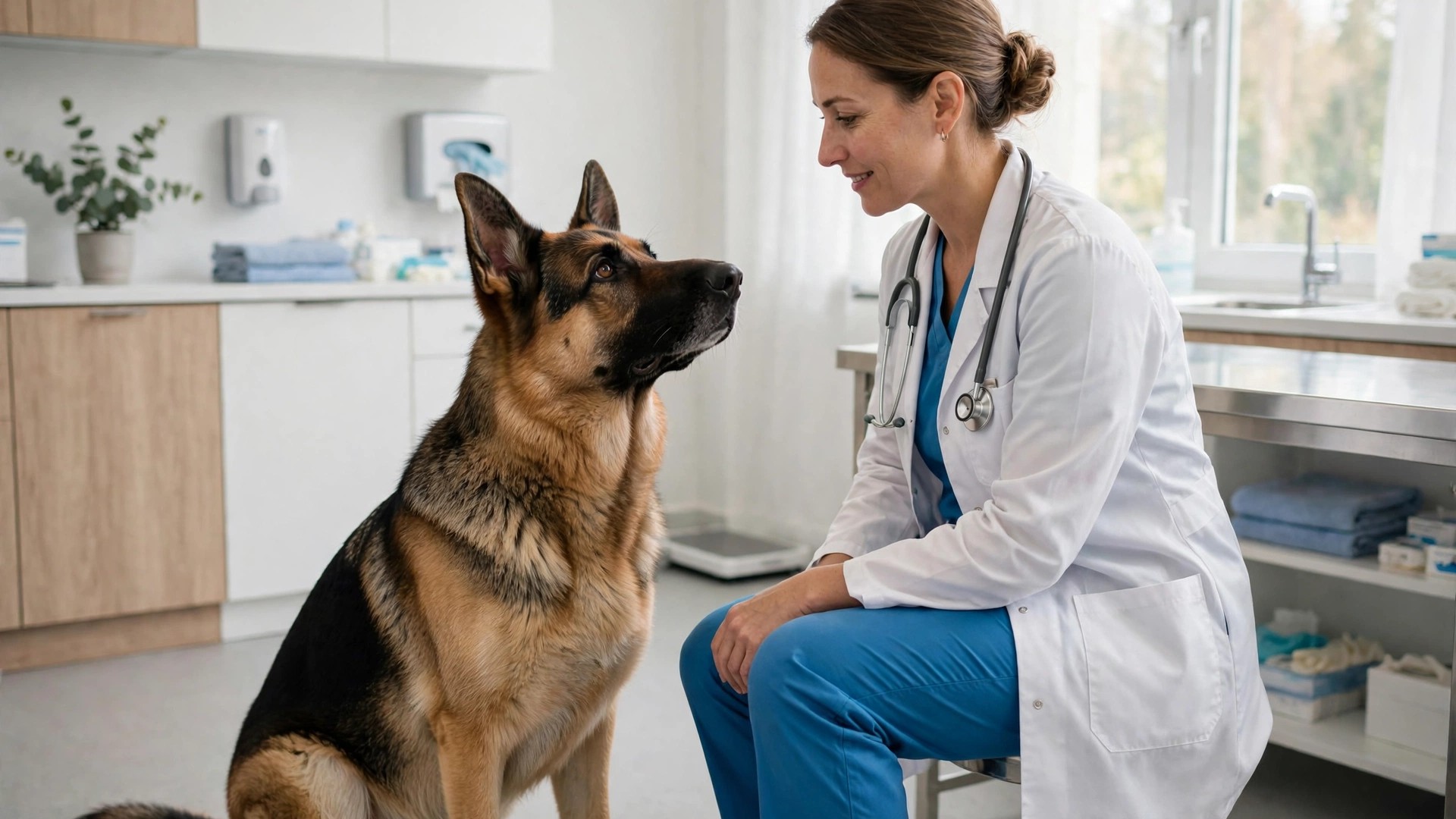
5. What does your vet actually recommend for this dog? A vet who has examined your dog and knows the parents’ history is worth more than any article, including this one. If your vet’s answer surprises you, ask them to walk you through the UC Davis numbers.
If your answers point to waiting, set a date now. Pick a target age, 18 or 24 months, and put it in your calendar. The most common mistake is drifting: the dog turns three, still intact, and nobody ever made a decision. Our guide to how long German Shepherds live covers the other choices that shape those years.
What Recovery Really Looks Like
Spaying is a bigger operation than neutering, since it opens the abdomen, but both are routine procedures. The hard part is the two weeks after.
Activity must stay restricted for 7 to 10 days while the incision heals. No running, no jumping, no stairs if you can avoid them, and leash walks only, short and calm. Plan for it: frozen Kongs, puzzle feeders, and gentle training games that use the brain instead of the body. The puppy training schedule has low-energy exercises that work for a recovering adult too.
Your dog will come home with a cone or a recovery suit. Keep it on, even at night, until the vet says otherwise. One unsupervised licking session can open an incision and turn a routine recovery into a second surgery. Watch the incision daily: a little redness is normal, but swelling or discharge needs a vet call the same day.
One more change after surgery: metabolism slows. Neutered dogs need fewer calories than intact dogs of the same weight. Recalculate portions after surgery with our dog calorie calculator rather than feeding the same amount out of habit.
If You Decide to Wait: Managing an Intact Dog
Waiting only works if you can manage it. For a male, that means no off-leash time anywhere an intact female might be, a fence you have genuinely tested, and extra care on walks when neighborhood females are in season. Some intact males mark more as they mature, and training, not surgery, is what handles that.
For a female, it means heat cycles, usually starting between 6 and 12 months and repeating roughly every six months. Each heat lasts about three weeks, during which she cannot go to dog parks, daycare, or off-leash areas. Washable diapers help indoors. Check your boarding or daycare intact-dog policy now, because many facilities will not take an intact dog over a certain age.
Recommended
KONG Cloud Collar (Inflatable Recovery Collar)
A softer alternative to the hard plastic cone after surgery. Your Shepherd can eat, sleep, and lie down comfortably while the incision stays protected.
Recommended
Zesty Paws Calming Bites for Dogs
Recovery means 7 to 10 days of forced rest, and a bored young Shepherd does not rest quietly. These chews help take the edge off crate rest.
Recommended
Big Barker Orthopedic Dog Bed (Large)
Joint health is the whole reason many owners wait to neuter. A proper orthopedic bed supports those joints every night, during recovery and for years after.
Frequently Asked Questions
What is the best age to neuter a male German Shepherd?
Most vets who follow the UC Davis research recommend 18 to 24 months, with 12 months as a reasonable floor. Joint disorders tripled for males neutered before one year, from 7% to 21%.
What is the best age to spay a female German Shepherd?
No age wins on every measure. Spaying before the first heat gives the lowest mammary cancer risk at 0.5%, but raises joint disorder risk to about 16% and incontinence to about 7%. The common compromise is after the first heat, around 12 months, and before the second.
Does neutering calm a German Shepherd down?
Sometimes, a little. Neutering can reduce roaming and marking. It does not reliably fix fear, reactivity, or poor manners, and it is not a substitute for training.
Will my German Shepherd get fat after neutering?
Many do. Metabolism slows after surgery, so the same food that maintained weight before will add weight after. Measure food, recalculate portions, and weigh your dog monthly for the first six months.
Is it safe to spay a dog while she is in heat?
Vets generally prefer not to. Surgery during heat carries more bleeding risk, so most vets ask you to wait about two months after the cycle ends.
Before Surgery Day: A Short Checklist
Once you have picked a date, a little preparation makes the two weeks after surgery far easier:
- Book a week when someone is home most days. The first three days need the most watching.
- Buy the recovery collar or suit before surgery day. Test the fit while your dog is calm, not groggy and sore.
- Set up a recovery space: a crate or small room with a bed, water nearby, and nothing to jump on.
- Stock frozen Kongs, lick mats, and puzzle feeders. Mental work is how a Shepherd rests without going stir crazy.
- Ask your vet about pain medication in advance, and confirm when the first dose is due after you get home.
- Weigh your dog the week before surgery, then recalculate portions for the slower post-surgery metabolism.
- Book the follow-up before you leave the clinic. Stitches usually come out at 10 to 14 days.
Both sides have real numbers behind them. The joint data favors waiting. The mammary and pyometra data favors earlier surgery for females. Your dog’s sex, your home, and your vet’s judgment fill in the rest. Pick a date, write it down, and make the decision on purpose rather than by accident.
This article is for information only and isn’t a substitute for your vet’s advice.


Leave a Reply