
Disclosure: Pets Life Time participates in affiliate programs. Product links in this article may earn us a commission at no extra cost to you — it helps keep our content free. Learn more
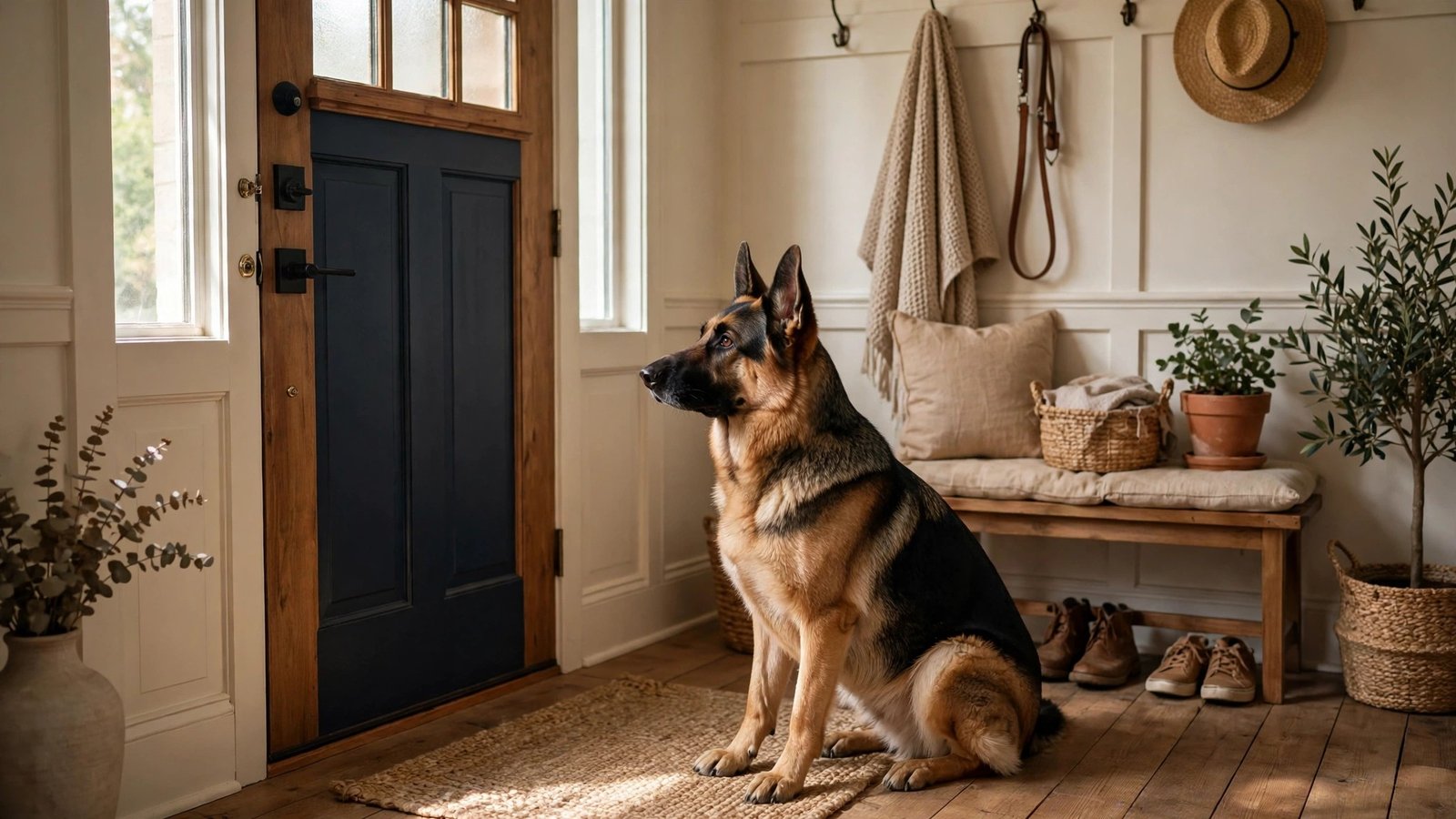
You get home from work and the house tells the story. The door frame is chewed raw. A neighbor left a note about barking. Your German Shepherd greets you like you have been gone for a year.
It is easy to read this as bad behavior. It usually is not. A dog with separation anxiety is not punishing you for leaving. He is panicking because you left. That difference changes everything about how you fix it. Punishment makes panic worse. Patience, structure, and slow practice make it better.
This guide covers seven steps that move the needle, plus a 14-day starter plan, written for German Shepherds specifically.
Is It Really Separation Anxiety?
Not every destructive dog has separation anxiety. Some dogs are bored. Some are under-exercised. Some are puppies who never learned what to chew. Treating boredom like anxiety wastes weeks, and treating anxiety like boredom is unfair to the dog. So start by checking which problem you actually have.
The clearest test is also the simplest. Set up your phone and record your dog for 30 minutes after you leave. Dogs with true separation anxiety usually start showing distress within minutes, often right at the door you left through. Bored dogs tend to settle, nap, then get into trouble later out of restlessness.
Watch for this cluster of signs:
- Barking, howling, or whining that starts soon after you leave and runs in long stretches
- Scratching or chewing at doors, windows, and door frames, the exit routes
- House soiling in a dog who is otherwise reliably house-trained
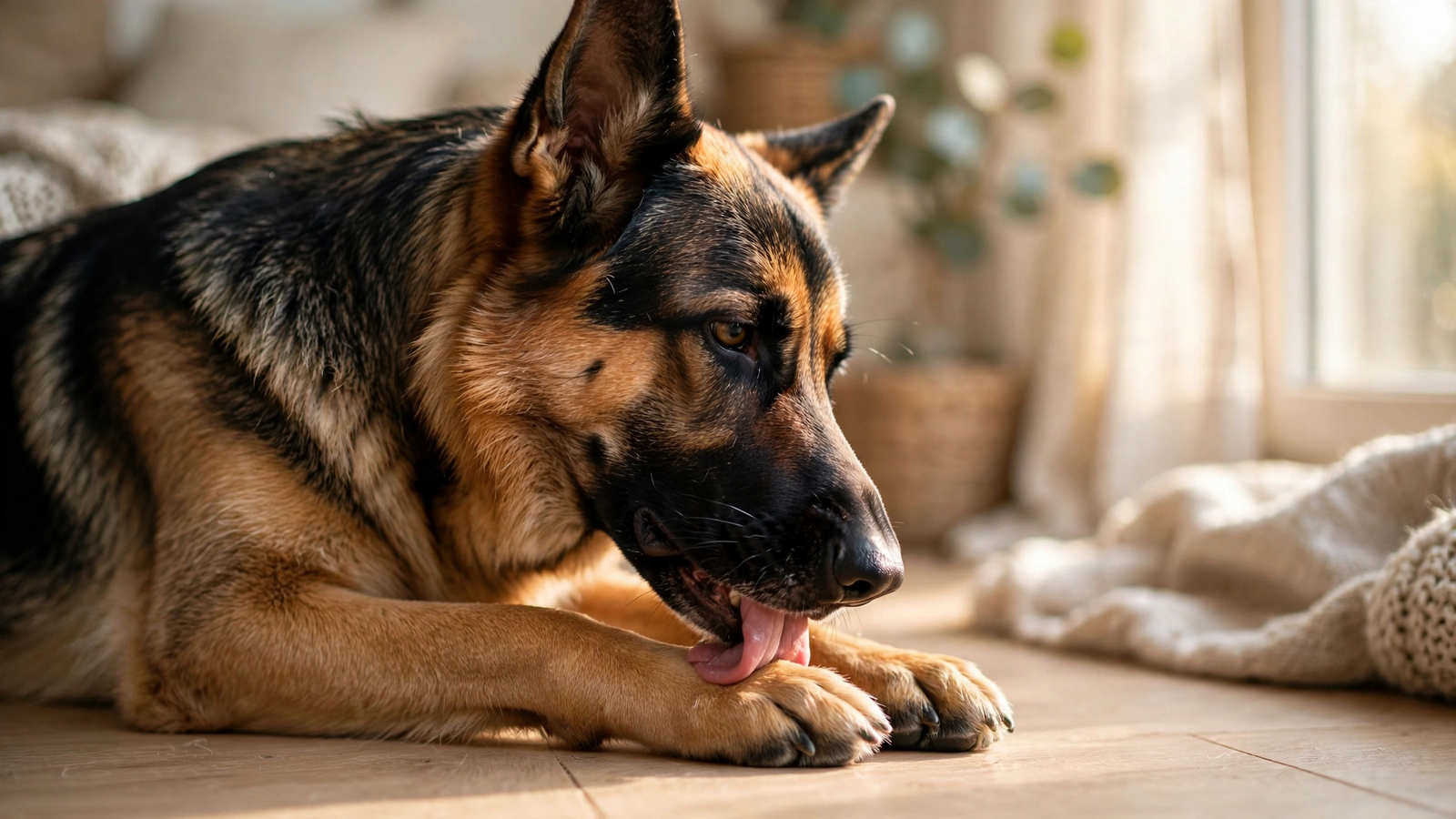
- Pacing, drooling, or panting that looks frantic rather than playful
- A greeting when you return that is over the top and slow to settle
One sign on its own proves little. The pattern matters. Several of these signs, happening only when the dog is alone, point toward separation anxiety. The American Kennel Club draws the same line, noting that dogs with separation anxiety show distress tied to being left alone, while some dogs are simply bored and looking for something to do.
Separation Anxiety or Something Else?
| What you see | Likely cause | What fixes it |
|---|---|---|
| Barking, door scratching, pacing that start minutes after you leave | Separation anxiety | Graduated absences, cue desensitization, calm departures |
| Chewing random objects, trouble starting an hour or more in | Boredom or under-stimulation | More exercise, food puzzles, rotating toys |
| Sudden house soiling in an older dog, or soiling plus drinking far more water | Medical issue | Vet visit first, before any training plan |
| Destruction only on days with no exercise | Unmet exercise needs | Longer walks, training, and play before departures |
| Calm on camera but wild when you walk in | Overexcited greeting habit | Low-key arrivals, reward calm behavior |
If the medical row sounds familiar, book the vet visit before you start training. Pain, urinary infections, and cognitive changes in senior dogs can all look like anxiety from the outside. Training cannot fix a bladder infection.
Why German Shepherds Struggle With This More Than Most Breeds
German Shepherds were bred to work in close partnership with one person. That bond is why they are such loyal family dogs. It is also why being alone hits them hard. A breed built to read your every move notices when you pick up your keys. A breed built to stay alert watches the door after you close it.
Add intelligence and the problem sharpens. A German Shepherd learns the whole routine that predicts your leaving: shoes, jacket, bag, keys, the same goodbye phrase. By the time you reach the door, some dogs are already anxious.
Triggers make an existing tendency worse. A rehomed dog may panic because being left once already ended in losing his family. A puppy who spent months with someone home all day can fall apart when work schedules change. A move, a new baby, or losing another pet can set off anxiety in a dog who coped fine before. Cornell University College of Veterinary Medicine notes that rehomed dogs appear more likely to show separation anxiety, while dogs with one family since puppyhood usually cope better with being alone. None of this is your fault. It is still your problem to solve, and it is solvable.
The 7 Steps
Work these in order. Each one supports the next.
Step 1: Film It and Rule Out Medical Problems
Record two or three departures on your phone. Note when the barking starts, how long it lasts, and what the dog does. This tells you whether you are dealing with anxiety, boredom, or a mix. It also gives you a baseline, so in two weeks you can compare and see real progress instead of guessing.
Get your dog checked by your vet if there is any chance something physical is going on. Sudden behavior changes in an older dog deserve a medical look first. A two-minute clip is worth a thousand words in an exam room.
Step 2: Tire the Body and the Brain Before You Leave
Exercise alone does not cure separation anxiety. “Just walk him more” is the advice every anxious-dog owner hears, and on its own it disappoints. But a dog who has had a solid workout and some mental work before you leave is far more likely to settle, and every other step works better on a dog who is not buzzing with unused energy.
For an adult German Shepherd, that means real exercise, not a ten-minute stroll around the block. A long walk with plenty of sniffing time, a game of fetch, or a training session that asks him to think. Fifteen minutes of nose work can tire a Shepherd out as well as a much longer run, because this breed needs a job for its brain. Our guide on how much exercise a German Shepherd needs daily breaks it down by life stage. Do the exercise 30 to 60 minutes before you leave, not two minutes before, so he has time to cool down.
Step 3: Break the Power of Your Departure Cues
Your dog is not only reacting to your absence. He is reacting to everything that predicts it. Keys in the pocket. Shoes on. Jacket grabbed. Bag by the door. Your dog has watched this hundreds of times. He knows the movie and he knows the ending.
Break the pattern. Several times a day, when you are not leaving, pick up your keys and put them down. Put your shoes on and sit back on the couch. Put your jacket on and make a coffee. The goal is boring repetition: keys stop meaning “she is leaving” and start meaning “that sound again.”
One mistake to avoid: do not sneak out. Sneaking feels kind to you and confusing to your dog. He still notices you are gone, and now the disappearance is unpredictable. Calm and obvious beats sneaky every time.
Step 4: Make Arrivals and Departures Boring
This one feels wrong. Your dog is thrilled to see you. You are happy to see him. Why would you ignore that? Because every dramatic goodbye and wild reunion teaches your dog that your leaving and returning are the biggest events of his day. You want the opposite. Leaving should be ordinary. Coming home should be ordinary.
So keep it flat. No long goodbyes, no “be a good boy, Mommy will be right back” speeches. When you leave, a short calm word if you use one, then go. When you return, walk in, put your things down, and wait until your dog has settled before you greet him. The dog who learns that your return is no big deal starts to believe your absence is no big deal either.
This is also the step where you stop punishing the damage. Scolding a dog for what he did hours ago teaches him nothing. He cannot connect your anger to the chewed door frame. Clean up without a lecture.
Step 5: Practice Being Alone in Small, Winnable Doses
This is the core of the whole plan. Everything else supports it. Graduated absences, also called desensitization, means you practice leaving for periods so short that your dog stays calm, then slowly stretch them.
Start absurdly small. If your dog panics at five minutes, start at 30 seconds. Step outside the door, wait, come back in calmly. No fanfare. Repeat. When 30 seconds is easy, try a minute. Then two. Then five. Then ten. The pace is set by your dog, not by your calendar.
Only increase the time when your dog is calm at the current level. If he fails at five minutes, drop back to two and rebuild. Vary the length: 30 seconds, then two minutes, then one minute, then five. If every absence gets longer, your dog learns each departure is worse than the last. Do several short reps a day rather than one long one.
For many dogs, the jump from inside the house to outside the front door is the hardest part, so practice inside first. Step into another room and close the door for 30 seconds, then a minute, then step out the front door and come straight back. Most owners who fail here fail because they rushed. Go slower than you think you need to.
Step 6: Set Up the Alone-Time Space
Your dog needs a safe, comfortable spot he already likes when you are home. A dog who only goes in his crate when you leave will hate the crate, because the crate means you are leaving. A dog who naps in his crate with the door open all evening will accept it as his den.
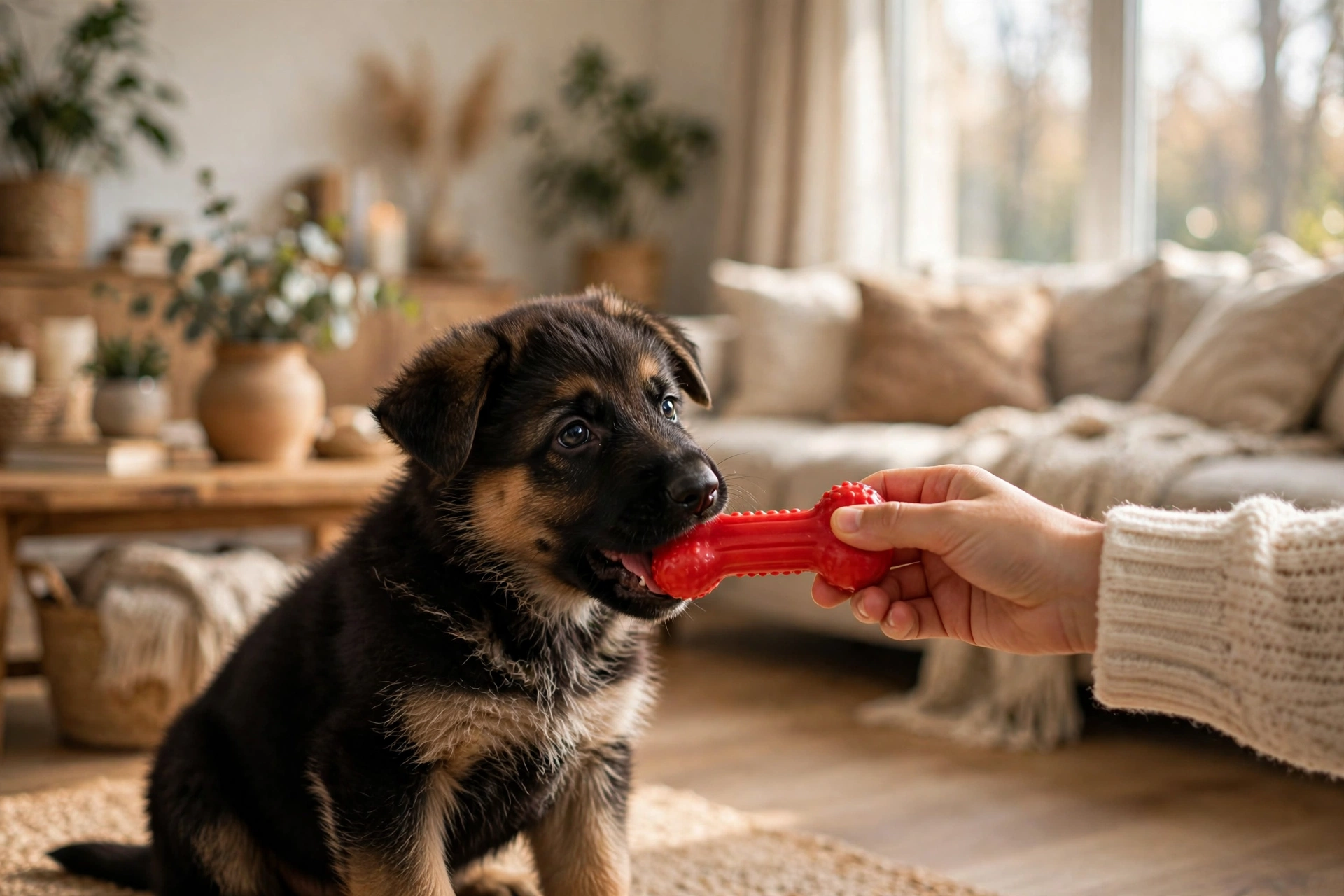
Set the space up with a comfortable bed or crate with the door open, in a room the dog already uses. Add a frozen stuffed Kong or a food puzzle, given only when you leave, so it becomes a departure-only treat. Background sound helps some dogs. Something that smells like you comforts others. Rotate the toys every few days.
A frozen Kong stuffed with a smear of peanut butter and kibble can keep a food-motivated dog busy through the hardest first minutes of your absence, which is where the panic lives. Watch the extra calories from stuffed toys, and if you use them daily, recalculate portions with our dog calorie calculator.
Recommended
KONG Classic Durable Natural Rubber Toy (Large)
The departure-only stuffed Kong is the single most useful tool in this plan. Stuff it, freeze it, and hand it over only as you leave.
Check Price on AmazonA note on crates. Crates help some anxious dogs and harm others. If your dog already loves his crate and settles in it, keep using it. If he panics in a crate, scratches at the door until his nails bleed, or has ever hurt himself trying to escape, stop crating him. A panicking dog in a crate can injure himself badly. Our crate training schedule covers how to build positive crate habits for dogs who take to it.
Step 7: Know When to Call In Help
Some dogs need more than a home plan. That is not failure. It is good judgment.
Call your vet or a certified behavior professional if your dog injures himself trying to escape, if the behavior is getting worse after two or three consistent weeks of the steps above, or if you cannot practice graduated absences because your dog panics at any separation, even seconds.
For severe cases, vets sometimes prescribe medication alongside behavior work. Fluoxetine, sold as Reconcile for dogs, is an FDA-approved option for separation anxiety, and it works best combined with the training here, not instead of it. Clomipramine, sold as Clomicalm, was the first medication FDA approved for separation anxiety in dogs. VCA Hospitals notes that fluoxetine can take a few weeks before full effects are seen, and that you should never stop it abruptly without your vet’s guidance. Medication does not sedate your dog into calmness. It lowers the anxiety floor so the training can take hold. VCA’s separation anxiety tips echo the same core advice: practice short separations, exercise first, and talk with your veterinarian about the case.
Recommended
Pet Camera With Two-Way Audio
You cannot fix what you cannot see. A camera shows you exactly when the panic starts, which is the information your vet or trainer will ask for first.
Check Price on AmazonYour 14-Day Starter Protocol
Days 1 to 3: Observe and reset. Film two departures. Book the vet check if anything medical is in question. Start cue desensitization: keys, shoes, and jacket, five to ten random reps a day, without leaving. Switch arrivals and departures to low-key. Set up the alone-time space.
Days 4 to 6: Inside practice. Step into another room and close the door for 30 seconds, then a minute, then three minutes. Reward calm behavior when you return. Start the pre-departure exercise routine. Give the departure-only Kong on every real departure.
Days 7 to 9: Short outside reps. Step out the front door for 30 seconds, then a minute, then three minutes, then five. Mix up the lengths. Do three to five reps a day, plus real errands. If your dog fails at a level, drop back one and rebuild.
Days 10 to 12: Stretch the gap. Push the longest calm absence toward 15, then 20, then 30 minutes. Add a midday check-in, a walker, or daycare on days you are gone longer than your dog can currently handle. Longer absences undo the training.
Days 13 to 14: Test and decide. Film a full departure at your new longest calm time. Compare it to your day 1 footage. Most dogs show real improvement by now: later onset of barking, shorter distress, faster settling. If you see that, keep building the same way. If you see no change, book the vet or behaviorist conversation from step 7.
Recommended
Adaptil Calming Diffuser for Dogs
A pheromone diffuser in the alone-time room is a low-effort addition. Evidence is mixed, but some dogs settle noticeably better with one running.
Check Price on AmazonThis article is for information only and isn’t a substitute for your vet’s advice. If your dog is injuring himself or the behavior is worsening, talk to your veterinarian or a certified behavior professional.

Leave a Reply