
Disclosure: Pets Life Time participates in affiliate programs. Product links in this article may earn us a commission at no extra cost to you — it helps keep our content free. Learn more
Walk up to a Labrador and you can pretty much pat anywhere. Try the same move on a German Shepherd and you might get a very different answer. A stiff body. A head that turns away. Maybe a low growl if you push it.
It is not that German Shepherds do not like affection. Most of them love it. They just have opinions about where it happens, and those opinions are stronger than in most breeds. Learn the spots they actually enjoy and petting turns into one of the best bonding tools you own. This guide covers the seven spots German Shepherds like best, the four to leave alone, how to read the body language that tells you whether to keep going or stop, and a simple seven day plan for a dog who flinches at touch.
Why German Shepherds Are Picky About Touch
A German Shepherd was bred to work, guard, and watch. That job shaped more than the dog’s body. It shaped how the dog reads the world. A Shepherd is always scanning. New sounds, new people, a hand moving fast toward his face, all of it gets assessed before it gets accepted.
That is why the classic greeting, a hand coming down over the top of the head, goes wrong so often with this breed. From the dog’s point of view, something just blocked his vision and reached for the most vulnerable part of his body. A friendly Labrador shrugs that off. A Shepherd files it as a threat until proven otherwise.
Touch also lands differently because of the coat. A Shepherd’s double coat is thick, and light fingertip pats barely register through it. Firm, slow strokes work far better than fast, fluttery pats.
None of this means your Shepherd is cold. The same dog who ducks a stranger’s hand will press his whole weight into your leg on the couch. If your dog seems anxious about touch in general, our guide to why German Shepherds get anxious and how to calm them down covers the signs worth watching for.
The 7 Best Spots to Pet a German Shepherd
Every dog is an individual, and your Shepherd will have his own ranking. But the same seven spots keep coming up. Start at the top with a new dog or a nervous one.
1. The Chest
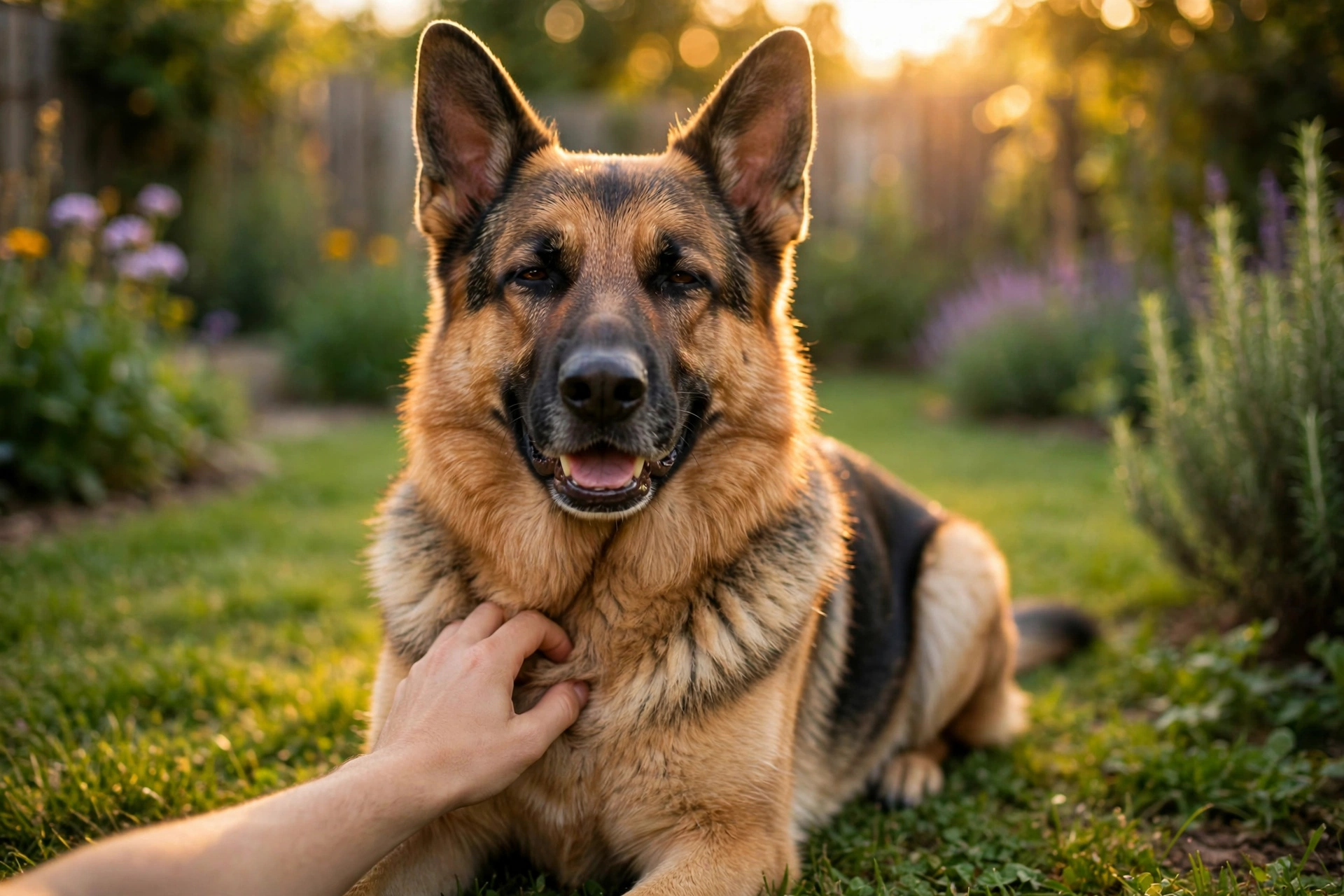
The chest is the number one spot, and it is not close. It sits right where the dog can see your hand coming, which matters a lot to a guarding breed. A slow rub on the upper chest, just below the throat, relaxes most Shepherds within seconds. Use the flat of your hand and long strokes, not fingertips.
2. Behind the Ears
A Shepherd’s ears are full of nerve endings, and a gentle scratch behind them is one of the fastest ways to get that soft, half-closed eye look. Rub the base of the ear in small circles and keep the pressure light. Skip this spot if the ears are hot, red, or the dog keeps shaking his head. Those are signs of an ear problem, and a sore ear needs a vet, not a scratch.
3. Under the Chin
The chin scratch is the quiet favorite. It is close to the face, so it feels personal to the dog, but your hand stays low and visible instead of coming down from above. Slide your fingers under the jaw and scratch gently. A lot of Shepherds will lift their chin higher when they want more, which is about as clear an invitation as a dog can give.
4. The Shoulders and Upper Back
Shepherds carry tension in their shoulders the same way people do, especially after a long walk or a training session. Long, firm strokes from the neck down across the shoulder blades hit the big muscle groups and most dogs melt a little. Follow the direction the fur grows. Going against the grain feels scratchy and most dogs pull away from it.
5. The Base of the Tail
Scratch the spot right where the tail meets the back and many Shepherds go still in the best way. Their eyes soften, their weight shifts toward your hand, and some will even do that funny little butt wiggle. The reason is simple. It is a spot the dog cannot reach himself, and it is packed with nerve endings. Keep the pressure moderate and watch the reaction. A small number of dogs find this spot overstimulating and will walk off or spin toward your hand. That is your answer. Move on to the shoulders.
6. The Neck and Under the Collar
The collar rubs all day, every day, and most owners never think about the skin underneath it. Slip a finger under the collar and give the neck a slow scratch and you will often get a groan of pure relief. Check the skin while you are there. Redness or a bald patch means the collar is too tight or needs a wash.
7. The Belly, Only If He Offers It
The belly is the most misunderstood spot on this list. Some Shepherds adore belly rubs and will flop over the moment you sit down. Others roll over to show submission, not to ask for a rub, and touching the belly then makes them more nervous, not less. If your dog rolls over, goes loose and wiggly, and stays relaxed when you start, keep going. If he goes stiff or freezes, stop and go back to the chest.
Your German Shepherd Petting Map at a Glance
Keep this table handy the first few weeks with a new dog.
| Spot | Best For | How to Do It | Watch Out For |
|---|---|---|---|
| Chest | First greetings, nervous dogs | Flat hand, long slow strokes | Safest spot there is |
| Behind the ears | Calming a wound-up dog | Small circles at the ear base | Hot or red ears need a vet, not a scratch |
| Under the chin | Bonding, kids saying hello | Gentle scratch under the jaw | Keep your hand low |
| Shoulders and upper back | After walks and training | Firm strokes with the fur | Against the grain feels scratchy |
| Base of the tail | A dog who already trusts you | Moderate scratch, short sessions | Some dogs find it overstimulating |
| Neck and under the collar | Evening wind-down ritual | Slow scratch under the collar | Check for redness or a tight collar |
| Belly | Only when the dog offers it | Flat hand, gentle strokes | A stiff body means stop |
4 Spots to Skip, or Approach With Care
Knowing where not to pet matters as much as knowing where to pet. These four areas cause most of the bad reactions owners see.
The top of the head. The number one mistake. A hand coming down over the head blocks the dog’s vision and reads as a dominance move to a guarding breed. Many Shepherds tolerate it from their own people and hate it from everyone else. Pet the chest instead.
The paws and legs. Most dogs dislike having their paws handled, and Shepherds are no exception. Paws are sensitive, and grabbing one triggers the pull-away reflex. You still need to touch them, for nail trims and checking for thorns or cuts, so build up to paw handling slowly with treats.
The tail itself. The base of the tail is a favorite. The tail itself is not. Never pull, lift, or grab a tail. A hand reaching for the tail from behind startles most dogs, and a Shepherd who is already on edge can spin and snap before he has time to think.
The muzzle and face. The muzzle is the most sensitive part of a dog’s body, packed with nerves, and most dogs dislike having it grabbed or stroked. A quick chin scratch is fine. Wrapping your hand around the muzzle is not. This is also why hugs go wrong with Shepherds: a full hug pins the dog’s head and shoulders, and a lot of dogs read that as being trapped.
How to Tell If Your Dog Is Enjoying It
Dogs tell you everything with their bodies. You just have to look at the whole dog instead of one signal. The American Kennel Club’s guide to reading dog body language makes the same point: a wagging tail alone means arousal, not happiness. VCA’s guide to canine communication adds that subtle signals, like a yawn or a lip lick, usually come before the obvious ones.
Green lights, keep going: the body goes loose and wiggly, the tail sweeps wide and low, the eyes go soft and half closed, and the dog leans his weight into your hand or nudges it back when you stop. A paw on your arm or leg during petting is usually an ask for more. Our article on why German Shepherds put their paw on you breaks down what that gesture usually means.
Stop signs, give him space: the body goes stiff or freezes, the tail tucks or goes high and rigid, the ears pin back, the dog turns his head away or licks his lips when no food is around, or he moves away and does not come back. Growling is a stop sign too, and it is one you should thank your dog for. Punishing the growl teaches him to skip the warning next time.
The 7-Day Touch Plan for a Touch-Shy Shepherd
Some Shepherds flinch at touch. Rescue dogs, under-socialized puppies, and dogs who had a bad experience with handling all need the same thing: a slow rebuild where the dog sets the pace.
| Day | Goal | What to Do |
|---|---|---|
| 1-2 | Hands mean good things | Sit on the floor with treats. Do not reach for him. Let him sniff your hand, take a treat, and walk off. Ten minutes, twice a day. |
| 3-4 | One stroke is safe | When he comes close, give one slow stroke on the chest, then a treat. Ending before he gets uncomfortable is what builds trust. |
| 5 | Two spots | Three slow strokes on the chest, three on the shoulders, treat, done. If he leans in, keep going for a minute. If he walks off, let him. |
| 6 | Behind the ears | A few small circles behind one ear. Soft eyes mean continue. A head turn means back to the chest for the rest of the session. |
| 7 | Follow his lead | Offer your hand and see which spot he presents. From here on, add one new spot per week, never more. |
If your dog’s fear of touch comes with shaking, hiding, or snapping, do not work through this plan alone. Talk to your vet first and ask about a referral to a certified behaviorist. A dog who is frightened is not being stubborn, and pushing through fear makes it worse. If alone time is also a struggle, our seven step separation anxiety plan pairs well with this one.
Recommended
Hertzko Self-Cleaning Slicker Brush
Brushing is petting with a purpose. A few minutes with a slicker brush teaches a touch-shy Shepherd that hands near his body mean something good.
Check Price on AmazonRecommended
KONG Classic Durable Natural Rubber Toy (Large)
Stuff it and hand it over after a touch session. Your Shepherd starts to link calm handling with the best part of his day.
Check Price on AmazonRecommended
PetSafe Treat Pouch Sport
The 7-day touch plan runs on well-timed treats. A waist pouch keeps them in reach for the exact second your dog relaxes into your hand.
Check Price on AmazonPetting a German Shepherd You Do Not Know
Everything above assumes your dog. A stranger’s Shepherd is a different situation, and the rules get stricter. The American Kennel Club’s advice on how to greet a dog you do not know is the standard to follow: ask the owner first, let the dog come to you, and keep your pats to the side, neck, back, or chest. Never reach over the dog’s head.
Turn your body slightly sideways and avoid direct eye contact while the dog decides about you. Hold your hand in a loose fist low down so the dog can sniff it. If he approaches and stays loose, a slow chest rub is your greeting. If he hangs back, respect it.
This matters more with Shepherds than with most breeds because a Shepherd who feels cornered can go from warning to bite faster than people expect. Our article on whether German Shepherds are aggressive and what drives it explains why that guarding instinct is so strong in the breed.
Kids need the same rules in simpler words. Hands low, chest or shoulders only, one hand at a time, and stop the second the dog walks away.
Frequently Asked Questions
Do German Shepherds like belly rubs?
Some do, some do not. A Shepherd who flops over loose and wiggly is asking for one. A Shepherd who rolls over stiffly is showing submission, and a belly rub then will make him more uncomfortable. Watch the body, not the position.
Do German Shepherds like being hugged?
Most do not, or at best they tolerate it. A hug pins the dog’s head and shoulders and takes away his exit, which is the opposite of what a guarding breed wants. A chest rub or a lean against your leg means far more to a Shepherd than a hug. If your dog leans his full weight into you, that is his version of a hug. Take it.
Why does my German Shepherd flinch when I pet his head?
Because a hand coming down over the head blocks his vision and feels like a threat, even from someone he loves. Switch to the chest and watch the difference. If the flinch happens with every kind of touch, run the seven day plan above and talk to your vet about whether pain or anxiety is playing a role.
Why does my German Shepherd follow me everywhere?
Petting and following are both bonding behaviors. A dog who shadows you room to room is usually checking in, not being needy. Our article on why German Shepherds follow their owners everywhere covers the full picture, including when shadowing is a sign of anxiety.
Do puppies like different petting spots than adult German Shepherds?
The favorites are the same, but puppies are more sensitive about pressure and more easily overwhelmed. Use a lighter touch and shorter sessions, and stop before the puppy gets mouthy or wiggly. The chest and shoulders are the best starting spots for a pup. Save the belly and the base of the tail for when the puppy is older.
Petting looks simple. With a German Shepherd, it is also a conversation. Start with the chest, skip the top of the head, and let your dog tell you the rest.
This article is for information only and isn’t a substitute for your vet’s advice.
Leave a Reply