
Disclosure: Pets Life Time participates in affiliate programs. Product links in this article may earn us a commission at no extra cost to you — it helps keep our content free. Learn more
If you own a German Shepherd, you already know the deal. You brush the sofa. You brush your black trousers. You find fur in places fur has no business being. The question is not whether your dog sheds. It is how often you need to brush to stay ahead of it without turning grooming into a second job.
Here is the short version. Most German Shepherds need brushing two to three times a week for most of the year. When they blow their coat in spring and fall, that jumps to every single day. Long-coated Shepherds need more, puppies need less but more often.
This guide gives you a real weekly plan you can stick to: a schedule for standard coats, long coats, and puppies, a step-by-step routine, the tools that earn their keep, and the mistakes that damage coats. Everything below is checked against what the American Kennel Club, Chewy’s veterinary team, and VCA Hospitals actually say.
How Often Should You Brush a German Shepherd? The Quick Answer
Different sources give slightly different numbers, because the right answer depends on the dog in front of you:
- American Kennel Club: brush every other day. AKC Breeder of Merit Wendy Wilson recommends this rhythm so “you won’t have balls of fur lying around your house.” (AKC grooming guide)
- Chewy: brush at least three times a week to manage shedding. (Chewy)
- VCA Hospitals: every dog should be brushed at least once a week at minimum, and long-haired dogs need it more often. Brushing also stimulates blood circulation and keeps skin healthy. (VCA)
Put those together and the baseline is 2 to 3 brushings a week for a standard-coated adult, rising to daily during the spring and fall coat blows.
Why the Number Changes Through the Year
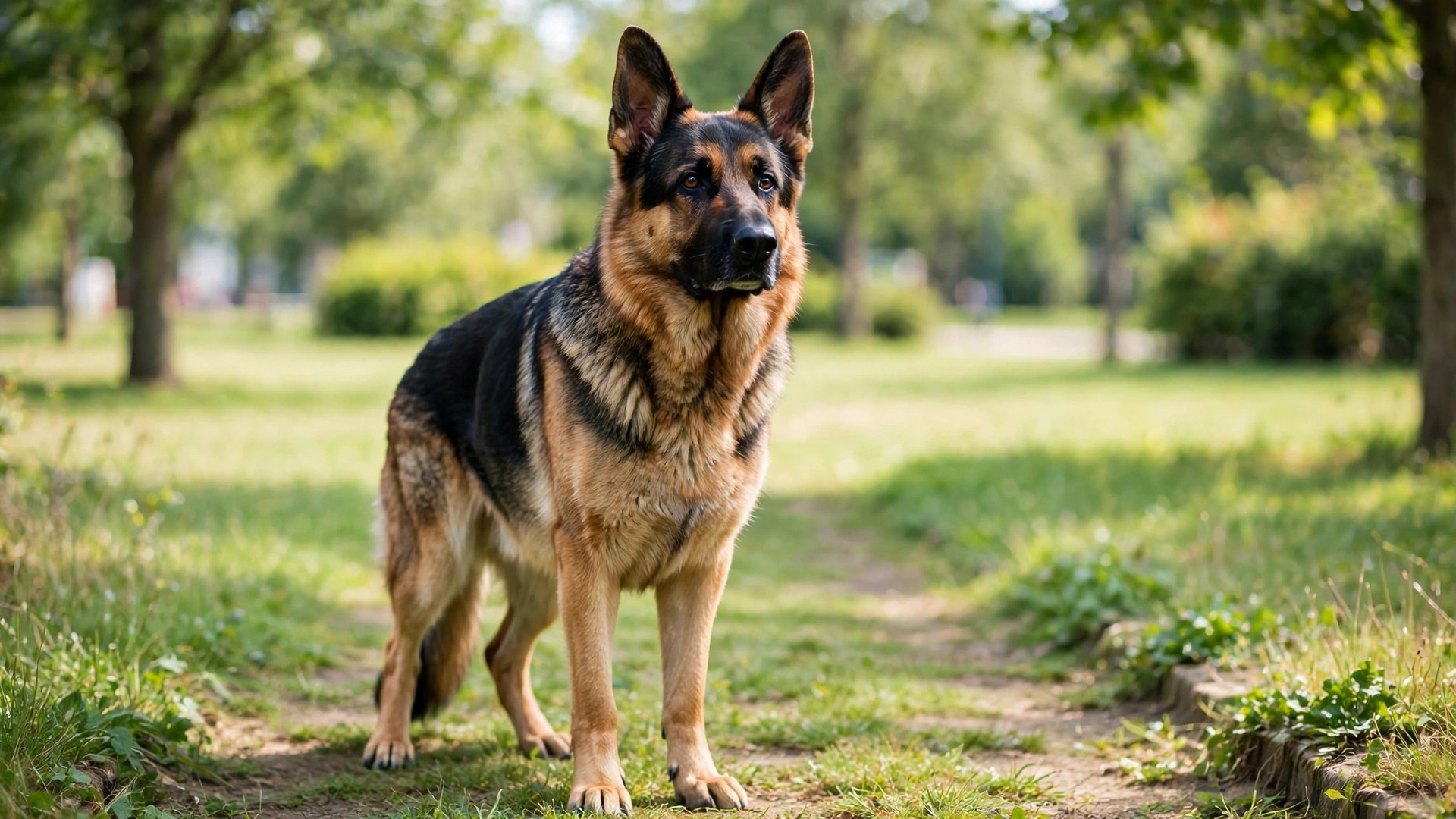
A German Shepherd wears two coats at once: coarse guard hairs on the outside, a dense soft undercoat underneath. That undercoat is the insulation layer. It keeps your dog warm in winter and, oddly enough, cool in summer by trapping air. The AKC is blunt about this: do not shave a German Shepherd. Shaving wrecks the insulation, the coat often grows back patchy, and it does nothing to stop shedding anyway.
Twice a year, usually spring and fall, the undercoat lets go all at once. Breeders call this “blowing coat.” Skip brushing during a blow and the loose undercoat compacts into the live coat, which is how mats form.
Brushing Schedule by Coat Type and Age
Not every German Shepherd wears the same coat. Use this table to find your dog’s row, then build your week around it.
| Your dog | Most of the year | Spring and fall coat blow | Session length |
|---|---|---|---|
| Standard-coat adult | 2 to 3 times a week | Every day | 10 to 15 minutes |
| Long-coated adult | 3 to 4 times a week | Every day, sometimes twice | 15 to 20 minutes |
| Puppy under 4 months | Short sessions most days | Puppies do not blow coat yet | 1 to 3 minutes |
| Puppy 4 to 12 months | Every other day | Puppy coat sheds around 4 months | 3 to 5 minutes |
| Senior (7 years and up) | 2 to 3 times a week, gentler | Every day, shorter sessions | 10 minutes, split if needed |
| Very active or outdoor dog | 3 to 4 times a week | Every day | 10 to 15 minutes |
A few notes on the rows. Long coats tangle behind the ears, in the armpits, along the backs of the legs, and under the tail, so those spots need daily attention even outside coat-blow season. Puppies do not blow their coats, but around four months they start shedding the soft puppy coat and growing adult fur. Seniors often have thinner skin and sore joints, so use a lighter hand. If your dog swims or runs through tall grass, brush after, not before the next scheduled day.
The Weekly Brushing Plan (Standard-Coat Adult)
Three days a week, about 30 to 45 minutes total. Pick days you can actually keep. Monday, Wednesday, and Saturday works. So does Tuesday, Thursday, and Sunday. The days matter less than the habit.
Monday: the full session (15 minutes)
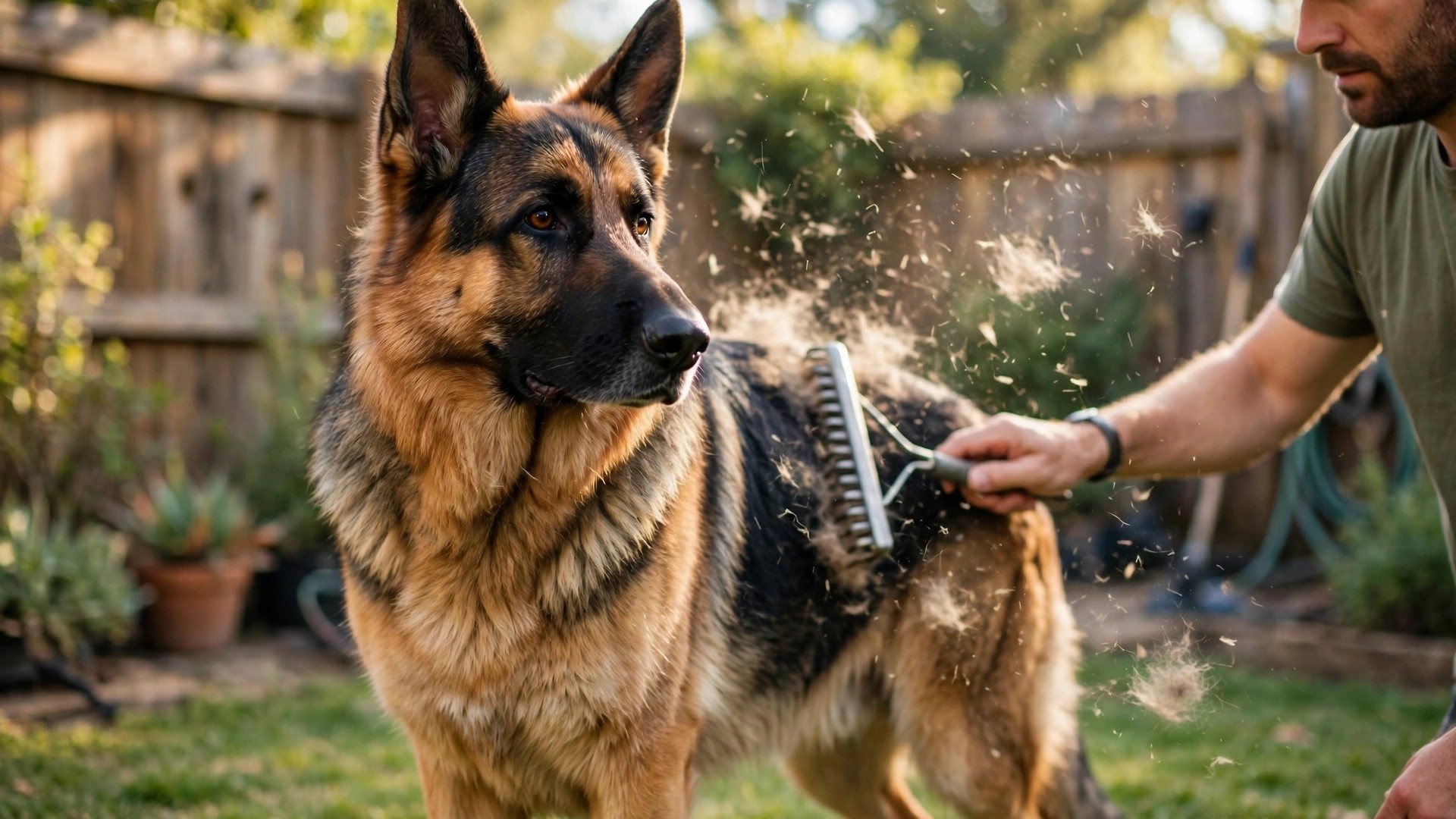
Start with the undercoat rake. Work in sections from neck to tail, in the direction the hair grows, lifting the outer coat with your free hand so the rake reaches the undercoat. When the rake stops pulling much fur, switch to the slicker brush and smooth the outer coat. Finish by running a metal comb through the whole dog.
Wednesday: the maintenance pass (10 minutes)
Same order, lighter touch. Rake the big areas only: back, sides, chest, tops of the legs. Slicker over the top, comb check. This is also your skin-check day. Look for redness, dry patches, lumps, ticks, or anything new while you brush. Most owners find a lump during grooming, not at the vet.
Saturday: the detail session (15 minutes)
Do the full Monday routine, then spend the extra minutes on the mat-prone spots: behind the ears, armpits, inner thighs, belly, and the feathering on the back of the legs and tail. Tease any small tangle apart with your fingers before it felts into a mat. Check the ears while you are there. Our guide to cleaning dog ears without a fight pairs well with this Saturday routine.
During a coat blow: daily, 15 minutes
When the spring or fall blow starts, switch to daily brushing for two to four weeks. Use the de-shedding tool as your main tool. AKC Breeder of Merit Lisa Walsh uses hers weekly in normal times and daily during heavy shedding, and says “it’s amazing what you can get out in five to ten minutes with a de-shedding tool.”
After the blow ends, run the metal comb through the entire coat. If the comb passes everywhere, drop back to the three-day plan.
How to Brush a German Shepherd Step by Step
Good brushing is a technique, not a chore you rush through. Here is the order that works.
Step 1: Pick the right moment. Brush after exercise, when your dog is calm and a bit tired. A tired Shepherd stands still. A wired one treats the brush like a toy.
Step 2: Start with the rake. Work in the direction of hair growth, neck to tail, in short strokes. Lift the outer coat with your free hand so the rake reaches the undercoat. Three or four passes per section is enough.
Step 3: Slicker the surface. Switch to a slicker brush for the outer coat. Light pressure. Let the pins do the work. If you are pressing hard enough to bend the pins flat against the skin, you are pressing too hard.
Step 4: Comb to verify. Run a wide-toothed metal comb through every section. The comb is your quality control. If it stops, there is still loose undercoat or a tangle there. Go back with the slicker until the comb passes.
Step 5: Hit the trouble spots. Behind the ears, armpits, belly, inner thighs, tail feathering. These areas mat first because the hair there is finer and rubs constantly. A minute on each spot saves a painful de-matting session later.
Step 6: Finish with a bristle brush. A quick once-over smooths the coat and spreads the skin’s natural oils.
Step 7: Reward and end on a good note. A treat, a short game, something positive. A dog that ends every brushing session with a treat starts the next one willingly. Our puppy training schedule covers the same reward principle for grooming habits, and it works on adults too.
Which Brush Does What: The Tool Comparison
You do not need seven brushes. You need three, maybe four. Here is what each one is actually for.
| Tool | What it does | When to use it | Watch out for |
|---|---|---|---|
| Undercoat rake | Metal pins pull loose undercoat | Every session, first tool | Match pin length to coat length |
| Slicker brush | Fine wire pins smooth the outer coat, catch small tangles | Every session, after the rake | Light touch only. Pressing hard scratches skin |
| De-shedding tool | Blade edge strips loose undercoat in bulk | Coat-blow season, or weekly for heavy shedders | Overuse thins the coat. Once or twice a week max, never on wet fur |
| Metal comb | Finds what the brushes missed | End of every session, as a check | If the comb stops, the job is not finished |
| Pin brush | Wide rounded pins, gentle on long feathering | Long coats only | Does not reach undercoat |
| Grooming glove | Rubber nubs lift loose hair while you pet the dog | Puppies, nervous dogs, quick touch-ups | Too gentle for a real coat-blow session |
If you are building a kit from zero, start with an undercoat rake, a slicker brush, and a metal comb. Add a de-shedding tool before the first spring blow. That is the whole kit.
Recommended
FURminator Undercoat deShedding Tool (Large, Long Hair)
The tool AKC breeders reach for first. It pulls loose undercoat out in bulk, exactly what you need during a coat blow.
Check Price on AmazonRecommended
Hertzko Self-Cleaning Slicker Brush
Fine wire pins for the outer coat, and the self-cleaning button means you are not picking fur out of the brush with your fingers after every session.
Check Price on AmazonRecommended
GoPets Undercoat Rake and Dematting Comb
Your everyday workhorse. The rake teeth reach the undercoat that slickers skate over, and the comb side handles small tangles before they become mats.
Check Price on Amazon5 Mistakes That Ruin a German Shepherd’s Coat
Most coat damage is not caused by neglect. It is caused by owners trying hard with the wrong method.
1. Shaving the coat for summer. It feels logical. It is wrong. The double coat insulates against heat as well as cold, and a shaved coat often grows back patchy, thin, or with a changed texture. VCA notes post-clipping coat problems in plush-coated breeds, where regrowth can take months. If your dog is hot, brush more and give shade and water. Do not shave.
2. Overusing the de-shedding tool. It is satisfying to watch the fur pile up, so owners use it every day. Used too often, it strips healthy coat and irritates skin. During a coat blow, daily is fine. The rest of the year, once or twice a week is the ceiling. Never use it on wet fur.
3. Brushing a matted dog while wet. Bathing a matted dog makes the mats tighter, and brushing wet mats pulls and hurts. Always get a comb through the coat before a bath. If the comb will not pass, work the tangles out dry first, or book a groomer. Our bathing guide covers the right order, because the bath-brush sequence matters more than most owners think.
4. Skipping the friction spots. The back and sides look fine, so owners stop there. Mats form where hair rubs: behind the ears, armpits, inner thighs, belly, and the backs of the legs. VCA’s matting guide lists exactly these areas. Check them every session.
5. Brushing only the top layer. A slicker brush alone never reaches the undercoat. That is why the rake comes first. If you only ever slicker-brush, the undercoat quietly felts itself into a mat underneath a coat that looks fine from the outside. The comb test catches this: if the comb will not glide from skin outward, the undercoat still needs work.
Brushing Checklist: The Mat-Prone Spots
Run through this at the end of every session.
- Behind both ears, where the fine hair felts first
- Armpits, where the leg meets the body
- Inner thighs and belly, the softest and most ignored area
- Feathering on the backs of the legs
- Under the tail and the tail plume itself
- The ruff around the neck, especially under a collar
- Between the toes, where mud and burrs hide
- Metal comb through the whole coat last. If it glides everywhere, you are done
When Brushing Is Not Enough: Call a Groomer or Your Vet
Most brushing problems are routine. A few are not. Book a professional groomer if mats have felted tight against the skin, if your dog will not let you near a matted area, or if the coat blow is beating you.
See your vet sooner if brushing uncovers bald patches, hot spots, sores under a mat, a sudden change in shedding, or skin that is red, flaky, or smelly. Sudden heavy shedding outside the spring and fall windows can point to diet, thyroid, or stress issues, and no brush fixes those. Our article on stopping German Shepherd shedding covers when shedding is a symptom rather than a season.
This article is for information only and isn’t a substitute for your vet’s advice.
Frequently Asked Questions
Can I brush my German Shepherd every day?
Yes. Daily brushing is fine, as long as you use the right tool. A slicker brush or grooming glove for a daily once-over is gentle. Just do not use a de-shedding tool every day outside coat-blow season, because that can thin the coat and irritate the skin.
When can I start brushing a German Shepherd puppy?
As young as 6 to 8 weeks, with a soft grooming glove. Keep it to a minute or two and end with a treat. The goal at that age is not fur removal. It is teaching the puppy that brushing is a normal, pleasant part of life. Build up to 3 to 5 minute sessions by the time the adult coat starts coming in around four months.
Does brushing reduce shedding?
Yes, in the sense that matters. Brushing does not stop your dog producing hair. It catches the loose hair before it lands on your sofa and your clothes. Owners who brush 3 times a week report far less loose fur around the house than owners who brush once a month.
What happens if I never brush my German Shepherd?
The undercoat felts into mats, and mats are not a cosmetic problem. VCA Hospitals explains that mats pull on the skin, trap moisture, hide sores and parasites, and can lead to hot spots. A badly matted dog may need to be shaved under sedation. A few minutes with a rake three times a week prevents all of that.
The Bottom Line
Brush your German Shepherd two to three times a week most of the year, and every day for the two to four weeks of each spring and fall coat blow. Use the rake first, the slicker second, and the comb to check your work. Spend the extra minute on the friction spots. Start puppies young with a glove and treats. Never shave the double coat, and never bathe a matted dog.
That is the whole system: about 45 minutes a week and one decent rake, for a healthier coat and less fur on everything you own. Put the three days on your calendar now.
Leave a Reply