Disclosure: Pets Life Time participates in affiliate programs. Product links in this article may earn us a commission at no extra cost to you – it helps keep our content free. Learn more
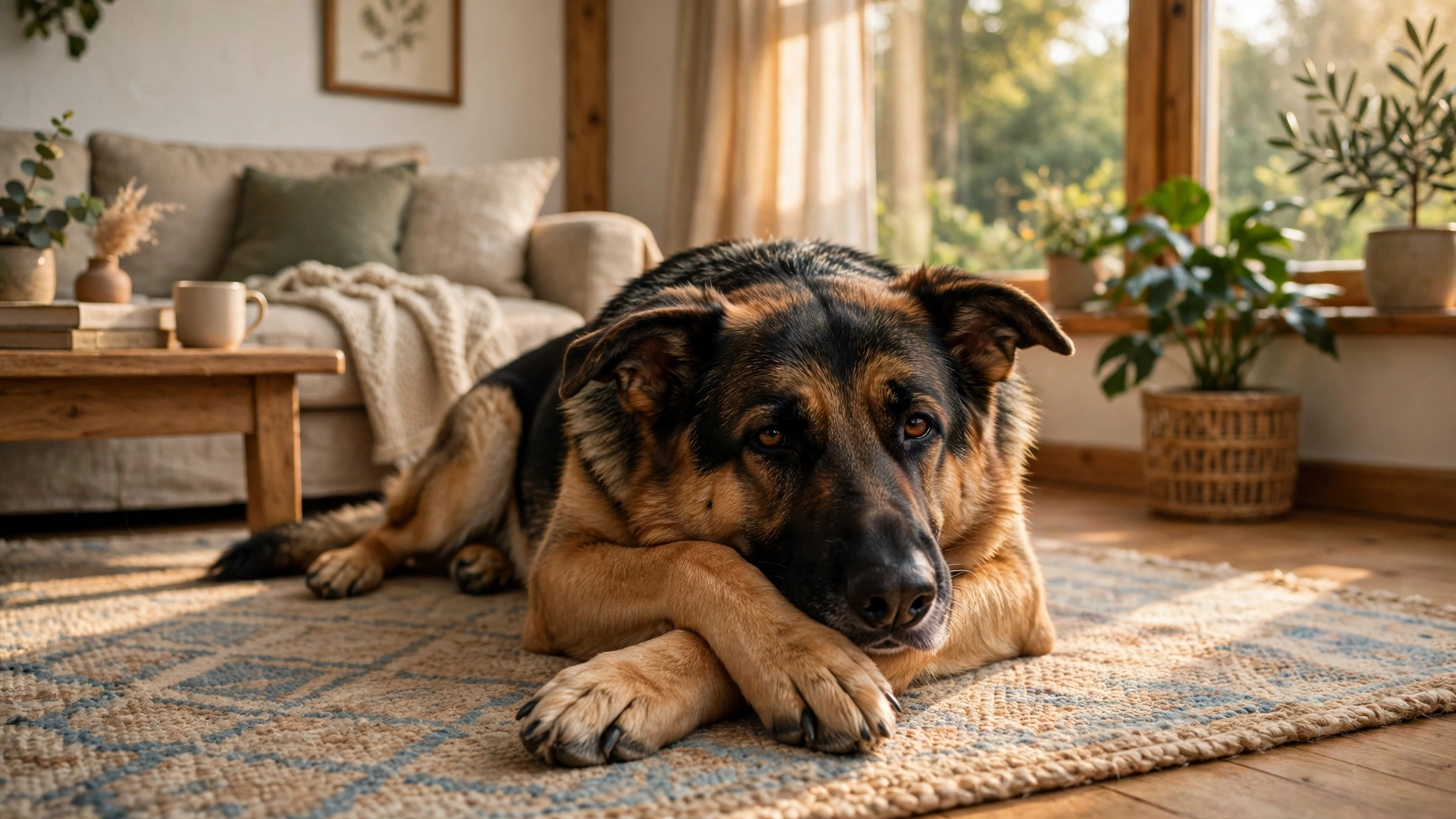
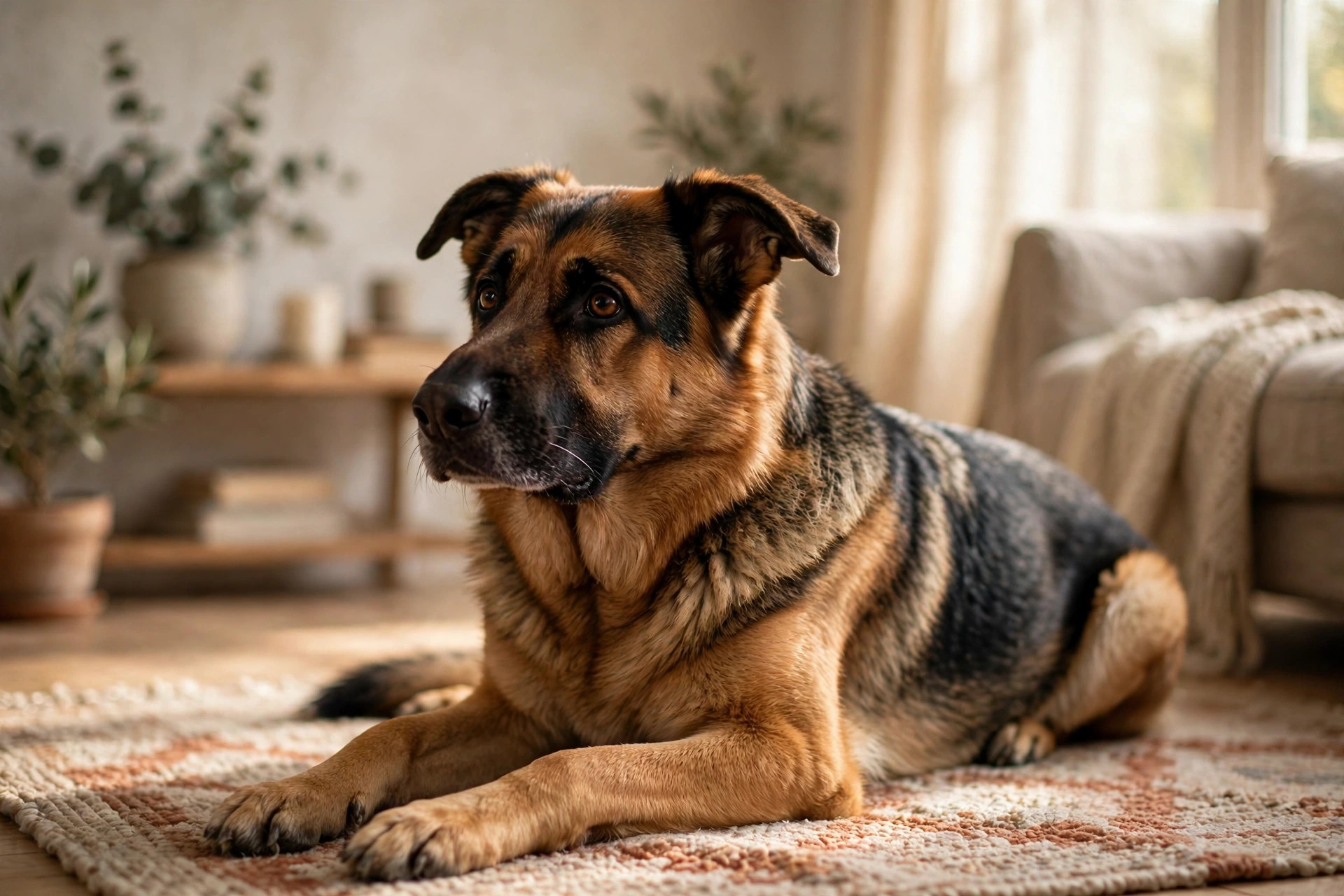
Walk into the living room, look down, and there it is. Your German Shepherd is flat out on the rug, front legs stretched ahead, one paw laid neatly over the other. It looks polite. It looks deliberate. It looks like it means something.
Most of the time, it means nothing dramatic. But it is not random either, and one reason, rarely, is worth a vet visit.
The Short Answer
German Shepherds fold their paws because it is comfortable, because they feel safe enough to relax, and because their build makes the position easy. Long legs, narrow chest, front legs close together: one paw slides over the other without any effort.
That is the whole story for most dogs. A tense dog keeps its front legs tucked underneath, ready to spring up. A dog lying with its paws folded has put its feet somewhere that takes a beat longer to get out of. It only does that when it feels safe.
One honest caveat: no large study has ever looked at paw folding on its own. Vets and behavior experts agree on the reasons below, but they are working from observation and anatomy, not a controlled trial.
7 Reasons German Shepherds Fold Their Paws
1. It Is Simply More Comfortable
This is the boring answer, and it is probably the right one. When a dog lies on its chest with both front legs straight out, its weight presses down through the elbows and shoulders. Turn the elbows slightly outward and lay one paw over the other, and that pressure shifts. Behavior consultant Amy Shojai puts it plainly: crossing the paws may skew the elbows outward into a more comfortable resting pose. Behaviorist Frania Shelley-Grielen agrees: rotating the elbows out takes weight off the shoulder.
Watch your own dog and you will often catch the sequence: paws start side by side, a few minutes pass, one paw slides over the other. The dog just found a better position, the same way you shift in a chair without thinking about it.
2. It Means They Feel Safe and Relaxed
Folded paws are a relaxation tell. A nervous dog stays ready: legs under the body, weight forward, ears up, ready to move. A dog with its paws folded has given up that readiness. It will take a second longer to get up.
Look at the rest of the dog before you decide what the folded paws mean. A relaxed dog shows soft eyes, a loose mouth, ears in their normal position, and a body that is not stiff anywhere. Many dogs rest their chin right on top of their folded paws and drift off. The American Kennel Club describes the same picture in its guide to reading dog body language.
Flip it around and the picture gets useful. If your Shepherd folds its paws but its eyes are hard or its body is stiff, do not read the paws as relaxation. Read the whole dog.
3. Their Body Is Built for It
Some dogs fold their paws constantly. Others never do it once. Body shape is the biggest reason why. Dogs with long legs and narrow chests, Greyhounds, Whippets, Dobermans, Labradors, Golden Retrievers, and German Shepherds, do it far more often than short-legged or wide-bodied dogs. A narrow chest means the front legs sit close together, so one paw slides over the other easily.
Short-legged breeds have the opposite problem: Dachshunds, Corgis, and Basset Hounds have legs set wide apart, and crossing them is awkward. Puppies fold their paws less than adults, since a young Shepherd is still growing into its legs.
4. They Are Tired and Settling In for a Nap
Folded paws show up most often at the end of the day, after a walk or a long play session. A tired dog wants the most comfortable position it can find, and folded paws take pressure off the elbows and shoulders. Shelley-Grielen ties the posture directly to this: a posture of relaxation can indicate contentment or fatigue, and often both at once.
If it just came in from a long walk, went straight to its spot, and put its head down on folded paws, that is a tired, content dog.
5. They Learned It Gets a Reaction From You
Folded paws look cute, and people react: owners smile, take a photo, say “aww,” or hand over a treat. Dogs notice what earns them good things, and they repeat it.
This is how a natural resting position turns into a habit. The dog folds its paws because it is comfortable, you make a fuss, and the dog files that away. Within a few weeks, you have a dog that folds its paws every single time it settles near you.
6. They Might Be Copying You
Here is the fun one, and the one with actual science behind it. Dogs can learn by watching people. A 2010 study by researchers in Vienna and Oxford found that trained dogs copied the way their owners opened a door, even when copying cost them a treat.
So if you spend your evenings on the couch with your legs crossed, is your Shepherd folding its paws to copy you? Maybe. Nobody has tested paw folding as imitation directly, but dogs watch us constantly. File it under “probably part of the story” rather than “definitely true.”
7. They Are Keeping Warm
Folded paws pull the legs in tight and tuck the paw pads closer to the body. On a cold floor, that helps a dog hold onto body heat. It is the same reason dogs curl into a tight ball on cold nights.
Easy to test: does your Shepherd fold its paws more in winter, or on the tile floor, than on a warm rug in summer? If yes, warmth is part of the reason. A genuinely cold dog shows other signs too: shivering, seeking out blankets, curling tight.
Folded Paws, Crossed Paws, and a Paw on You: Not the Same Thing
Three paw behaviors get mixed up constantly, and they mean different things.
| Behavior | What it looks like | What it usually means | Worth a vet visit? |
|---|---|---|---|
| Folded paws | Lying down, one front paw laid over the other | Comfort, relaxation, tiredness | No, unless pain signs appear |
| Crossed paws while standing | Standing with front legs crossed at the wrists | A trained trick, or a dog shifting weight off a sore leg | Yes, if new and the dog favors one leg |
| Paw on you | Dog places a paw on your leg, arm, or chest | Attention seeking or a learned way to ask for something | No, it is a social behavior |
| Paw licking or chewing | Repeated licking, biting, or chewing at one paw | Allergies, injury, or pain in that paw | Yes, if frequent or focused on one paw |
The one that matters most is the paw-on-you behavior. A paw placed on you is social: a dog asking for attention, food, or a game. Folded paws are private. The dog is settling itself, not talking to you. We covered the paw-on-you habit in why German Shepherds put their paw on you.
When Folded Paws Are a Warning Sign
Most folded paws are nothing. But there is one version that deserves a vet visit. Sometimes a dog rests one paw over the other because it is protecting a sore joint, taking weight off an elbow, wrist, or shoulder that hurts. Watch for the details: the dog folds the same paw over the other one every time, it is slow or stiff getting up afterward, or it starts doing it suddenly when it never did before.
German Shepherds are a breed vets watch closely for joint trouble. Hip dysplasia and elbow dysplasia are both common in the breed, and both feed into osteoarthritis over time. VCA Animal Hospitals reports that osteoarthritis affects at least 20% of dogs over one year old, and around 80% of dogs over eight years old. Cornell University College of Veterinary Medicine describes it as a chronic, progressive joint disease where cartilage thins and bony changes add inflammation and pain.
The early signs are easy to miss because dogs hide pain well. VCA lists the ones owners notice first: difficulty getting up and down, walking slowly, hesitation before stairs or jumping onto furniture, lameness, and loss of stamina on walks. Cornell’s list lines up: stiffness, lameness or a change in gait, less interest in exercise, difficulty getting up, and muscle wasting. None of those signs on its own proves arthritis. But folded paws plus any two of them is a pattern worth a vet visit, and Cornell is clear that the earlier osteoarthritis is diagnosed and managed, the better the long-term outcome.
Two rules matter here. First, never reach into your own medicine cabinet when your dog limps. Ibuprofen, acetaminophen, and aspirin are all dangerous for dogs without veterinary direction. Second, do not wait for your dog to cry. Dogs rarely cry from joint pain. They slow down, they hesitate, they change how they lie. Folded paws that appear out of nowhere in an older dog are exactly that kind of quiet change.
If joint trouble is already on your radar, our guide to German Shepherd hip dysplasia signs, prevention, and treatment covers what to watch for. Our guide to telling if your dog is overweight matters too: VCA lists excess weight as highly correlated with osteoarthritis, and keeping a Shepherd lean is the highest-leverage thing an owner can do for its joints.
The 7-Day Folded Paws Check: What to Watch
Not sure whether it is a cute habit or something worth checking? Watch for a week.
Day 1: Take a baseline photo. Note the time of day, what the dog did before lying down, and which paw is on top. A dog that suddenly switches paws is telling you something changed.
Day 2: Watch the get-up. A comfortable dog unfolds and rises smoothly. A sore dog hesitates, pushes up with its front legs first, or takes a few stiff steps before loosening up.
Day 3: Check the rest of the body. Soft eyes and a loose mouth mean relaxed. Hard eyes, a shut mouth, or a stiff body mean something else is going on. If your Shepherd seems on edge even while lying down, our guide to why German Shepherds are so anxious covers the signs and a calm-down plan.
Day 4: Change the surface. Put a thick bed on the dog’s usual spot. If the folded paws disappear on soft bedding, comfort on hard floors was the driver. If they stay, it is habit or body shape.
Day 5: Watch the stairs and the car. Does your dog hesitate before stairs, refuse to jump into the car, or lag behind on walks? One yes is worth noting. Two or three is worth a vet visit.
Day 6: Check the paws themselves. Look between the toes and check the pads for cracks or swelling. A dog that folds its paws and then licks one paw repeatedly is soothing something that hurts.
Day 7: Decide. If the week showed a relaxed dog that rises smoothly and moves normally, it is a habit, and a charming one. If it showed stiffness or one paw getting all the attention, book a vet visit and bring your notes.
Make the Resting Spot Worth Folding Paws On
Whether the folded paws are comfort, habit, or an aging joint, the fix is the same: a resting spot that is actually good.
- A thick orthopedic bed in the room where you spend evenings. Dogs settle where you are, and a thin bed on a hard floor is barely better than the floor itself.
- Non-slip rugs on slick floors. Tile and hardwood are the worst surfaces for sore joints, both for lying down and for getting up.
- A ramp or steps for the car and the couch. Every jump loads the joints. A ramp takes that impact away, and older dogs learn to use one in a day or two.
- Warmth in winter. Cold stiffens sore joints. A bed away from drafts is worth more than any supplement.
- Keep the weight down. A lean Shepherd puts far less force through its joints. Our dog calorie calculator works out daily portions from your dog’s weight and activity level.
- Short, regular walks instead of one big weekend hike. Steady, low-impact movement keeps joints lubricated.
Senior dogs deserve extra attention. A Shepherd that has folded its paws its whole life and keeps doing it at ten is probably fine. One that starts at ten when it never did before is worth a closer look. Our guide to how long German Shepherds live covers the changes that matter most in the senior years.
Recommended
Big Barker Orthopedic Dog Bed (Large)
Thick orthopedic foam that supports a Shepherd’s weight instead of flattening out, so sore elbows and shoulders get real relief.
Check Price on AmazonRecommended
Nutramax Cosequin Maximum Strength Joint Supplement
Glucosamine and chondroitin are the joint-support ingredients vets mention most for Shepherds, and this is the brand that shows up in vet offices.
Check Price on AmazonRecommended
PetSafe Happy Ride Telescoping Dog Ramp
Telescopes out for the car and folds away small, so an older Shepherd can walk up instead of jumping, sparing the elbows and hips.
Check Price on AmazonFrequently Asked Questions
Why do German Shepherds fold their paws when lying down?
Mostly comfort and relaxation. Turning the elbows outward shifts pressure off the shoulders, and a dog only lies with its paws folded when it feels safe enough to give up a quick getaway.
Is it normal for a German Shepherd to cross its paws?
Yes. It is a normal resting posture, especially in long-legged breeds, and vets describe it as a sign of a relaxed, comfortable dog. It only becomes a concern when it appears suddenly, always favors the same leg, or comes with limping.
Does folding paws mean my dog is in pain?
Not on its own. Pain is a possibility when folded paws show up with other signs: difficulty getting up, hesitation on stairs, or limping. Two or more signs together means a vet visit is the right call.
Why does my German Shepherd fold its paws only around me?
Two reasons, both good news. Dogs relax most around the person they trust, so the pose shows up where the dog feels safest. And dogs repeat behaviors that earn a reaction, so your dog has likely learned the pose gets attention.
Can I teach my German Shepherd to cross its paws on command?
Yes, if your dog already folds its paws on its own. Wait for it to happen naturally, mark the moment with a word like “polite” or “cross,” and reward it. A few short sessions and most Shepherds pick it up. Skip it if your dog resists or has stiff joints.
This article is for information only and isn’t a substitute for your vet’s advice.
Leave a Reply