
Disclosure: Pets Life Time participates in affiliate programs. Product links in this article may earn us a commission at no extra cost to you — it helps keep our content free. Learn more
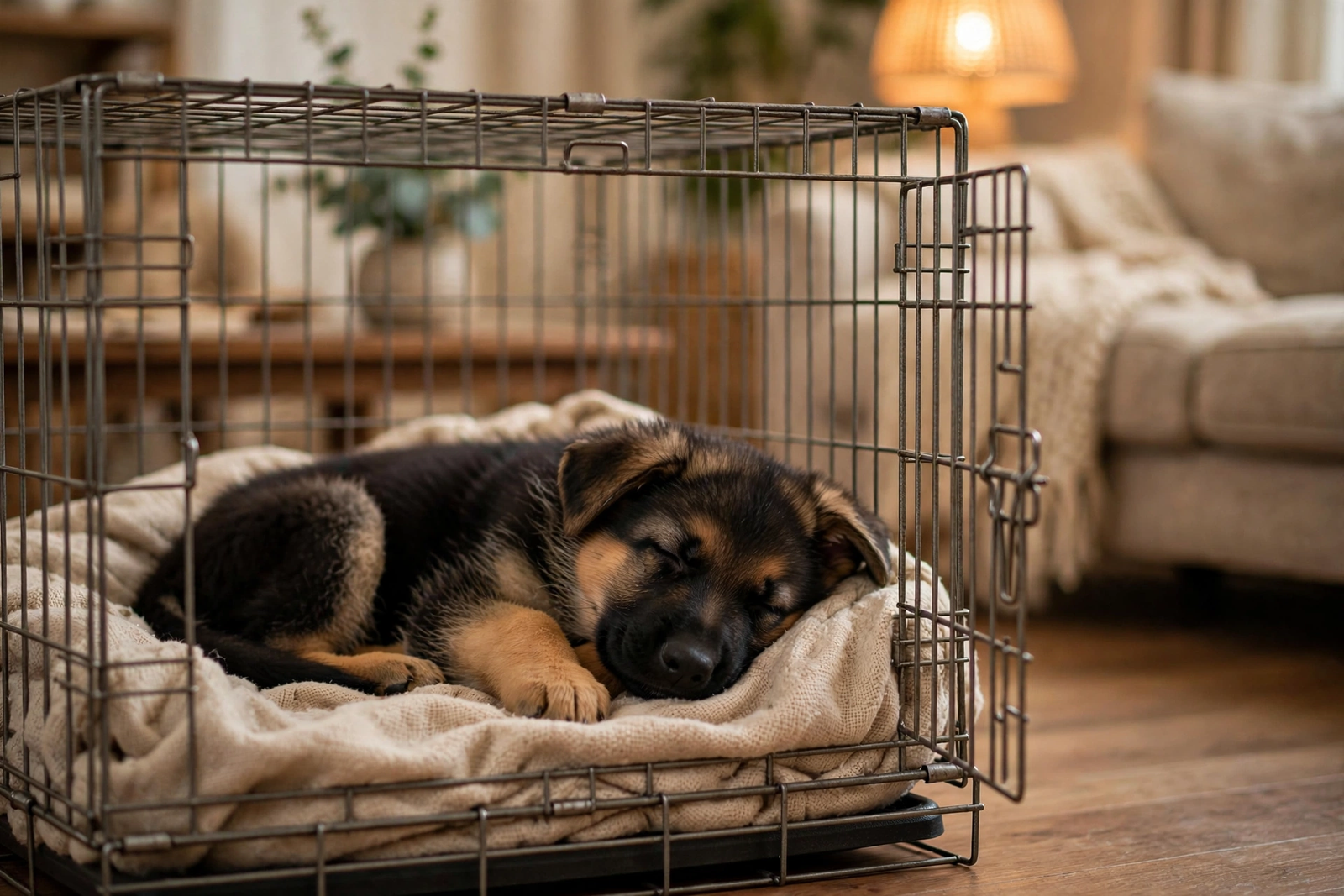
Your puppy’s first night home usually goes one of two ways. Either you follow a plan and everyone sleeps, or you wing it and spend three weeks negotiating with a tiny dictator at 3 AM. The difference is rarely the crate. It is almost always the schedule.
This is a complete crate training schedule for puppies: what the daytime rhythm looks like, how to handle nights without losing your mind, and how the whole thing changes as your puppy grows. Built for German Shepherd owners, but it works for any breed.
Forget the Crate. Nail the Schedule.
Most “crate training isn’t working” stories are actually scheduling stories. The puppy was crated for four hours at nine weeks old with a bladder that holds two. Or let out every time it whined, which taught it that screaming is the doorbell.
The crate is just a box. The schedule is what teaches your puppy that the box means rest, rest is followed by potty, and potty is followed by fun. Get the rhythm right and the crate trains itself.
The Only Bladder Math You Need
The rule of thumb: a puppy can hold it roughly one hour per month of age, up to about eight hours. An 8-week-old puppy gets about two hours. A 12-week-old gets about three. Nights stretch a little longer because a sleeping puppy isn’t drinking water, but not by much.
Treat this as a guideline, not a law. Vets disagree on the exact numbers and individual puppies vary. The point is simple: if your schedule asks for more bladder than the puppy has, the puppy will fail, and that is on you, not the puppy.
The First 3 Days: Introduction, Not Incarceration
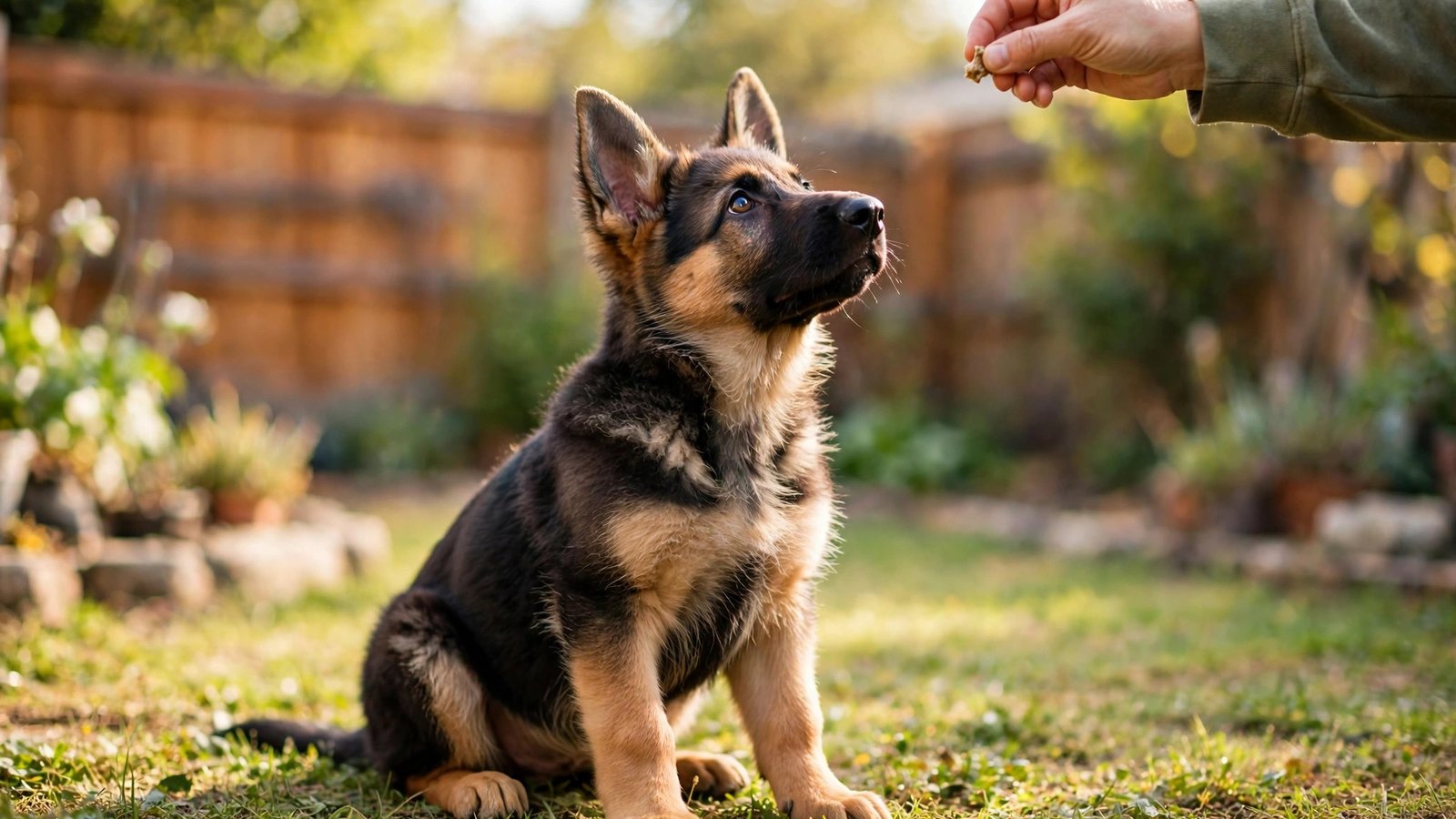
Do not lock a brand-new puppy in the crate for hours on day one. The first three days are about building the association: crate equals good things. Leave the door open and let the puppy wander in on its own. Feed meals inside the crate and toss treats in randomly through the day.
Once the puppy walks in willingly, start closing the door for short stretches: ten minutes while you sit nearby, then twenty, then thirty. The AKC’s crate training guide stresses the same principle, that every interaction with the crate should stay positive, starting with brief sessions while the puppy is awake and content (akc.org).
Sample Daytime Schedule: 8 to 12 Weeks
This is the rhythm for a young puppy. Adjust the clock times to your life, but keep the pattern: crate, potty, activity, repeat. Every crate exit leads straight outside. That pairing, repeated dozens of times, is what house-trains the dog.
| Time | What happens |
|---|---|
| 6:30 AM | Out of crate, straight outside for potty. No detours. |
| 7:00 AM | Breakfast (in the crate if you are still in the intro phase), then play. |
| 8:00 AM | Potty break, then crate for a nap, about 1.5 to 2 hours. |
| 10:00 AM | Potty, play and a short training session, 20 to 30 minutes. |
| 10:45 AM | Crate for a nap, about 1.5 to 2 hours. |
| 12:30 PM | Potty, lunch, play. |
| 1:30 PM | Potty break, then crate for the afternoon nap, about 2 hours. |
| 3:30 PM | Potty, play, training. This is the big energy-burn window. |
| 5:30 PM | Dinner, then potty. |
| 6:30 PM | Crate for quiet rest while you eat, about 1 hour. |
| 7:30 PM | Calm evening: gentle play, potty, winding down. |
| 9:30 PM | Final potty break, then crate for the night. |
Notice the crate sessions sit at or under the two-hour bladder limit. If your work schedule cannot cover the midday breaks, this is the age where a dog walker or a midday trip home matters most. For the full day-by-day picture beyond crate time, our puppy schedule planner maps out feeding, training, and sleep targets by age.
The Nighttime Plan
Nights are where most owners break. Here is the setup that works.
Put the crate in your bedroom for the first couple of weeks. Not because the puppy is spoiled, but because you need to hear the difference between “I need to pee” whining and “I am bored” whining. A puppy that just woke from sleep and cries almost always needs to go out. VCA’s veterinarians note that young puppies often need a break during the night until they are old enough to hold it through (vcahospitals.com).
For puppies under 12 weeks, set an alarm for one middle-of-the-night potty trip, around 2 or 3 AM. Carry the puppy out and keep it boring: no lights blazing, no play. Potty, quiet praise, back in the crate. Most puppies drop the overnight trip between 12 and 16 weeks, and many sleep through the night by about four months.
Recommended
MidWest Homes for Pets iCrate (42″) with Divider Panel
Buy one crate with a divider and you never buy twice: shrink the space for the 8-week-old, slide the panel back as your German Shepherd grows into the full 42 inches.
Check Price on AmazonWeeks 12 to 16: Stretching the Intervals
Around three months, the schedule loosens. Daytime crate sessions stretch to about three hours. The 2 AM alarm gets retired, usually with one false alarm where you wake up and find the puppy snoring.
This is also when freedom arrives in small, supervised doses: ten minutes loose in one puppy-proofed room after a potty break, then twenty. The crate is becoming a choice rather than a requirement, which is exactly the goal.
5 Mistakes That Quietly Wreck Crate Training
1. Using the crate as punishment. The moment the crate becomes the place the puppy goes when it is “bad,” you have poisoned it. Time-outs happen behind a baby gate. The crate stays sacred.
2. Buying a crate that is too big. A German Shepherd puppy in a full-size adult crate will sleep in one corner and pee in the other. The crate should fit just enough to stand up, turn around, and lie down. That is why the divider panel matters for this breed.
3. Crating too long, too soon. Nine weeks old, eight hours, no break: that is not crate training, that is a setup for daily accidents and a puppy that learns the crate is where bad things happen. Match the schedule to the bladder.
4. Negotiating with the 3 AM opera. If whining opens the door, whining becomes the strategy. The exception is the genuine potty cry, which is why the crate sits in your bedroom early on. Potty cries are urgent and follow sleep; protest cries start the moment the door closes.
5. Skipping the energy burn. A puppy that has been wired for two hours will not settle just because the schedule says so. A tired puppy is a crate-trained puppy.
Recommended
SmartPetLove Snuggle Puppy Heartbeat Stuffed Toy
The pulsing heartbeat and heat pack mimic littermate warmth, and it takes the edge off those first lonely nights in the crate.
Check Price on AmazonRecommended
KONG Puppy Natural Rubber Chew Toy
A KONG stuffed with peanut butter and frozen buys you twenty quiet minutes and teaches the puppy that the crate predicts the best part of the day.
Check Price on AmazonGerman Shepherd Owners: One Extra Note
German Shepherds learn patterns frighteningly fast, which cuts both ways. A consistent schedule will have a GSD puppy running to the crate on cue within two weeks. But one week of “just this once” exceptions teaches the wrong pattern just as quickly. This breed does not need a stricter schedule. It needs a more consistent one.
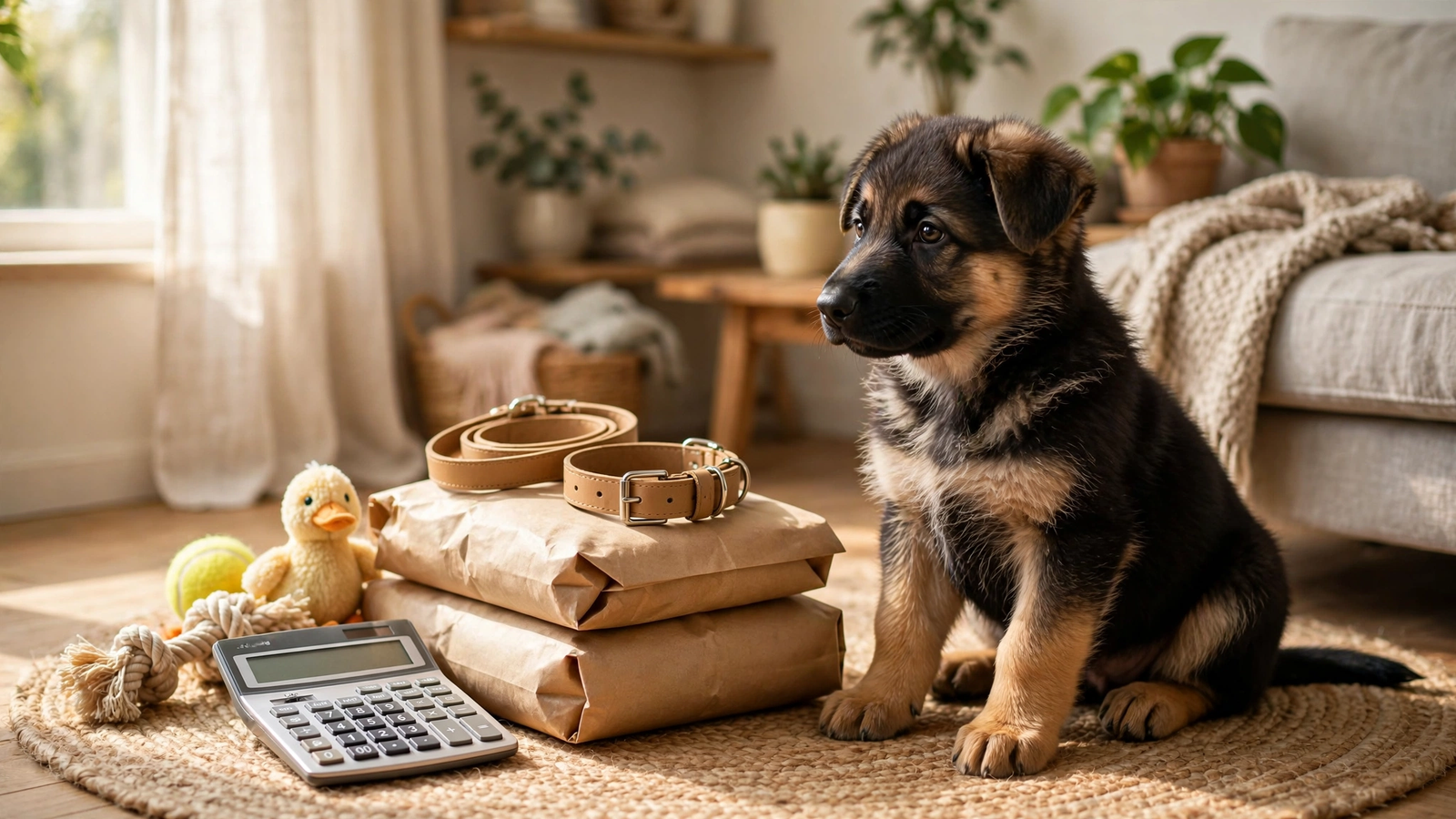
Two practicalities. First, buy the adult-size crate now (42 or 48 inch) with the divider: a growing GSD outgrows a puppy crate in about ten weeks. Crates, bedding, and gates add up, so run the numbers in our pet care cost calculator before the puppy comes home. Second, give the brain a job before crate time. Five minutes of nose work settles a Shepherd puppy better than another lap around the yard. Pair this schedule with our puppy training schedule by age so training and crate naps reinforce each other.
Crate Training Schedule FAQ
How long can my puppy stay in the crate during the day?
Use the month-of-age rule: about one hour per month, up to roughly eight hours for an adult. An 8-week-old puppy maxes out around two hours, a 4-month-old around four.
Should the crate be in my bedroom?
For the first two to three weeks, yes. You need to hear genuine potty cries, and the puppy settles faster near you. Move it to its permanent spot once nights are quiet.
What if my puppy cries all night?
First, rule out a full bladder with a boring potty trip. Then check the basics: enough daytime exercise, a comfortable crate, no accidental rewards for crying. True distress, panting, drooling, frantic escape attempts, is different from protest and deserves a vet or trainer consult.
When can I stop using the crate?
Most puppies earn unsupervised freedom somewhere between 12 and 18 months, once they are reliably house-trained and past the destructive chewing phase. Many dogs keep using the crate voluntarily as their den long after that.
A crate training schedule is not about confinement. It is about giving a baby animal a predictable rhythm while its body catches up to its brain. Follow the bladder math, keep the nights boring, and stay consistent for a month. The puppy handles the rest.


Leave a Reply