
Disclosure: Pets Life Time participates in affiliate programs. Product links in this article may earn us a commission at no extra cost to you — it helps keep our content free. Learn more
German Shepherd puppies are the honor students of the dog world. Brilliant, eager, and learning every second, whether you’re teaching them or not. That’s exactly why the right training tools matter so much in the first year. A Shepherd puppy with no guidance doesn’t stay a blank slate. It becomes a creative problem-solver with 60 pounds of muscle and its own ideas about the rules.
The best training tools for German Shepherd puppies aren’t about force or gadgets that promise shortcuts. They’re about setting your puppy up to succeed: a crate that makes house training click, a long line that makes recall practice safe, a harness that keeps walks pleasant while leash manners develop, and enrichment that works that busy brain. Used with positive, consistent training, these six essentials cover the foundations every Shepherd puppy needs: potty training, crate comfort, recall, loose-leash walking, and impulse control.
How to Choose Training Tools for Your Shepherd Puppy
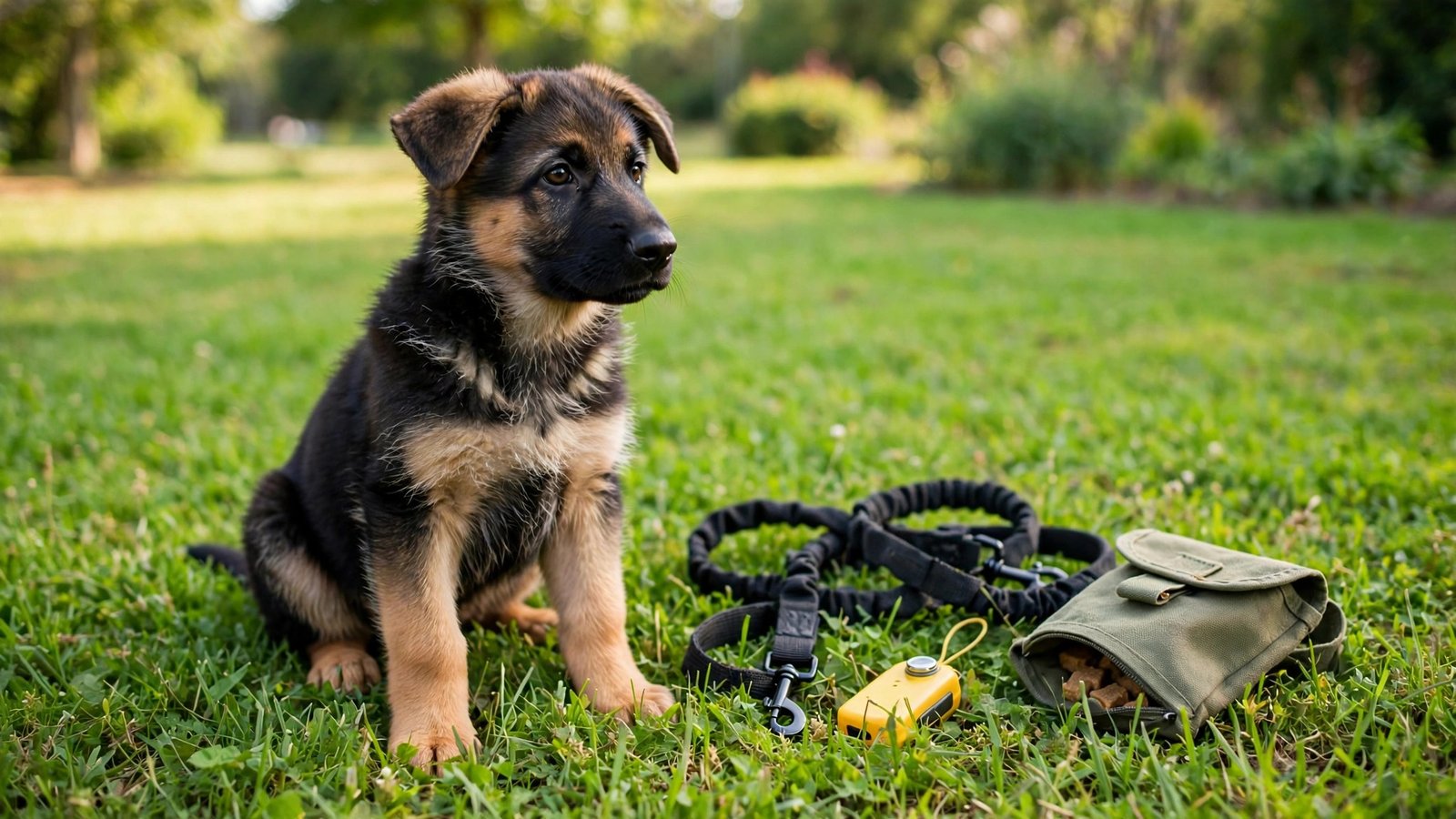
Start with your training philosophy. German Shepherds respond best to reward-based training: clear markers, good timing, and motivation. Tools should help you communicate, not punish. A clicker marks the exact moment your puppy gets it right. A treat pouch keeps rewards handy so your timing stays sharp. A long line gives freedom safely while recall is still a work in progress.
Second, buy for the dog your puppy is becoming. A crate with a divider panel grows with your Shepherd from 8 weeks to adulthood, and a no-pull harness bought in the right size keeps walks enjoyable during the months leash manners take to build. Cheap, flimsy gear fails right when you need it. A lunging adolescent Shepherd will test every clip and seam.
Third, remember that training is mostly management plus practice. The crate manages the puppy when you can’t supervise. The long line manages safety during off-leash practice. Puzzle toys manage boredom. Layer these tools over short, fun daily sessions. Five minutes, several times a day, beats one long drill. And pair training with the right amount of activity from our puppy exercise guide. If you’re tracking growth milestones alongside training, our German Shepherd weight chart shows what to expect month by month.
Our Top 6 Essentials
1. PupSensei Dog Training Kit & Puppy Starter Set
If you want one purchase that covers the core training gear, this is it. The PupSensei kit bundles a 30-foot long training leash, a magnetic-closure treat pouch, and a clicker. Those are the three tools trainers reach for first with a new puppy. The long line is the star: it lets your Shepherd puppy roam, sniff, and practice recall at a safe distance while you still have control. The magnetic pouch opens silently with one hand (no noisy Velcro startling your pup mid-reward), and the clicker gives you precise marker timing.
What we like:
- Complete starter bundle: long line, treat pouch, and clicker in one box
- 30-foot line is ideal for safe recall practice in open spaces
- Magnetic treat pouch opens quietly with one hand
Keep in mind:
- A long line requires attention. Never tie it off or leave it dragging unsupervised
Recommended
PupSensei Dog Training Kit & Puppy Starter Set
Long line, silent treat pouch, and clicker — the three core tools for training a new puppy, in one kit.
Check Price on Amazon2. MidWest Homes for Pets iCrate (42-Inch, Double Door)
Crate training is the foundation of house training, safe alone-time, and calm evenings. And the MidWest iCrate is the crate trainers recommend most. The 42-inch size fits an adult German Shepherd, and the included divider panel lets you shrink the space for a small puppy (dogs avoid soiling a snug space, which is what makes crate training work) and expand it as they grow. Two doors give you flexible placement, the plastic tray handles accidents, and the whole thing folds flat for travel.
What we like:
- Divider panel grows with your puppy: one crate from 8 weeks to adulthood
- Double doors and folding design for easy placement and travel
- Sturdy wire construction stands up to a determined Shepherd
Keep in mind:
- Introduce the crate gradually with treats and meals. Never use it as punishment
Recommended
MidWest Homes for Pets iCrate (42-Inch, Double Door)
The trainer-recommended crate — divider panel, double doors, and one size that lasts into adulthood.
Check Price on Amazon3. rabbitgoo No-Pull Dog Harness
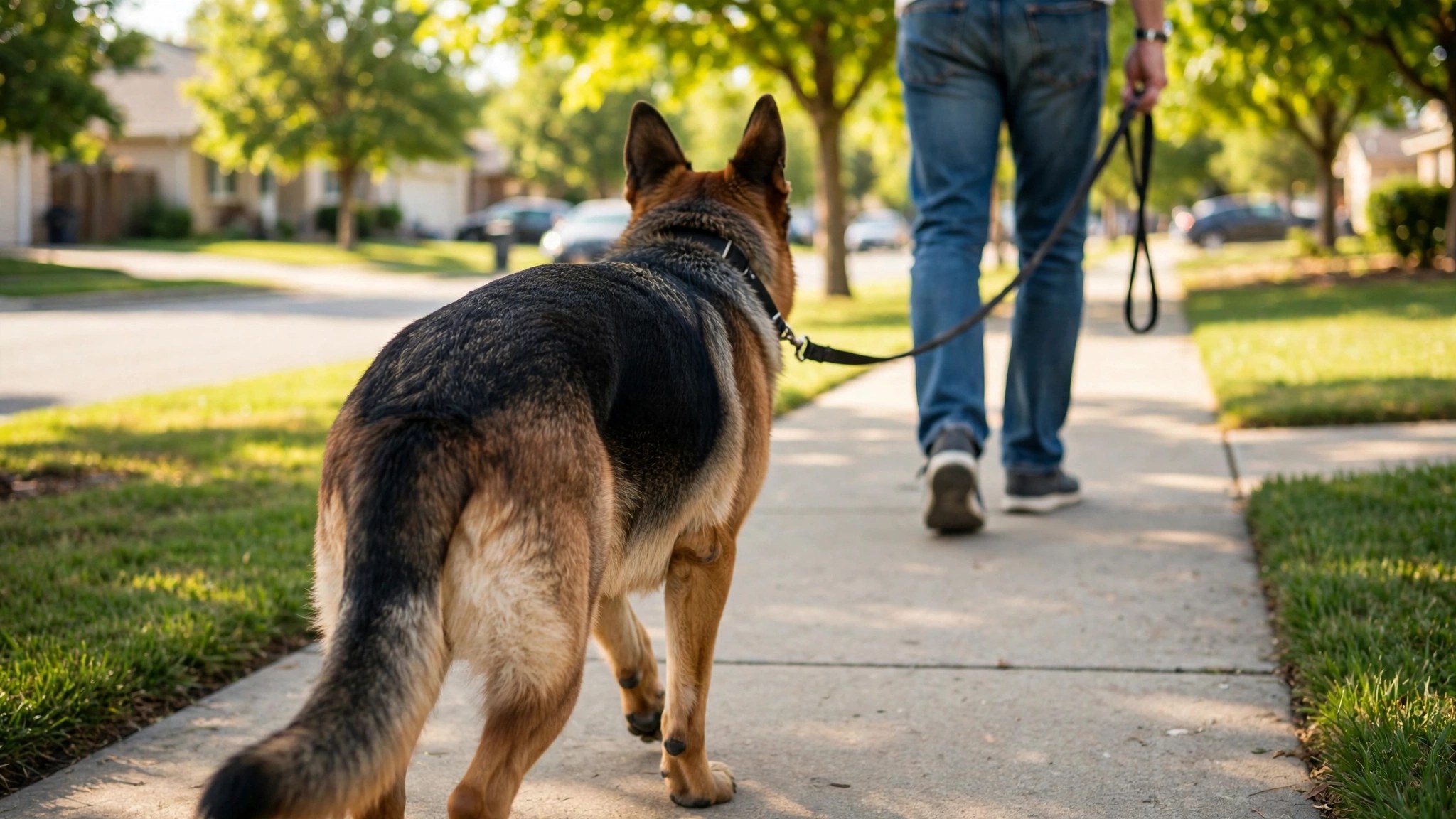
German Shepherd puppies grow into strong pullers fast, and the months it takes to teach loose-leash walking are much more pleasant with the right harness. The rabbitgoo no-pull harness has both front and back leash attachments. Clip the leash to the front ring and pulling gently turns the puppy back toward you instead of rewarding the lunge. It’s fully adjustable at the neck and chest, padded for comfort, and has reflective trim for evening walks. Owners consistently rate it among the best-value no-pull harnesses available.
What we like:
- Front clip redirects pulling without choking, ideal while leash manners develop
- Fully adjustable with padding, so it fits comfortably as your puppy grows
- Reflective trim and sturdy buckles built for strong dogs
Keep in mind:
- A harness manages pulling; it doesn’t replace loose-leash training, so keep practicing
Recommended
rabbitgoo No-Pull Dog Harness
Front-clip control that makes the pulling phase bearable while you train loose-leash walking.
Check Price on Amazon4. PetSafe Gentle Leader Headcollar
For Shepherd puppies that pull like sled dogs despite your best training efforts, the Gentle Leader headcollar is the humane backup plan trainers have recommended for decades. It fits over the nose and behind the ears. Where the leash attaches under the chin, gentle pressure turns the head (and therefore the body) back toward you. It’s not a muzzle. Your puppy can pant, drink, and take treats normally. Fit it correctly and introduce it with treats, and most puppies accept it within days.
What we like:
- Gives you steering control of a strong puller without neck strain
- Dog can pant, drink, and take treats normally. It’s not a muzzle
- Decades of trainer recommendations behind the design
Keep in mind:
- Requires proper fitting and a gradual, treat-heavy introduction. Don’t just strap it on
Recommended
PetSafe Gentle Leader Headcollar
Humane head control for determined pullers — steering, not straining, while training progresses.
Check Price on Amazon5. KONG Wobbler Treat-Dispensing Toy
Training a German Shepherd puppy isn’t only about commands. It’s about teaching an active brain to settle and problem-solve. The KONG Wobbler is a weighted, wobbling dispenser you fill with kibble: your puppy bats it around to earn each piece, getting 15 to 20 minutes of focused mental work from one meal. It’s brilliant for slowing down gulpers, entertaining a crated puppy, and building the frustration tolerance that underpins all impulse-control training.
What we like:
- Turns mealtime into mental enrichment, great for fast eaters and busy brains
- Sturdy, weighted design stands up to enthusiastic batting
- Dishwasher-safe and easy to fill
Keep in mind:
- Best on hard floors; it can mark up walls if your puppy body-slams it
Recommended
KONG Wobbler Treat-Dispensing Toy
A wobbling food puzzle that works your puppy’s brain and builds impulse control at mealtime.
Check Price on Amazon6. Nina Ottosson by Outward Hound Dog Smart Puzzle
For structured brain training, a puzzle feeder like the Nina Ottosson Dog Smart is hard to beat. Your puppy learns to slide and lift compartments to uncover hidden treats. It’s a genuine problem-solving workout that builds persistence and focus. Start with the easiest configuration and increase difficulty as your Shepherd figures it out (which will be faster than you expect). Short puzzle sessions are one of the best ways to tire out a puppy that still can’t go on long walks.
What we like:
- Real problem-solving that builds focus and persistence
- Adjustable difficulty grows with your puppy’s skills
- Excellent energy-burner for young puppies with exercise limits
Keep in mind:
- Supervise puzzle play. Clever Shepherds may try to chew rather than solve
Recommended
Nina Ottosson by Outward Hound Dog Smart Puzzle
A sliding-piece treat puzzle that gives a brilliant puppy a real mental workout.
Check Price on AmazonFrequently Asked Questions
When should I start training my German Shepherd puppy? Day one. Puppies start learning house rules, name recognition, and crate comfort the moment they arrive home, usually at 8 weeks. Keep sessions to 3 to 5 minutes, several times a day, and always end on a success.
What size crate does a German Shepherd puppy need? Buy the adult size (42-inch) with a divider panel, like the MidWest iCrate above. The puppy should have just enough room to stand, turn, and lie down. Extra space invites accidents in the corner.
How do I teach recall to my Shepherd puppy? Practice on a long line in low-distraction areas first. Call once, reward generously when they come, and never punish a slow recall. You want coming to you to always be the best deal on offer. Gradually add distance and distractions over months, not days.
My puppy pulls terribly on walks. Will a harness fix it? A front-clip harness like the rabbitgoo (or a Gentle Leader for serious pullers) makes walks manageable, but the real fix is training: reward the puppy for walking near you, stop or change direction when the leash tightens, and be patient. Most Shepherds need months of consistent practice.
The Bottom Line
You don’t need a garage full of gadgets to raise a great German Shepherd. You need the right few tools and consistency. The crate, long line, clicker, and treat pouch cover the foundations; the no-pull harness (or Gentle Leader) keeps walks sane while manners develop; and puzzle toys keep that brilliant brain busy between sessions.
Start early, keep it positive, and train in short bursts. Do that, and the puppy chewing your shoelaces today becomes the steady, obedient partner the breed is famous for. For the physical side of raising your pup, see our exercise guide.
Keep Reading
- German Shepherd Puppy Training Schedule: Week-by-Week Plan
- How to Stop Puppy Biting: 7 Proven Methods
- Puppy Training Schedule by Age: Day-by-Day Plan
- Best Toys for German Shepherds: 6 Tough Picks for Power Chewers
Your First 30 Days: Putting the Six Tools to Work
Buying the gear is the easy part. Here is how the six essentials above fit together across your puppy’s first month at home, so each tool arrives when your puppy is ready for it.
Week 1 — Safety and the marker. Set up the iCrate with the divider giving your puppy just enough room to stand, turn, and lie down, and feed meals in it so the crate predicts good things. Charge the clicker: click, treat, repeat, a dozen times a day, until your puppy perks up at the sound because it means food is coming. The treat pouch lives on your belt from day one — timing is what teaches. Keep everything else put away.
Week 2 — First harness walks and working for meals. Fit the rabbitgoo harness and take short walks on the back clip, rewarding every few steps of loose leash. Swap one meal a day into the KONG Wobbler so your puppy learns to work for food and settle afterwards. Training sessions stay at three to five minutes, several times a day.
Week 3 — The long line earns its keep. Move recall practice outside on the PupSensei kit’s 30-foot line, attached to the harness rather than the collar so a sudden dash cannot jerk your puppy’s neck. Call once, reward generously when they come, and let the line — not your voice repeated ten times — set the boundary. Start the Dog Smart puzzle at its easiest setting for rainy-day energy.
Week 4 — Combine and proof. Repeat the basics in new places: the yard, a quiet street, a friend’s garden. Only if pulling is still defeating you despite consistent practice, begin introducing the Gentle Leader indoors with treats, a few minutes at a time, before ever clipping a leash to it outside. This weekly rhythm sits inside the bigger picture in our week-by-week German Shepherd puppy training schedule.
More Frequently Asked Questions
Do I need to buy all six tools before my puppy comes home? No. Start with the crate, the training kit (long line, pouch, clicker), and one food toy — that covers the first two weeks completely. Add the harness as walks begin, and the puzzle and Gentle Leader only when you know whether your puppy needs them. Spreading purchases out also means better sizing: Shepherd puppies outgrow gear fast.
Clicker or marker word — does it matter which I use? Both work the same way: a short, consistent signal that marks the exact moment your puppy got it right, always followed by a reward. A clicker is more consistent in sound; a word like “yes” is always with you. Pick one and be consistent — many owners use the clicker at home and the word on walks, where the play and exercise gear is doing the entertaining.
How many treats is too many during training? Keep treats and chews to roughly 10 percent of your puppy’s daily calories, as vets generally advise, and make each training treat pea-sized — a Shepherd puppy works for the frequency of rewards, not the size. On heavy training days, simply use part of the puppy’s measured meals as rewards so the total never creeps up.
My puppy cries in the crate at night. Am I doing it wrong? Some protest in the first nights is normal for an eight-week-old puppy who has just left their littermates. Keep the crate near you at first, take a calm potty break when the crying follows a quiet spell (not at the peak of the noise), and build daytime crate naps with treats and a food toy. Crying that escalates night after night, or any sign of panic rather than protest, is worth discussing with your vet or a qualified trainer.
Leave a Reply