
Disclosure: Pets Life Time participates in affiliate programs. Product links in this article may earn us a commission at no extra cost to you — it helps keep our content free. Learn more
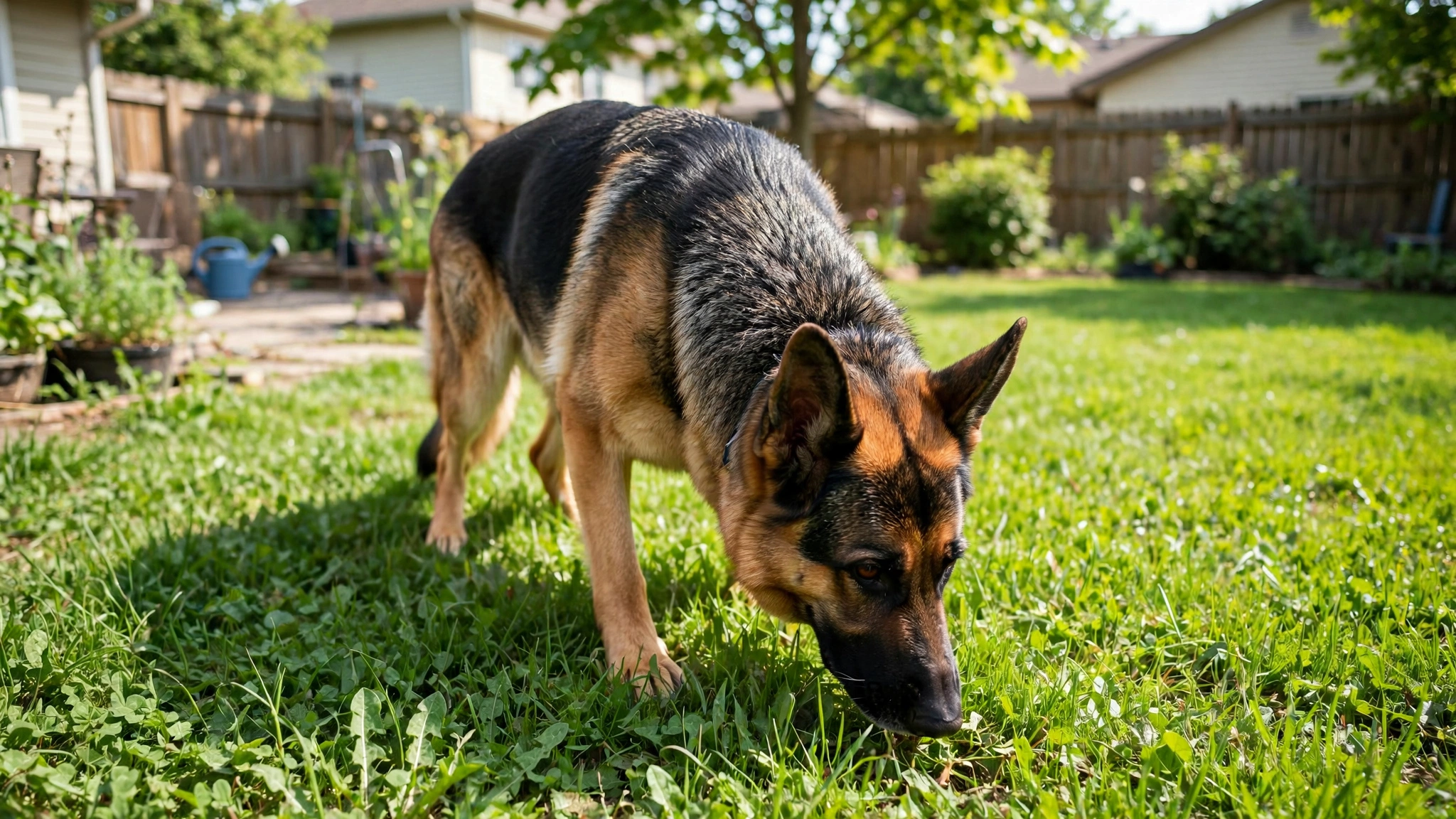
Picture this. You let your German Shepherd out in the morning, coffee in hand, and instead of doing her business she starts grazing. Head down, ripping up mouthfuls of grass like a cow. A few minutes later she throws up a small pile of foam and grass on the lawn, shakes it off, and looks at you like nothing happened.
Weird? Yes. An emergency? Almost certainly not.
Grass eating is one of the most common dog behaviors that looks alarming and usually means nothing. Research from UC Davis found that roughly two-thirds of dogs eat grass or plants on a weekly basis. It happens in every breed, at every age. And here is the part that surprises most owners: the majority of dogs that eat grass were not sick before, and do not vomit after.
So why do they do it, and what should you do about the times when vomit IS involved? Let us go through the five real reasons, what the science says, and when it is actually worth a call to your vet.
The Quick Answer
Most dogs eat grass simply because they like it, they are bored, or it is an old instinct. It is not usually a sign of illness, and it is rarely a medical problem on its own. VCA Animal Hospitals notes that fewer than 25% of dogs vomit after eating grass, and only about 10% show any sign of being unwell before they start grazing.
That flips the old story on its head. The common belief is that dogs eat grass to make themselves vomit when they feel sick. The data says otherwise. Most of the time, your dog grazes for the same reason a toddler picks up interesting things on the ground: because it is there.
The pattern matters more than the grass itself. Calm, occasional nibbling in a healthy dog? Normal. Frantic gulping followed by repeated vomiting? Worth investigating. The five reasons below will help you tell the difference.
5 Reasons Dogs Eat Grass
1. They just like it
Sometimes the simplest answer is the right one. Fresh grass, especially soft spring growth after rain, has a mild sweet taste and a satisfying texture. Some dogs prefer it dewy. Some have a favorite patch they visit every day.
This is also an old habit. Dogs evolved from wolves, and studies of wolf scat show plant material, including grass, in a large percentage of samples. Modern dogs do not need to graze to survive, but the urge to sample vegetation seems baked in. As one veterinary specialist at Cornell University reportedly put it: maybe dogs just like it. That honest answer deserves respect. We do not always need a pathology to explain a preference.
2. They are bored or understimulated
This one hits home for German Shepherd owners. A GSD with nothing to do will find something to do, and grass happens to be available. Dogs left alone in the yard for long stretches, or dogs whose exercise is a slow 15-minute lap around the block, often graze as a pastime. It can also be a way to grab your attention. Dogs learn fast. If every grazing session brings you sprinting across the yard shouting, well, that is entertainment.
The fix is not complicated. More real exercise, more games, more things to chew that are not the lawn. Puzzle toys and food-dispensing toys turn idle yard time into busy brain time.
Recommended
KONG Classic Durable Natural Rubber Toy (Large)
Stuff it with peanut butter and kibble and a bored German Shepherd has a job to do instead of grazing the lawn all afternoon.
Check Price on Amazon3. Their stomach feels off
This is the one everyone asks about. Can grass settle an upset stomach? The honest answer is: sometimes, but the science does not support it as the main reason.
Here is what vets do observe. A dog with acid reflux or an empty stomach can get a buildup of bile, which irritates the gut. The American Kennel Club quotes its chief veterinary officer explaining that dogs sometimes eat grass to bring that bile up and feel better, much the way people reach for an antacid. The classic pattern: frantic grass-gulping first thing in the morning, then vomiting yellow foam, then a perfectly perky dog. The fix in those cases is often boringly simple: feed a small meal at night before bed and a small meal first thing in the morning, so the stomach is never running on empty.
But that is a specific scenario. VCA frames it as a chicken-and-egg problem: does the dog eat grass to soothe a stomachache, or does the stomachache come from the grass? Since most dogs do not look sick beforehand and do not vomit afterward, routine grazing is probably not a stomach cure at all. The key distinction is urgency. Calm nibbling is one thing. Gulping grass frantically like a cow, the kind of grazing that looks almost panicked, is a stronger signal that something is bothering the stomach.
Recommended
Zesty Paws 11-in-1 Probiotic Bites for Dogs
If your dog’s digestion seems touchy, a daily probiotic chew supports gut balance alongside a good diet. Check with your vet first if your dog has an ongoing stomach issue.
Check Price on Amazon4. They are hungry
Researchers have noticed a pattern: dogs eat more grass when they have not eaten yet. In one study where dogs were given grass daily, grazing peaked before the day’s meal and dropped after. The hungrier the dog, the more likely the grazing.
That is worth a look at your feeding schedule. A dog fed once a day, or a dog whose last meal was 14 hours ago, may be grazing out of genuine hunger. Two meals a day, roughly 12 hours apart, is the standard most vets recommend, and it keeps blood sugar and stomach acid steady. It is also worth checking that portions match your dog’s actual needs. Our dog calorie calculator gives you a science-based daily target by weight, age, and activity level, and our feeding chart by weight shows typical meal sizes at a glance.
5. They want fiber
Grass is roughage. Dogs need a certain amount of fiber for healthy digestion and normal stools, and VCA Animal Hospitals notes that grazing may help a dog whose diet is light on fiber. This is more relevant for dogs on homemade or unbalanced diets than for dogs eating a complete commercial food, which already contains the right fiber levels. Still, if your dog grazes constantly and the diet has recently changed, the food is a reasonable place to look. A switch to a formula with more fiber, or one that simply agrees with your dog better, sometimes ends the grazing habit on its own.
Recommended
Snuffle Mat for Dogs
Scatters kibble into fabric folds so your dog “hunts” for food with her nose. It satisfies the foraging instinct that grass grazing scratches, and it slows down fast eaters.
Check Price on AmazonWhat About the Vomiting Part?
Let us settle the biggest myth: dogs do not eat grass because they know it will make them vomit. Grass is not some natural emetic that dogs figured out. What usually happens is simpler. A dog eats a lot of grass quickly, the blades irritate the stomach lining, and up it comes. The grass caused the vomit, not the other way around.
There is one real exception, and it is the scenario from reason 3 above. A dog that frantically eats grass, vomits yellow foam, and then feels fine may have been dealing with bile on an empty stomach. If that pattern repeats every morning, the answer is usually a schedule change, not a disease. Split the meals so the stomach is never empty for long stretches.
But repeated vomiting after grass, especially with anything below, is not a quirk. That is a vet visit.
When Grass Eating Means a Vet Visit
Call your vet if you see any of these alongside the grazing:
- Frantic, compulsive grass eating that is new or getting worse
- Vomiting more than occasionally, or vomiting repeatedly after grazing
- Diarrhea, weight loss, loss of appetite, or low energy
- Lip licking, gulping, or swallowing hard before grazing (classic nausea signals)
- Signs of belly pain: hunched posture, whimpering, reluctance to move
- Grass eating combined with eating other non-food items like dirt, fabric, or rocks (a condition called pica)
Also consider WHERE your dog grazes. Grass treated with herbicides, pesticides, or fertilizer can be genuinely dangerous. Parks, sports fields, and roadside strips are the riskiest spots. If your dog grazes at the park, stick to areas you know are untreated, and keep up with regular deworming, since grazing dogs can pick up intestinal parasites from grass where other dogs do their business.
This article is for information only and isn’t a substitute for your vet’s advice.
How to Reduce the Grazing
If your dog’s grazing is driving you up the wall (or destroying the lawn), a few practical moves usually help.
First, look at the routine. Most German Shepherds do best with two real meals a day and at least 60 to 90 minutes of active exercise. A tired, well-fed dog grazes less. Add a food puzzle or two for the yard hours. When she starts grazing, redirect calmly. Call her over, offer a toy, start a game. Do not yell or chase, because drama is a reward in dog logic, and you will accidentally train her to graze for attention.
Second, look at the diet. If the grazing started after a food change, or your dog’s stools are off too, the food deserves a review with your vet.
Third, track it for a week. Note the time of day, what happened before (exercise? meal?), and what happened after (vomit? nothing?). Patterns reveal a lot. A dog who only grazes in the morning before breakfast is telling you something different from a dog who grazes all day.
Frequently Asked Questions
Is it OK to let my dog eat grass?
Occasional grazing on untreated grass is fine for most dogs. Just keep an eye on frequency and any symptoms that come with it.
Can grass make my dog sick?
Plain grass itself rarely causes problems, but treated grass can. Herbicides and pesticides are the real hazard, along with parasites in heavily used grassy areas.
Why does my dog eat grass and then throw up foam?
The yellow foam is usually bile from an empty stomach. If it happens regularly in the morning, try a small late-evening meal and an early breakfast so the stomach stays settled.
How do I get my dog to stop eating grass?
Redirect with a toy or game when she starts, increase daily exercise and mental enrichment, and check that the feeding schedule and diet make sense. Punishing the grazing tends to backfire.
Do dogs eat grass when they have worms?
Some researchers suspect the instinct comes from wild canids using roughage to purge intestinal parasites. In domestic dogs there is no proven link, but if your dog is grazing heavily and has soft stools or weight loss, ask your vet about a fecal test and deworming.
The Bottom Line
A dog eating grass looks strange, but for most healthy dogs it is normal behavior with several possible motives, from simple enjoyment to boredom to a hungry stomach. The grass itself is rarely the problem. Watch the pattern, note what comes with it, and treat frantic grazing with repeated vomiting as a signal to call your vet. Do that, and you can stop worrying about the lawn and enjoy your dog.


Leave a Reply